Kirjojen hintavertailu. Mukana 12 595 353 kirjaa ja 12 kauppaa.

Kirjailija

Carl Mitcham

Kirjat ja teokset yhdessä paikassa: 8 kirjaa, julkaisuja vuosilta 1983-2019, suosituimpien joukossa Humanitarian Engineering. Vertaile teosten hintoja ja tarkista saatavuus suomalaisista kirjakaupoista.

8 kirjaa

Kirjojen julkaisuhaarukka 1983-2019.

Steps toward a Philosophy of Engineering

Steps toward a Philosophy of Engineering

Carl Mitcham

Rowman Littlefield International
2019
sidottu
The rise of classic Euro-American philosophy of technology in the 1950s originally emphasized the importance of technologies as material entities and their mediating influence within human experience. Recent decades, however, have witnessed a subtle shift toward reflection on the activity from which these distinctly modern artifacts emerge and through which they are engaged and managed, that is, on engineering. What is engineering? What is the meaning of engineering? How is engineering related to other aspects of human existence? Such basic questions readily engage all major branches of philosophy --- ontology, epistemology, ethics, political philosophy, and aesthetics --- although not always to the same degree. The historico-philosophical and critical reflections collected here record a series of halting steps to think through engineering and the engineered way of life that we all increasingly live in what has been called the Anthropocene. The aim is not to promote an ideology for engineering but to stimulate deeper reflection among engineers and non-engineers alike about some basic challenges of our engineered and engineering lifeworld.
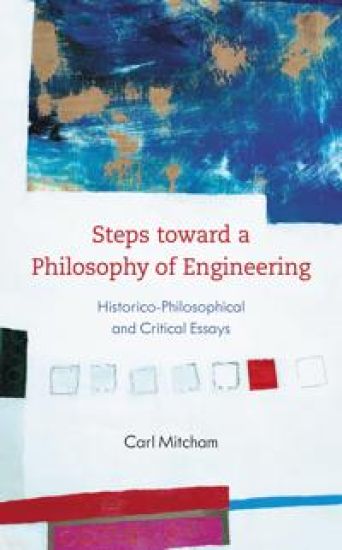
Steps toward a Philosophy of Engineering

Steps toward a Philosophy of Engineering

Carl Mitcham

Rowman Littlefield International
2019
nidottu
The rise of classic Euro-American philosophy of technology in the 1950s originally emphasized the importance of technologies as material entities and their mediating influence within human experience. Recent decades, however, have witnessed a subtle shift toward reflection on the activity from which these distinctly modern artifacts emerge and through which they are engaged and managed, that is, on engineering. What is engineering? What is the meaning of engineering? How is engineering related to other aspects of human existence? Such basic questions readily engage all major branches of philosophy --- ontology, epistemology, ethics, political philosophy, and aesthetics --- although not always to the same degree. The historico-philosophical and critical reflections collected here record a series of halting steps to think through engineering and the engineered way of life that we all increasingly live in what has been called the Anthropocene. The aim is not to promote an ideology for engineering but to stimulate deeper reflection among engineers and non-engineers alike about some basic challenges of our engineered and engineering lifeworld.
Ethics and Science

Ethics and Science

Briggle Adam; Carl Mitcham

Cambridge University Press
2012
sidottu
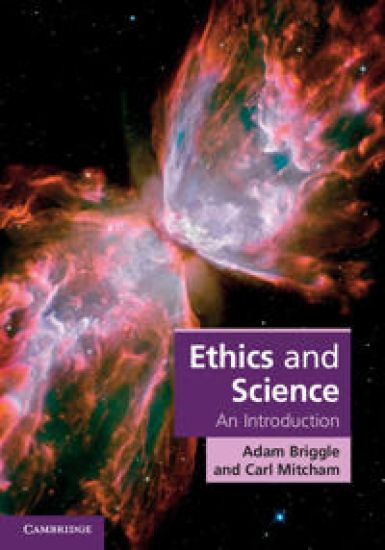
Who owns your genes? What does climate science imply for policy? Do corporations conduct honest research? Should we teach intelligent design? Humans are creating a new world through science. The kind of world we are creating will not simply be decided by expanding scientific knowledge, but will depend on views about good and bad, right and wrong. These visions, in turn, depend on critical thinking, cogent argument and informed judgement. In this book, Adam Briggle and Carl Mitcham help readers to cultivate these skills. They first introduce ethics and the normative structure of science and then consider the 'society of science' and its norms for the responsible conduct of research and the treatment of human and animal research subjects. Later chapters examine 'science in society' - exploring ethical issues at the interfaces of science, policy, religion, culture and technology. Each chapter features case studies and research questions to stimulate further reflection.
Ethics and Science

Ethics and Science

Briggle Adam; Carl Mitcham

Cambridge University Press
2012
pokkari
Who owns your genes? What does climate science imply for policy? Do corporations conduct honest research? Should we teach intelligent design? Humans are creating a new world through science. The kind of world we are creating will not simply be decided by expanding scientific knowledge, but will depend on views about good and bad, right and wrong. These visions, in turn, depend on critical thinking, cogent argument and informed judgement. In this book, Adam Briggle and Carl Mitcham help readers to cultivate these skills. They first introduce ethics and the normative structure of science and then consider the 'society of science' and its norms for the responsible conduct of research and the treatment of human and animal research subjects. Later chapters examine 'science in society' - exploring ethical issues at the interfaces of science, policy, religion, culture and technology. Each chapter features case studies and research questions to stimulate further reflection.
Humanitarian Engineering

Humanitarian Engineering

Carl Mitcham; David Munoz

Springer International Publishing AG
2010
nidottu
Humanitarian Engineering reviews the development of engineering as a distinct profession and of the humanitarian movement as a special socio-political practice. Having noted that the two developments were situated in the same geographical and historical space -- that is, in Europe and North America beginning in the 1700s -- the book argues for a mutual influence and synthesis that has previously been lacking. In this spirit, the first of two central chapters describes humanitarian engineering as the artful drawing on science to direct the resources of nature with active compassion to meet the basic needs of all -- especially the powerless, poor, or otherwise marginalized. A second central chapter then considers strategies for education in humanitarian engineering so conceived. Two final chapters consider challenges and implications. Table of Contents: Engineering / Humanitarianism / Humanitarian Engineering / Humanitarian Engineering Education / Challenges / Conclusion: Humanizing Technology
Thinking through Technology

Thinking through Technology

Carl Mitcham

University of Chicago Press
1994
nidottu
What does it mean to think about technology philosophically? Why try? These are the issues that Carl Mitcham addresses in this work, a comprehensive, critical introduction to the philosophy of technology and a discussion of its sources and uses. Tracing the changing meaning of "technology" from ancient times to the modern day, Mitcham identifies the most important traditions of critical analysis of technology: the engineering approach, which assumes the centrality of technology in human life; and the humanities approach, which is concerned with its moral and cultural boundaries. Mitcham bridges these two traditions through an analysis of discussions of engineering design, of the distinction between tools and machines, and of engineering science itself. He looks at technology as it is experienced in everyday life: as material objects (from kitchenware to computers); as knowledge (including recipes, rules, theories and intuitive "know-how"); as activity (design, construction and use); and as volition (knowing how to use technology and understanding its consequences). By elucidating these multiple aspects, Mitcham establishes criteria for a more comprehensive analysis of ethical issues in applications of science and technology.
Philosophy and Technology

Philosophy and Technology

Carl Mitcham

The Free Press
1983
pokkari
From editors Carl Mitcham and Robert Mackey comes an unusually reflective and wide-ranging colloquium on technology as a philosophical problem.Organized into sections on conceptual issues, ethical and political critiques, religious critiques, existentialist critiques, and metaphysical studies, Philosophy and Technology features an introductory overview that suggests the aims of truly comprehensive philosophy of technology. Philosophy and Technology features essays by Jacques Ellul, Lewis Mumford, Ortega y Gasset, and C.S. Lewis. This revised and fully updated edition features a comprehensive bibliography.