Kirjojen hintavertailu. Mukana 12 469 136 kirjaa ja 12 kauppaa.

Kirjailija

Carl W. Ernst

Kirjat ja teokset yhdessä paikassa: 13 kirjaa, julkaisuja vuosilta 1992-2023, suosituimpien joukossa Mohammed Folgen: Der Islam in Der Modernen Welt. Vertaile teosten hintoja ja tarkista saatavuus suomalaisista kirjakaupoista.

Mukana myös kirjoitusasut: Carl W Ernst

13 kirjaa

Kirjojen julkaisuhaarukka 1992-2023.

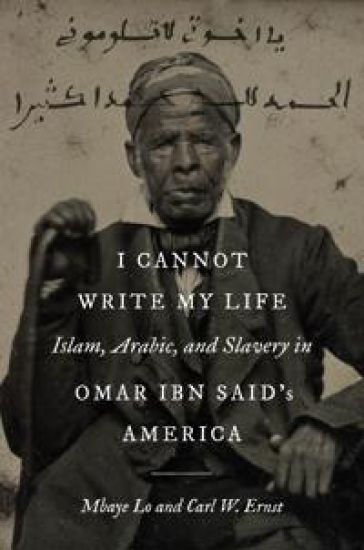
I Cannot Write My Life

I Cannot Write My Life

Mbaye Lo; Carl W. Ernst

THE UNIVERSITY OF NORTH CAROLINA PRESS
2023
pokkari
Omar ibn Said (1770–1863) was a Muslim scholar from West Africa who spent more than fifty years enslaved in the North Carolina household of James Owen, brother of Governor John Owen. In 1831 Omar composed a brief autobiography, the only known narrative written in Arabic by an enslaved person in North America, and he became famous for his Arabic writings. His enslavers also provided him with an Arabic Bible and claimed Omar as a convert to Christianity, prompting wonder and speculation among amateur scholars of Islam, white slave owners, and missionaries. But these self-proclaimed experts were unable or unwilling to understand Omar's writings, and his voice was suppressed for two centuries. Mbaye Lo and Carl W. Ernst here weave fresh and accurate translations of Omar's eighteen surviving writings, for the first time identifying his quotations from Islamic theological texts, correcting many distortions, and providing the fullest possible account of his life and significance. Placing Omar at the center of a broader network of the era's literary and religious thought, Lo and Ernst restore Omar's voice, his sophisticated engagement with Islamic and Christian theologies, his Arabic skills, and his extraordinary efforts to express himself and exert agency despite his enslavement.
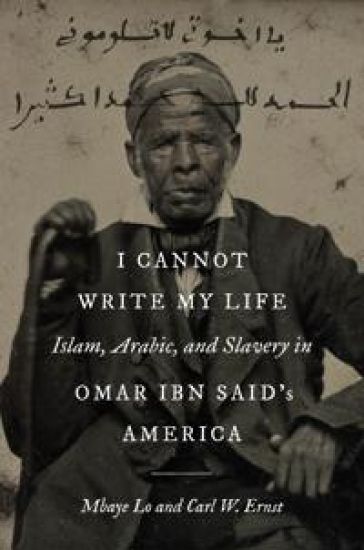
I Cannot Write My Life

I Cannot Write My Life

Mbaye Lo; Carl W. Ernst

THE UNIVERSITY OF NORTH CAROLINA PRESS
2023
sidottu
Omar ibn Said (1770–1863) was a Muslim scholar from West Africa who spent more than fifty years enslaved in the North Carolina household of James Owen, brother of Governor John Owen. In 1831 Omar composed a brief autobiography, the only known narrative written in Arabic by an enslaved person in North America, and he became famous for his Arabic writings. His enslavers also provided him with an Arabic Bible and claimed Omar as a convert to Christianity, prompting wonder and speculation among amateur scholars of Islam, white slave owners, and missionaries. But these self-proclaimed experts were unable or unwilling to understand Omar's writings, and his voice was suppressed for two centuries. Mbaye Lo and Carl W. Ernst here weave fresh and accurate translations of Omar's eighteen surviving writings, for the first time identifying his quotations from Islamic theological texts, correcting many distortions, and providing the fullest possible account of his life and significance. Placing Omar at the center of a broader network of the era's literary and religious thought, Lo and Ernst restore Omar's voice, his sophisticated engagement with Islamic and Christian theologies, his Arabic skills, and his extraordinary efforts to express himself and exert agency despite his enslavement.
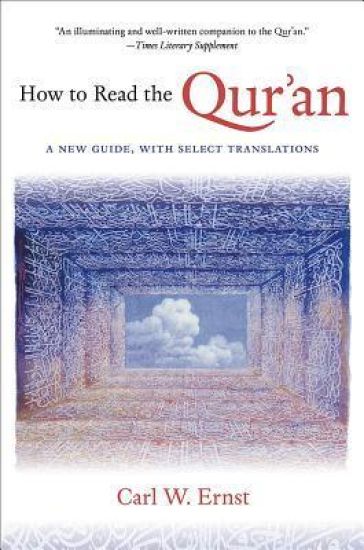
How to Read the Qur'an

How to Read the Qur'an

Carl W. Ernst

The University of North Carolina Press
2013
nidottu
How to Read the Qur'an offers a compact introduction and reader's guide for anyone, non-Muslim or Muslim, who wants to know how to approach, read, and understand the text of the Qur'an.Using a chronological reading of the text according to the conclusions of modern scholarship, Carl Ernst offers a nontheological approach that treats the Qur'an as a historical text that unfolded over time, in dialogue with its audience, during the career of the Prophet Muhammad. Ernst explores the history of the text and its development in the Meccan and Medinan periods; the Qur'an's important structural features, including symmetrical or ring composition; recent revisionist challenges to its textual integrity; and intertextual references in the Qur'an that relate to earlier works, such as the Bible. Featuring Ernst's illuminating new translations of 725 Qur'anic verses, close studies of numerous key passages, and appendices with tools to help readers work their way through the entire text, How to Read the Qur'an not only summarises historical and literary issues but also engages with the religious and political context of understanding the Qur'an today.
How to Read the Qur'an

How to Read the Qur'an

Carl W. Ernst

Edinburgh University Press
2012
nidottu
'Outstanding, timely and much needed.' Amir Hussain, Professor of Theological Studies, Loyola Marymount University 'A very well-written, remarkably accessible, timely and important book. It is sure to be read widely.' Muhammad Qasim Zaman, Robert H. Niehaus '77 Professor of Near Eastern Studies and Religion, Princeton University A compact introduction and reader's guide to the Qur'an This is an ideal introduction to the Qur'an, featuring the most up-to-date methods for reading and understanding the text. It deals with sensitive issues regarding the interpretation of sacred texts as well as differing points of view and major debates. A substantial explanatory introduction summarises the historical and literary issues and engages with the religious and political context of understanding the Qur'an today, including an appreciation of the ritual and oral uses of text. Key Features: * Includes new translations of 725 Qur'anic verses * Promotes an understanding of multiple interpretations of the Qur'an * Designed for use on introductory courses and for self-study Keywords: Qur'an; sacred; translation; text.
How to Read the Qur'an

How to Read the Qur'an

Carl W. Ernst

Edinburgh University Press
2012
sidottu
'Outstanding, timely and much needed.' Amir Hussain, Professor of Theological Studies, Loyola Marymount University 'A very well-written, remarkably accessible, timely and important book. It is sure to be read widely.' Muhammad Qasim Zaman, Robert H. Niehaus '77 Professor of Near Eastern Studies and Religion, Princeton University A compact introduction and reader's guide to the Qur'an This is an ideal introduction to the Qur'an, featuring the most up-to-date methods for reading and understanding the text. It deals with sensitive issues regarding the interpretation of sacred texts as well as differing points of view and major debates. A substantial explanatory introduction summarises the historical and literary issues and engages with the religious and political context of understanding the Qur'an today, including an appreciation of the ritual and oral uses of text. Key Features: * Includes new translations of 725 Qur'anic verses * Promotes an understanding of multiple interpretations of the Qur'an * Designed for use on introductory courses and for self-study Keywords: Qur'an; sacred; translation; text.
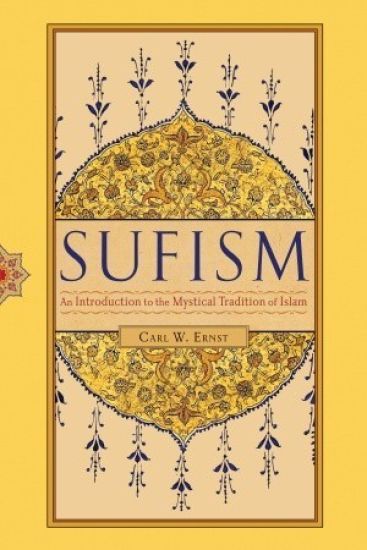
Sufism

Sufism

Carl W. Ernst

Shambhala Publications Inc
2011
pokkari
The Sufis are as diverse as the countries in which they've flourished--from Morocco to India to China--and as varied as their distinctive forms of art, music, poetry, and dance. They are said to represent the mystical heart of Islam, yet the term Sufism is notoriously difficult to define, as it means different things to different people both within and outside the tradition. With that fact in mind, Carl Ernst explores the broadest range of Sufi philosophies and practices to provide one of the most complete and comprehensive introductions to Sufism available in English. He traces the history of the movement from the earliest days of Islam to the present day, along the way examining its relationship to the larger world of Islam and its encounters with both fundamentalism and secularism in the modern world.
Constitutional History of Boston, Massachusetts. an Essay.

Constitutional History of Boston, Massachusetts. an Essay.

Carl W Ernst

British Library, Historical Print Editions
2011
pokkari
Title: Constitutional History of Boston, Massachusetts. An essay.Publisher: British Library, Historical Print EditionsThe British Library is the national library of the United Kingdom. It is one of the world's largest research libraries holding over 150 million items in all known languages and formats: books, journals, newspapers, sound recordings, patents, maps, stamps, prints and much more. Its collections include around 14 million books, along with substantial additional collections of manuscripts and historical items dating back as far as 300 BC.The GENERAL HISTORICAL collection includes books from the British Library digitised by Microsoft. This varied collection includes material that gives readers a 19th century view of the world. Topics include health, education, economics, agriculture, environment, technology, culture, politics, labour and industry, mining, penal policy, and social order. ++++The below data was compiled from various identification fields in the bibliographic record of this title. This data is provided as an additional tool in helping to insure edition identification: ++++ British Library Ernst, Carl W.; 1894] 173 p.; 8 . 10411.i.24.
Mohammed Folgen: Der Islam in Der Modernen Welt

Mohammed Folgen: Der Islam in Der Modernen Welt

Carl W. Ernst

Vandenhoeck Ruprecht
2007
nidottu
English summary: A thoughtful and finely balanced primer on contemporary Islam, Ernst's book introduces readers to the profound spiritual resources of Islam while clarifying diversity and debate within the tradition. German description: Fernab der Gefilde politischer Sensations- und islamwissenschaftlicher Expertenliteratur stellt Carl W. Ernst die Quellen islamischer Spiritualitat vor. Dabei wird die Vielfalt des Islam ebenso berucksichtigt wie das innerhalb der Tradition gefuhrte Gesprach. Der Autor beschreibt den Einfluss westlicher Definitionen von Religion und Fremdenhass auf die in Europa und Amerika dominierenden Bilder des Islam. Der Vergleich traditioneller und moderner religioser Strukturen scharft die Wahrnehmung von Hintergrunden extremistischer Bewegungen. Ein Uberblick zum kritischen islamischen Diskurs uber Themen wie Gender und Verschleierung, Politik und Naturwissenschaft und Religion beschlieat den Band.
Rethinking Islam in the Contemporary World

Rethinking Islam in the Contemporary World

Carl W. Ernst

Edinburgh University Press
2004
nidottu
Recipient of the 2004 Bashrahil Prize for Outstanding Cultural Achievement in the Humanities An introduction to Islam, today the faith of more than a billion people, set in the context of world history and of religious studies. Carl Ernst brings together Islamic religious thought and lived experience to examine traditional spirituality and the contentious issues confronting Muslims today. His approach is balanced - both sympathetic and critical. Besides providing a guide to the fundamental aspects of Islam - its sacred sources, ethical systems and spiritual practices - the author encourages the reader to reflect on these topics. This compact introduction appeals to all those who want to understand both the historical aspects of Islam as well as the place of Islam in the contemporary world. Features: *A critical perspective on Western attitudes toward Islam. *A clarification of the contemporary importance of Islam both in Euro-American and in Afro-Asiatic countries and a context for understanding extremist movements like fundamentalism. *Access to the voice of Muslims, through translations of texts into English. *An overview of the critical debates on such important contemporary issues as gender and veiling, state politics, and science and ethics.
Teachings of Sufism

Teachings of Sufism

Carl W. Ernst

Shambhala
1999
nidottu
The prose and verse readings in this book were chosen to interest the many people who have become attracted to Sufi teachings through their exposure to popular Sufi poetry, music, and dance. The selections--mostly from the Middle East and India, ranging from the tenth to the twentieth century--provide a sampling of Sufi thought on some of the basic aspects of this spiritual path. Most of the readings are published here in English for the first time. Brief introductory remarks place each selection into its historical and religious context, and an index of Qur'anic passages helps the reader to trace the extensive allusions to the Islamic holy scriptures. The topics covered include: - The nature of mystical love - Meditation - Listening to music as a spiritual practice - Ethical teachings of Sufism - Pitfalls on the spiritual path - Spiritual companionship and the master-disciple relationship - The importance of the Qur'an and the Prophet Muhammad - Biographical accounts of great mystics, including the poet Rumi as well as several female saints
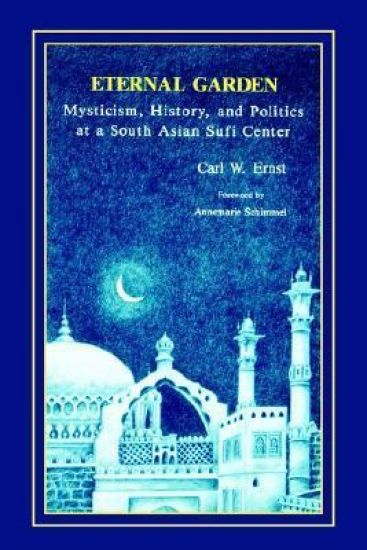
Eternal Garden

Eternal Garden

Carl W. Ernst

State University of New York Press
1992
pokkari
Reveals the mystical teachings and practices of the Chishti Sufi order as taught by the ecstatic Shaykh Burhan al-Din Gharib (d. 1337) and his disciples.Ernst's research, based on rare Persian manuscripts preserved in Sufi shrines in the medieval town of Khuldabad, a major center of pilgrimage in the Indian Deccan, reveals the mystical teachings and practices of the Chishti Sufi order as taught by the ecstatic Shaykh Burhan al-Din Gharib (d. 1337) and his disciples. The book clarifies the diverse historiographical approaches found in an array of narratives. It redefines major topics in the often emotionally charged study of religion and history in South Asia, and it raises provocative theses on much-argued topics such as the basis of Islamic political power in South Asia and the alleged roles of Sufis as warriors and missionaries.