Kirjojen hintavertailu. Mukana 12 390 323 kirjaa ja 12 kauppaa.
Kirjailija
Carlo Collodi
Kirjat ja teokset yhdessä paikassa: 239 kirjaa, julkaisuja vuosilta 1993-2028, suosituimpien joukossa Pinocchio. Vertaile teosten hintoja ja tarkista saatavuus suomalaisista kirjakaupoista.
Carlo Lorenzini nacque nel 1826 a Firenze in via Taddea. Il padre, Domenico Lorenzini, era cuoco, e la madre, Angiolina Orzali, lavorava come domestica a servizio dei marchesi Ginori, insieme al marito. Quest'ultima, figlia del fattore dei marchesi Garzoni Venturi era nata a Veneri, presso Collodi, il cui nome ispir lo pseudonimo che rese lo scrittore famoso in tutto il mondo. Pot studiare grazie all'aiuto della famiglia Ginori: il giovane Lorenzini fu infatti ospitato nel palazzo Ginori di via de' Rondinelli, sulla facciata del quale una targa ne ricorda la permanenza. Dal 1837 fino al 1842 entr in seminario a Colle di Val d'Elsa, per diventare prete e contemporaneamente ricevere un'istruzione. Fra il 1842 e il 1844 segu lezioni di retorica e filosofia a Firenze, presso un'altra scuola religiosa degli Scolopi
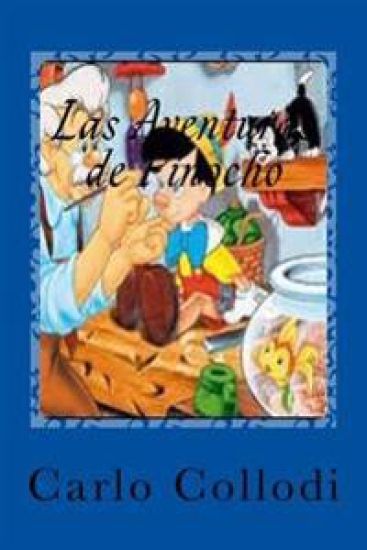
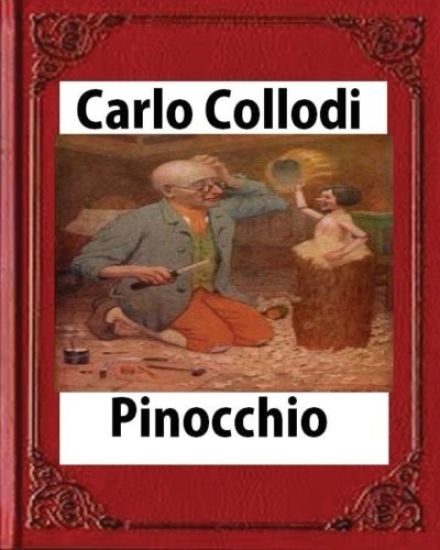
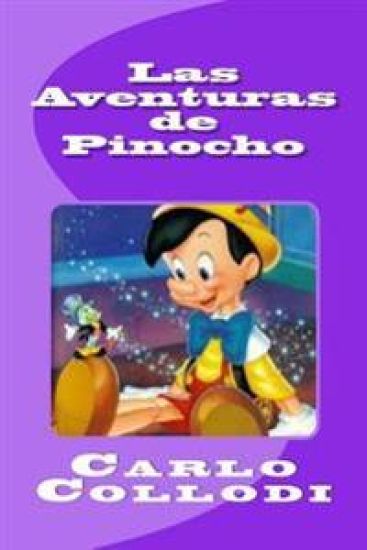
El carpintero Geppetto es un humilde hombre que siempre hab a deseado tener un hijo. Un buen d a se le ocurre la genial idea de tallar una marioneta de madera con la forma de un ni o de verdad. Antes de estar terminada, esta cobra vida inesperadamente y se convierte en un ni o travieso y desobediente al que Geppetto llama Pinocho.
Best way to learn Italian by readingDo you want to learn Italian with stories from Carlo Collodi, the author of Pinocchio? It's easy with Italian and interlinear English. 180+ pages with every word translated so you can keep on reading. This book contains fairy tales from the classic Italian author Carlo Collodi. We have added an interlinear translation to the Italian text. This means that the meaning of every Italian word is immediately accessible, which in turn will make it much easier for you to expand your Italian vocabulary fast. How to learn Italian fast and easyRead and re-read the stories to learn high frequency words without any effort. Then mark the words you don't know in your Kindle reader and revisit those every day until you memorized them. Now you read fluent intermediate Italian, and you can continue with the Italian Short Stories in Interlinear Italian to English format If you would like a pdf version of the book let us know. Also, audio is available as well, just contact us Finally, we have a HypLern Reader App on Amazon that integrates reading with word practice, for more learning options.
Pinocho (en italiano Pinocchio) es la marioneta de madera protagonista del libro "Las aventuras de Pinocho", escrito por Carlo Collodi, seud nimo de Carlo Lorenzini (Florencia 1826-1890), y publicado en un peri dico italiano entre 1882 y 1883, con los t tulos "Storia di un Burattino" ("Historia de un t tere") y "Le avventure di Pinocchio" ("Las aventuras de Pinocho'"), libro ilustrado por Enrico MazzanCarlo Lorenzini (Florencia, Italia, 24 de noviembre de 1826 - id. 26 de octubre de 1890), m s conocido como Carlo Collodi, o s lo Collodi, fue un periodista y escritor italiano, conocido especialmente por su novela Las aventuras de Pinocho.
Pinochios Äventyr är en illustrerad bok i serien Anpassade Berättelser. Den berättar om Pinocchios busiga eskapader, en levande marionett, och hans fattige far, en träsnidare vid namn Geppetto. Dock är inte Pinochios värld som en traditionell saga; istället skildrar den den hårda verkligheten att kämpa för att uppfylla grundläggande dagliga behov som mat och skydd.
A carpenter named Geppetto had a single, humble desire: to have a son. One day, he has a great idea and decides to carve a wooden puppet in the shape of a child. What surprises Geppetto is that the puppet comes to life and at times takes the form of a real child, who he names Pinocchio. Un carpintero llamado Geppetto ten a un nico y humilde deseo: tener un hijo. Un d a tiene una idea genial y decide tallar una marioneta de madera con la forma de un ni o. Lo sopresivo para Geppetto es que la marioneta cobra vida y en algunos momentos toma la forma de un ni o de verdad, al que su padre nombra Pinocho.
"Las aventuras de Pinocho" es una obra literaria escrita por el autor italiano Carlo Collodi. Fue publicado en Italia en el peri dico "Giornale per i bambini" desde 1882 hasta 1883, con los t tulos "Storia di un Burattino" ("Historia de un t tere"), y es una de las obras m s le das a nivel mundial. El libro consta de treinta cap tulos y comienza con el conocido " rase una vez...". Impregnado de invenci n y extraordinarios hallazgos, el libro dedica los dos primeros cap tulos a contarnos como fue el maestro Ciliegia (cereza por el color de su nariz), siendo carpintero encuentra un trozo de madera, destinado a la hoguera, pero que l tom para sacar la pata de una mesa. Cuando se dispuso a trabajar con sus herramientas observ c mo ese sencillo trozo de le a pose a vida, pues re a y lloraba como un ni o y de l sal a una sutil vocecilla que le dec a: "No me pegues tan fuerte", cuando el arremet a con sus herramientas de trabajo. "El maestro Ciliegia" regal el trozo de madera a su amigo Geppeto, que fabric con l un mu eco maravilloso, que sab a bailar, esgrimir y dar saltos mortales. Ah precisamente comienzan las aventuras. Sin haber terminado Geppeto los ojos y la boca, ya el mu eco comienza a decir versos, y dar sus primeros pasos; terminadas sus piernas, se dirige hacia la puerta de la calle y se marcha.
"The Adventures of Pinocchio" is a literary work written by Italian author Carlo Collodi. It was published in Italy in the newspaper "Giornale per i bambini" from 1882 to 1883, with the titles "Storia di un Burattino" "Story of a puppet"), and is one of the most widely read works worldwide. The book consists of thirty chapters and begins with the famous "once upon a time ...". Steeped in invention and extraordinary findings, the book devotes the first two chapters to tell us how was the master Ciliegia (Cherry by the color of his nose), being a carpenter is a piece of wood, for the stake, but he took to get the leg of a table. When I went to work with his tools he watched this simple piece of wood had life, then laughed and cried like a child and he was leaving a subtle voice that told him: "Do not hit me so hard," when lashed out with his tools of work. "The teacher Ciliegia" gave the piece of wood to his friend Geppetto, That made him a wonderful doll who could dance, brandish and turn somersaults. That is precisely the adventures begin. Geppetto finished without eyes and mouth, and the doll begins to tell verses, and take their first steps; He finished his legs, he goes to the front door and walks away. Pinocchio comes to time to become a real boy, of flesh and blood like other children. Start working to help Geppetto and, one day, saves his life until the turquoise fairy. The moralizing end: "What a fool I was while I was doll, and I am now happy to have become a good boy
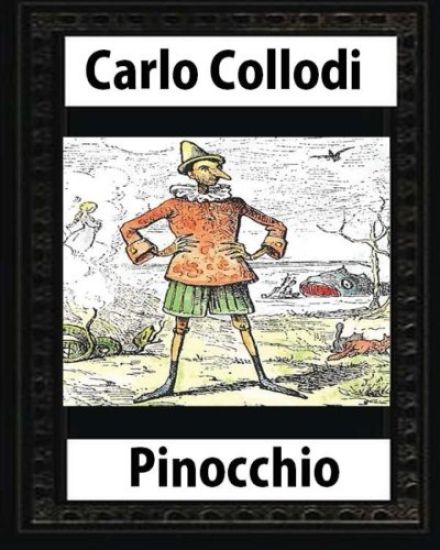
The Adventures of Pinocchio is a novel for children by Italian author Carlo Collodi, written in Pescia. The first half was originally a serial in 1881 and 1882, and then later completed as a book for children in February 1883. It is about the mischievous adventures of an animated marionette named Pinocchio and his father, a poor woodcarver named Geppetto. It is considered a canonical piece of children's literature and has inspired hundreds of new editions, stage plays, merchandising and movies, such as Walt Disney's iconic animated version and commonplace ideas such as a liar's long nose. According to extensive research done by the Fondazione Nazionale Carlo Collodi in late 1990s and based on UNESCO sources, it has been adapted in over 240 languages worldwide. That makes it among the most translated and widely read books ever written.The Adventures of Pinocchio is a story about an animated puppet, boys who turn into donkeys and other fairy tale devices. The setting of the story is the Tuscan area of Italy. It was a unique literary marriage of genres for its time. The story's Italian language is peppered with Florentine dialect features, such as the protagonist's Florentine name. In the 1850s, Collodi began to have a variety of both fiction and non-fiction books published. Once, he translated some French fairy-tales so well that he was asked whether he would like to write some of his own. In 1881, he sent a short episode in the life of a wooden puppet to a friend who edited a newspaper in Rome, wondering whether the editor would be interested in publishing this "bit of foolishness" in his children's section. The editor did, and the children loved it. The Adventures of Pinocchio were serialized in the paper in 1881-2, and then published in 1883 with huge success. In the original, serialized version, Pinocchio dies a gruesome death: hanged for his innumerable faults, at the end of Chapter 15. At the request of his editor, Collodi added chapters 16-36, in which the Fairy with Turquoise Hair (or "Blue Fairy", as the Disney version names her) rescues Pinocchio and eventually transforms him into a real boy, when he acquires a deeper understanding of himself, making the story more suitable for children. In the second half of the book, the maternal figure of the Blue-haired Fairy is the dominant character, versus the paternal figure of Geppetto in the first part. Children's literature was a new idea in Collodi's time, an innovation in the 19th century. Thus in content and style it was new and modern, opening the way to many writers of the following century.
The Adventures of Pinocchio" is a literary work written by Italian author Carlo Collodi. It was published in Italy in the newspaper "Giornale per i bambini" from 1882 to 1883, with the titles "Storia di un Burattino" ("Story of a puppet"), and is one of the most widely read works worldwide. The book consists of thirty chapters and begins with the famous "once upon a time ...". Steeped in invention and extraordinary findings, the book devotes the first two chapters to tell us how was the master Ciliegia (Cherry by the color of his nose), being a carpenter is a piece of wood, for the stake, but he took to get the leg of a table. When I went to work with his tools he watched this simple piece of wood had life, then laughed and cried like a child and he was leaving a subtle voice that told him: "Do not hit me so hard," when lashed out with his tools of work. "The teacher Ciliegia" gave the piece of wood to his friend Geppetto, That made him a wonderful doll who could dance, brandish and turn somersaults. That is precisely the adventures begin. Geppetto finished without eyes and mouth, and the doll begins to tell verses, and take their first steps; He finished his legs, he goes to the front door and walks away. Pinocchio comes to time to become a real boy, of flesh and blood like other children. Start working to help Geppetto and, one day, saves his life until the turquoise fairy. The moralizing end: "What a fool I was while I was doll, and I am now happy to have become a good boy "
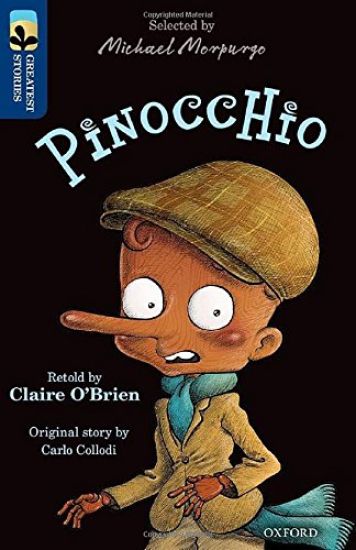
Geppetto the puppet-maker is overjoyed when he brings Pinocchio to life he has always wanted a son! But this little wooden boy is always getting himself into trouble with his bad decisions. Will he ever learn to use his brain and understand the difference between right and wrong? Carlo Collodi's original story is wonderfully retold complete with all its darkness and danger. TreeTops Greatest Stories offers children some of the worlds best-loved tales in a collection of timeless classics. Top children's authors and talented illustrators work together to bring to life our literary heritage for a new generation, engaging and delighting children. The books are carefully levelled, making it easy to match every child to the right book. Each book contains inside cover notes to help children explore the content, supporting their reading development. Teaching notes on Oxford Owl offer cross-curricular links and activities to support guided reading, writing, speaking and listening.
Pinocchio, the name a variant of common "pinolo" (pine seed), is a fictional character and the protagonist of the children's novel The Adventures of Pinocchio (1883) by Italian writer Carlo Collodi. Carved by a woodcarver named Geppetto in a small Italian village near Florence, he was created as a wooden puppet but dreamed of becoming a real boy. He has also been used as a character who is prone to telling lies and fabricating stories for various reasons.The story has appeared in many adaptations in other media.Pinocchio has been called an icon of modern culture and one of the most re-imagined characters in the pantheon of children's literature
Pinocchio, the name a variant of common "pinolo" (pine seed), is a fictional character and the protagonist of the children's novel The Adventures of Pinocchio (1883) by Italian writer Carlo Collodi. Carved by a woodcarver named Geppetto in a small Italian village near Florence, he was created as a wooden puppet but dreamed of becoming a real boy. He has also been used as a character who is prone to telling lies and fabricating stories for various reasons.The story has appeared in many adaptations in other media.Pinocchio has been called an icon of modern culture and one of the most re-imagined characters in the pantheon of children's literature
"Las aventuras de Pinocho" es una obra literaria escrita por el autor italiano Carlo Collodi. Fue publicado en Italia en el peri dico "Giornale per i bambini" desde 1882 hasta 1883, con los t tulos "Storia di un Burattino" ("Historia de un t tere"), y es una de las obras m s le das a nivel mundial. El libro consta de treinta cap tulos y comienza con el conocido " rase una vez...". Impregnado de invenci n y extraordinarios hallazgos, el libro dedica los dos primeros cap tulos a contarnos como fue el maestro Ciliegia (cereza por el color de su nariz), siendo carpintero encuentra un trozo de madera, destinado a la hoguera, pero que l tom para sacar la pata de una mesa.