Kirjojen hintavertailu. Mukana 12 390 323 kirjaa ja 12 kauppaa.

Kirjailija

Carlo Invernizzi Accetti

Kirjat ja teokset yhdessä paikassa: 3 kirjaa, julkaisuja vuosilta 2015-2021, suosituimpien joukossa Relativism and Religion. Vertaile teosten hintoja ja tarkista saatavuus suomalaisista kirjakaupoista.

3 kirjaa

Kirjojen julkaisuhaarukka 2015-2021.

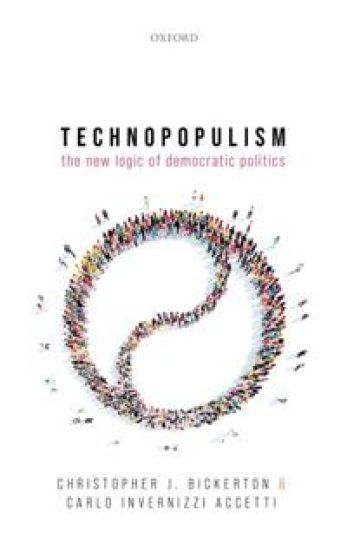
Technopopulism

Technopopulism

Christopher J. Bickerton; Carlo Invernizzi Accetti

Oxford University Press
2021
sidottu
Technocratic appeals to expertise and populist invocations of 'the people' have become mainstays of political competition in established democracies. This development is best understood as the emergence of technopopulism—a new political logic that is being superimposed on the traditional struggle between left and right. Political movements and actors—such as Italy's Five Star Movement and France's La Républiqe En Marche—combine technocratic and populist appeals in a variety of ways, as do more established parties that are adapting to the particular set of incentives and constraints implicit in this new, unmediated form of politics. In the first book-length treatment of the phenomenon of technopopulism, we combine theoretical and historical approaches, offering a systematic definition of the concept of technopopulism, while also exploring a number of salient contemporary examples. This book provides a detailed account of the emergence of this new political logic, as well as a discussion of its troubling consequences for existing democratic regimes. It ends by considering some possible remedies that go beyond the simplistic idea that in the right 'dose' populism and technocracy can counter-balance one another.
What is Christian Democracy?

What is Christian Democracy?

Carlo Invernizzi Accetti

Cambridge University Press
2019
sidottu
Christian Democratic actors and thinkers have been at the forefront of many of the twentieth century's key political battles - from the construction of the international human rights regime, through the process of European integration and the creation of postwar welfare regimes, to Latin American development policies during the Cold War. Yet their core ideas remain largely unknown, especially in the English-speaking world. Combining conceptual and historical approaches, Carlo Invernizzi Accetti traces the development of this ideology in the thought and writings of some of its key intellectual and political exponents, from the mid-nineteenth century to the present day. In so doing he sheds light on a number of important contemporary issues, from the question of the appropriate place of religion in presumptively 'secular' liberal-democratic regimes, to the normative resources available for building a political response to the recent rise of far-right populism.
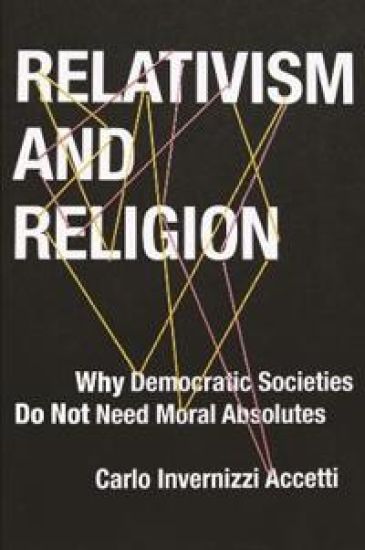
Relativism and Religion

Relativism and Religion

Carlo Invernizzi Accetti

Columbia University Press
2015
sidottu
Moral relativism is deeply troubling for those who believe that, without a set of moral absolutes, democratic societies will devolve into tyranny or totalitarianism. Engaging directly with this claim, Carlo Invernizzi Accetti traces the roots of contemporary anti-relativist fears to the antimodern rhetoric of the Catholic Church and then rescues a form of philosophical relativism for modern, pluralist societies, arguing that this viewpoint provides the firmest foundation for an allegiance to democracy. In his analyses of the relationship between religious arguments and political authority and the implications of philosophical relativism for democratic theory, Accetti makes a far-ranging contribution to contemporary debates over the revival of religion in politics and the conceptual grounds for a commitment to democracy. He presents the first comprehensive genealogy of anti-relativist discourse and reclaims for English-speaking readers the overlooked work of Hans Kelsen on the connection between relativism and democracy. By engaging with contemporary attempts to replace the religious foundation of democratic values with a neo-Kantian conception of reason, Accetti also makes a powerful case for relativism as the best basis for a civic ethos that integrates different perspectives into democratic politics.