Kirjojen hintavertailu. Mukana 12 595 353 kirjaa ja 12 kauppaa.

Kirjailija

Carlo Levi

Kirjat ja teokset yhdessä paikassa: 10 kirjaa, julkaisuja vuosilta 1984-2025, suosituimpien joukossa Christus kam nur bis Eboli. Vertaile teosten hintoja ja tarkista saatavuus suomalaisista kirjakaupoista.

10 kirjaa

Kirjojen julkaisuhaarukka 1984-2025.

Christus kam nur bis Eboli

Christus kam nur bis Eboli

Carlo Levi

dtv Verlagsgesellschaft
2003
pokkari
Die große literarische Dokumentation des italienischen Südens - ein Klassiker des italienischen Neorealismus. Lukanien, ganz unten am Stiefel. Dort, wo Eisenbahn und Straße die Küste von Salerno verlassen, liegt Eboli, und dahinter beginnt der Mezzogiorno, dessen Bewohner sagen: ?Wir sind keine Menschen, keine Christen, wir sind Tiere, denn Christus kam nur bis Eboli, aber nicht weiter, nicht zu uns.? In diese gottverlassene Gegend bringen im Spätsommer 1935 zwei Carabinieri den Turiner Arzt Carlo Levi. Er ist ein confinato politico, einer, den das Regime wegen seiner antifaschistischen Aktivitäten aus der Großstadt in die Verbannung schickt. Ernste und von Malaria ausgezehrte Gesichter blicken ihm entgegen. Die Kargheit der von der Zivilisation unberührten Landschaft findet Ausdruck in der resignativen Haltung der Bauern und ihrer Schicksalsergebenheit. Levi gewinnt jedoch die Zuneigung dieser Menschen, als er den anscheinend sinnlosen Kampf gegen die Malaria aufnimmt. In den zwei Jahren seines Zusammenlebens mit ihnen betreut der Arzt Levi die Kranken, der Schriftsteller und Maler in ihm porträtiert Jahre später die Landschaft und ihre Menschen: Eindringlich erfaßt Carlo Levi das archaische Leben im Mezzogiorno, den Alltag dieser Bauern, ihre Kümmernisse und Krankheiten, aber auch ihre Feste, ihre geheimen Hoffnungen und Wünsche. Doch nach seiner Abreise sinken die Menschen in ihr dumpfes Dasein zurück. ?Es regnet auf den, der schon naß ist?, sagt man in dieser Gegend.
Kristus stannade i Eboli

Kristus stannade i Eboli

Carlo Levi; Torbjörn Elensky

Modernista
2022
sidottu
En av 1900-talets stora memoarböcker»Carlo Levi skildrar vardagen och flera av byns invånare med djup respekt men också med ett mått av förtvivlan. Känslan av att aldrig riktigt kunna överbrygga skillnaderna, hur goda intentionerna än var, är ständigt närvarande i texten.« Betyg: 4 av 5 - Maria Hjort, BTJItalienaren Carlo Levi var läkare, konstnär och författare av judisk börd. Han var uttalad antifascist, vilket ledde till att Mussolinis regim förvisade honom till Luciana, en gudsförgäten del av södra Italien. Trots att han är politiskt utstött möts Levi av värme och gästfrihet i de byar han hamnar i - Grassano och Gagliano. Trakten är ytterst fattig: här finns bara en bil, och en toalett, man saknar de mest grundläggande förnödenheter och hänger sig åt en blandning av katolicism och mysticism. Malaria och vidskepelse härjar, borgmästaren missköter skolundervisningen och står hellre på balkongen och röker, måltiderna är påvra och består som regel av bröd, olja och tomat. Kristus stannade i Eboli är Carlo Levis myllrande berättelse om människorna och livsvillkoren han möter i sin exil under åren 1935-36, på en plats som Jesus, enligt myten, bara besökte helt kort - och sedan övergav. I svensk översättning av Karin De Laval och med ett nyskrivet förord av Torbjörn Elensky, författare och kritiker. CARLO LEVI föddes i Turin 1902, där han också studerade, och avled i Rom 1975. Han var aktiv kommunist, arresterades och förvisades av fascisterna på 1930-talet. Memoarboken Kristus stannade i Eboli publicerades 1945; dess djupt inkännande blick på människorna i södern bidrog till att lyfta deras umbäranden till en nationell angelägenhet under efterkrigstiden. Boken filmatiserades av Francesco Rosi 1979.
Christ Stopped at Eboli

Christ Stopped at Eboli

Carlo Levi

Picador USA
2020
nidottu
'There should be a history of this Italy, a history outside the framework of time, confining itself to that which is changeless and eternal, in other words, a mythology. This Italy has gone its way in darkness and silence, like the earth, in a sequence of recurrent seasons and recurrent misadventures. Every outside influence has broken over it like a wave, without leaving a trace.' So wrote Carlo Levi - doctor, painter, philosopher, and man of conscience - in describing the land and the people of Lucania, where he was banished in 1935, at the start of the Ethiopian war, because of his opposition to Fascism. In the south of Italy, Lucania was a barren land - a harsh white landscape largely stripped of trees - inhabited by peasants who lived the same lives their ancestors had, grimly coaxing a subsistence existence from the stony land and constantly fearing black magic and the near presence of death. In describing their lives and history, and in exploring their surroundings, Carlo Levi offered a starkly beautiful and deeply moving account of a place beyond hope and a people abandoned by history.
Fear of Freedom

Fear of Freedom

Carlo Levi

Columbia University Press
2008
pokkari
Carlo Levi was a painter, writer, and antifascist Italian from a Jewish family, and his political activism forced him into exile for most of the Second World War. While in exile, he wrote Christ Stopped at Eboli, a memoir, and Fear of Freedom, a philosophical meditation on humanity's flight from moral and spiritual autonomy and our resulting loss of self and creativity. Brooding on what surely appeared to be the decline, if not the fall of Europe, Levi locates the human abdication of responsibility in organized religion and its ability to turn the sacred into the sacrificial. In doing so, he references the entire intellectual and cultural estate of Western civilization, from the Bible and Greek mythology to Sigmund Freud and Carl Jung. This edition features newly published pieces of Levi's artwork and the first English translation of his essay "Fear of Painting," which was appended to a later publication of the work. It also includes an introduction that discusses Levi's life and enduring legacy. Written as war clouds were gathering over Europe, Fear of Freedom not only addresses a specific moment in history and a universal, timeless condition, but it is also a powerful indictment of our contemporary moral and political failures.
Fear of Freedom

Fear of Freedom

Carlo Levi

Columbia University Press
2008
sidottu
Carlo Levi was a painter, writer, and antifascist Italian from a Jewish family, and his political activism forced him into exile for most of the Second World War. While in exile, he wrote Christ Stopped at Eboli, a memoir, and Fear of Freedom, a philosophical meditation on humanity's flight from moral and spiritual autonomy and our resulting loss of self and creativity. Brooding on what surely appeared to be the decline, if not the fall of Europe, Levi locates the human abdication of responsibility in organized religion and its ability to turn the sacred into the sacrificial. In doing so, he references the entire intellectual and cultural estate of Western civilization, from the Bible and Greek mythology to Sigmund Freud and Carl Jung. This edition features newly published pieces of Levi's artwork and the first English translation of his essay "Fear of Painting," which was appended to a later publication of the work. It also includes an introduction that discusses Levi's life and enduring legacy. Written as war clouds were gathering over Europe, Fear of Freedom not only addresses a specific moment in history and a universal, timeless condition, but it is also a powerful indictment of our contemporary moral and political failures.
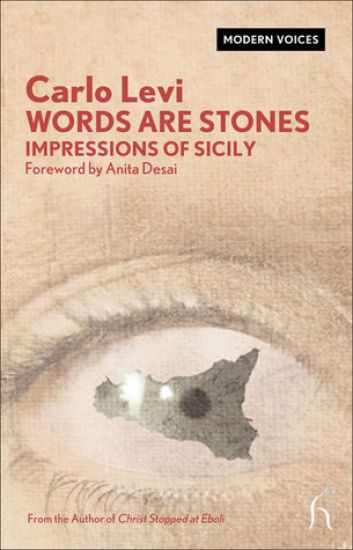
Words are Stones

Words are Stones

Carlo Levi; Anita Desai

Hesperus Press Ltd
2005
nidottu
Over the course of a number of years, Italian writer Carlo Levi made three separate journeys to Sicily. He went on to chronicle his travels, penning a number of short essays and capturing in miniature the essence of Sicilian life: its traditions, culture and breathtaking landscape. Bringing his writings together in one comprehensive volume - Words are Stones - Levi offers a rare and insightful glimpse into an island whose people, though marred by poverty and backwardness, retained a generosity and graciousness of spirit - even in the face of hardship, political upheaval and murder.
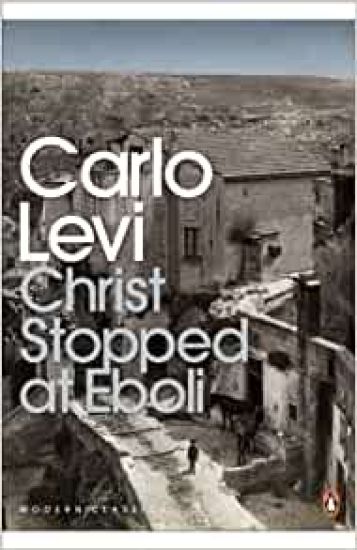
Christ Stopped at Eboli

Christ Stopped at Eboli

Carlo Levi

Penguin Classics
2000
pokkari
'We're not Christians, Christ stopped short of here, at Eboli.' Exiled to a remote and barren corner of Italy for his opposition to Mussolini, Carlo Levi entered a world cut off from history and the state, hedged in by custom and sorrow, without comfort or solace, where, eternally patient, the peasants lived in an age-old stillness and in the presence of death - for Christ did stop at Eboli.