Kirjojen hintavertailu. Mukana 12 390 323 kirjaa ja 12 kauppaa.

Kirjailija

Carlo Ratti

Kirjat ja teokset yhdessä paikassa: 7 kirjaa, julkaisuja vuosilta 2014-2026, suosituimpien joukossa How AI Sees the City. Vertaile teosten hintoja ja tarkista saatavuus suomalaisista kirjakaupoista.

7 kirjaa

Kirjojen julkaisuhaarukka 2014-2026.

How AI Sees the City

How AI Sees the City

Fábio Duarte; Martina Mazzarello; Fan Zhang; Carlo Ratti

TAYLOR FRANCIS LTD
2026
sidottu
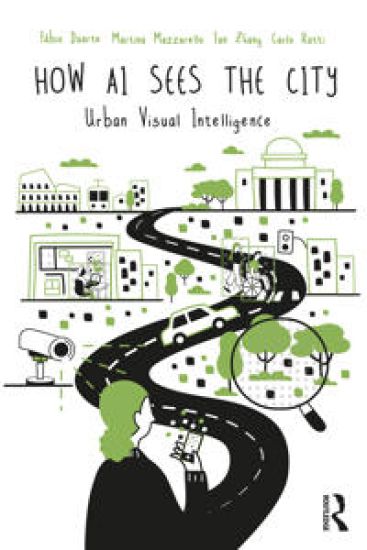
In an era where extreme amounts of data are produced daily, with the majority being visual content, cities have become vast repositories of digital imagery. From surveillance cameras to smartphone photos, satellite imagery to street-level captures, our urban environments are continuously documented through an unprecedented volume of visual data. This groundbreaking book examines how artificial intelligence (AI) is revolutionizing our understanding of cities, and presents a comprehensive framework for applying visual AI in urban contexts. The book traces the evolution of visual analysis in urban studies, from early photographic documentation to today's sophisticated AI-powered interpretations. Through detailed case studies from across the US, Stockholm, Amsterdam, Beijing, Dubai, Singapore, and more, it demonstrates how machine learning is unveiling new insights about urban patterns, human behavior, and social dynamics in cities. Chapters address critical concerns about surveillance, privacy, and algorithmic bias, offering a nuanced perspective on the ethical implications of urban visual intelligence. This book is essential for scholars and postgraduate students in urban planning, and landscape architecture, while also appealing to anyone interested in the future of cities and technology's role in understanding them.
How AI Sees the City

How AI Sees the City

Fábio Duarte; Martina Mazzarello; Fan Zhang; Carlo Ratti

TAYLOR FRANCIS LTD
2026
nidottu
In an era where extreme amounts of data are produced daily, with the majority being visual content, cities have become vast repositories of digital imagery. From surveillance cameras to smartphone photos, satellite imagery to street-level captures, our urban environments are continuously documented through an unprecedented volume of visual data. This groundbreaking book examines how artificial intelligence (AI) is revolutionizing our understanding of cities, and presents a comprehensive framework for applying visual AI in urban contexts. The book traces the evolution of visual analysis in urban studies, from early photographic documentation to today's sophisticated AI-powered interpretations. Through detailed case studies from across the US, Stockholm, Amsterdam, Beijing, Dubai, Singapore, and more, it demonstrates how machine learning is unveiling new insights about urban patterns, human behavior, and social dynamics in cities. Chapters address critical concerns about surveillance, privacy, and algorithmic bias, offering a nuanced perspective on the ethical implications of urban visual intelligence. This book is essential for scholars and postgraduate students in urban planning, and landscape architecture, while also appealing to anyone interested in the future of cities and technology's role in understanding them.
Waste Is Information

Waste Is Information

Dietmar Offenhuber; Carlo Ratti

MIT PRESS LTD
2023
pokkari
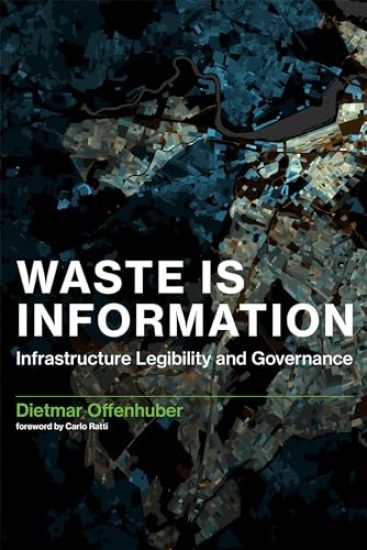
The relationship between infrastructure governance and the ways we read and represent waste systems, examined through three waste tracking and participatory sensing projects. Waste is material information. Landfills are detailed records of everyday consumption and behavior; much of what we know about the distant past we know from discarded objects unearthed by archaeologists and interpreted by historians. And yet the systems and infrastructures that process our waste often remain opaque. In this book, Dietmar Offenhuber examines waste from the perspective of information, considering emerging practices and technologies for making waste systems legible and how the resulting datasets and visualizations shape infrastructure governance. He does so by looking at three waste tracking and participatory sensing projects in Seattle, S o Paulo, and Boston. Offenhuber expands the notion of urban legibility--the idea that the city can be read like a text--to introduce the concept of infrastructure legibility. He argues that infrastructure governance is enacted through representations of the infrastructural system, and that these representations stem from the different stakeholders' interests, which drive their efforts to make the system legible. The Trash Track project in Seattle used sensor technology to map discarded items through the waste and recycling systems; the Forager project looked at the informal organization processes of waste pickers working for Brazilian recycling cooperatives; and mobile systems designed by the city of Boston allowed residents to report such infrastructure failures as potholes and garbage spills. Through these case studies, Offenhuber outlines an emerging paradigm of infrastructure governance based on a complex negotiation among users, technology, and the city.
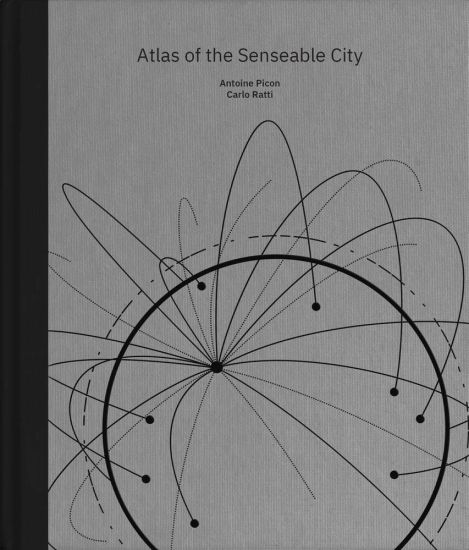
Atlas of the Senseable City

Atlas of the Senseable City

Antoine Picon; Carlo Ratti

YALE UNIVERSITY PRESS
2023
sidottu
A fascinating exploration of how the growth of digital mapping, spurred by sensing technologies, is affecting cities and daily lives What have smart technologies taught us about cities? What lessons can we learn from today’s urbanites to make better places to live? Antoine Picon and Carlo Ratti argue that the answers are in the maps we make. For centuries, we have relied on maps to navigate the enormity of the city. Now, as the physical world combines with the digital world, we need a new generation of maps to navigate the city of tomorrow. Pervasive sensors allow anyone to visualize cities in entirely new ways—ebbs and flows of pollution, traffic, and internet connectivity. This book explores how the growth of digital mapping, spurred by sensing technologies, is affecting cities and daily lives. It examines how new cartographic possibilities aid urban planners, technicians, politicians, and administrators; how digitally mapped cities could reveal ways to make cities smarter and more efficient; how monitoring urbanites has political and social repercussions; and how the proliferation of open-source maps and collaborative platforms can aid activists and vulnerable populations. With its beautiful, accessible presentation of cutting-edge research, this book makes it easy for readers to understand the stakes of the new information age—and appreciate the timeless power of the city.
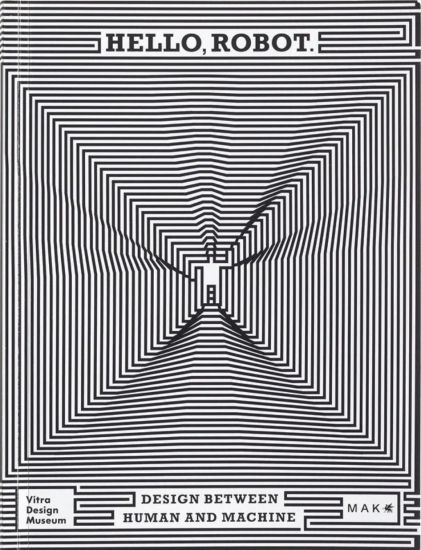
Hello, Robot

Hello, Robot

Mateo Kries; Christoph Thun-Hohenstein; Katrien Laporte; Hortensia Völckers; Alexander Farenholtz; Ulrich Spiesshofer; Ameile Klein; Marlies Wirth; Gesche Joost; Bruce Stirling; Fredo De Smet; Frauke Zeller; David Harris Smith; Thomas Geisler; Fiona Raby; Anthony Dunne; Carlo Ratti; Daniele Belleri; Rosi Braidotti; et al

Vitra Design Museum
2017
nidottu
Hello, Robot. Design Between Human and Machine investigates how robotics is becoming part of our everyday lives. The exhibitions shows that design in its traditional function as a mediator is indispensable if robots are to become a visible reality and not just remain hidden in washing machines, cars and cash machines. The volume clarifies where we already encounter these intelligent machines and where we may come across them in the near future: in industry, in the military and in everyday settings; at nurseries and retirement homes; in our bodies and in the cloud; when shopping and having sex; in video games and, of course, in film and literature. In a series of in-depth essays and interviews, experts such as the science fiction author Bruce Sterling and the design duo Dunne & Raby explore the question of how we deal with our environment becoming increasingly digital, smarter and more autonomous. They highlight our often ambivalent relationship to new technologies and discuss the opportunities and challenges that are posed to us as individuals and as a society in this context. In this regard, Hello, Robot. broadens the scope of the discussion to the ethical and political questions with which we are faced today in the light of technological advances in robotics, whilst confronting us with the contradictions that are often found in the answers to these questions.
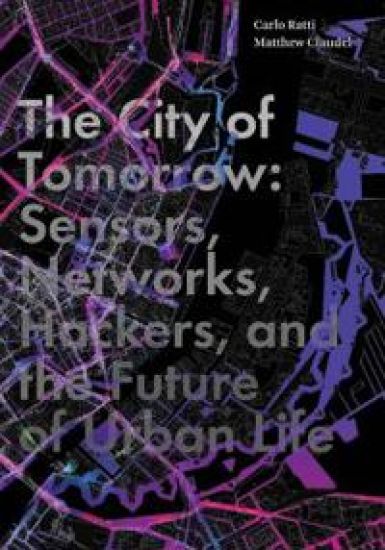
The City of Tomorrow

The City of Tomorrow

Carlo Ratti; Matthew Claudel

Yale University Press
2016
sidottu
An internationally renowned architect, urban planner, and scholar describes the major technological forces driving the future of cities Since cities emerged ten thousand years ago, they have become one of the most impressive artifacts of humanity. But their evolution has been anything but linear—cities have gone through moments of radical change, turning points that redefine their very essence. In this book, a renowned architect and urban planner who studies the intersection of cities and technology argues that we are in such a moment. The authors explain some of the forces behind urban change and offer new visions of the many possibilities for tomorrow’s city. Pervasive digital systems that layer our cities are transforming urban life. The authors provide a front-row seat to this change. Their work at the MIT Senseable City Laboratory allows experimentation and implementation of a variety of urban initiatives and concepts, from assistive condition-monitoring bicycles to trash with embedded tracking sensors, from mobility to energy, from participation to production. They call for a new approach to envisioning cities: futurecraft, a symbiotic development of urban ideas by designers and the public. With such participation, we can collectively imagine, examine, choose, and shape the most desirable future of our cities.
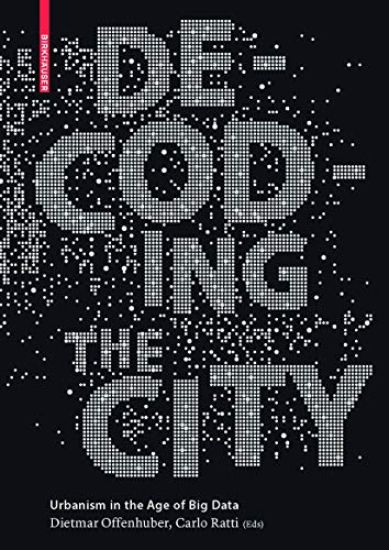
Decoding the City

Decoding the City

Dietmar Offenhuber; Carlo Ratti

Birkhauser
2014
sidottu
The MIT based SENSEable City Lab under Carlo Ratti is one of the research centers that deal with the flow of people and goods, but also of refuse that moves around the world. Experience with large-scale infrastructure projects suggest that more complex and above all flexible answers must be sought to questions of transportation or disposal. This edition, edited by Dietmar Offenhuber and Carlo Ratti, shows how Big Data change reality and, hence, the way we deal with the city. It discusses the impact of real-time data on architecture and urban planning, using examples developed in the SENSEable City Lab. They demonstrate how the Lab interprets digital data as material that can be used for the formulation of a different urban future. It also looks at the negative aspects of the city-related data acquisition and control. The authors address issues with which urban planning disciplines will work intensively in the future: questions that not only radically and critically review, but also change fundamentally, the existing tasks and how the professions view their own roles.