Kirjojen hintavertailu. Mukana 12 595 353 kirjaa ja 12 kauppaa.
Kirjailija
Carlo Salzani
Kirjat ja teokset yhdessä paikassa: 8 kirjaa, julkaisuja vuosilta 2008-2025, suosituimpien joukossa Gemälde 2018-2015. Vertaile teosten hintoja ja tarkista saatavuus suomalaisista kirjakaupoista.
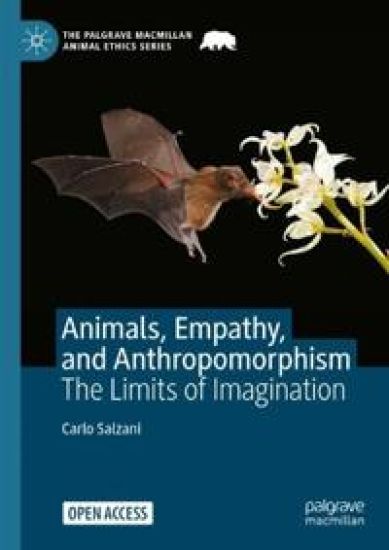
This open access book explores the role of imagination in animal ethics and its constitutive links to empathy/sympathy and anthropomorphism. The book argues for the constitutive role of imagination in ethical deliberation, but acknowledges that there exist important limits to its use. However, “limit” is here understood not merely negatively as restriction and insufficiency, but rather positively as “condition of possibility,” so what the book explores and analyses are the conditions for a positive and fruitful use of the imagination in ethics. The book uses as a “frame” the questions and issues raised in J.M. Coetzee’s The Lives of Animals to explore some central and salient themes.
L'IGNORANZA DEL POETA poesie 2018-1994. A cura, con un saggio e con una postfazione di Delfo Cecchi. Contributi di: Bartoccio, Cecchi, di Stefano, Jaeschke, Maggiani, Salzani. "Il poeta concepito o incarnato da Chiodo non un ignorante qualsiasi. Non solo non accetta che la sua ignoranza venga confusa con l'insipienza comune, ma soprattutto rivendica, in modo paradossale ma non certo insensato, una sorta di sguardo primigenio sull'Ignoranza come tale, una specie di privilegio non esoterico, ma neppure facilmente trasmissibile, di sceverare le diverse ignoranze, separando le buone dalle cattive, le fertili dalle infeconde. Ma, ancor pi , il poeta dirime, rettifica e focalizza (non in modo didascalico, ma propriamente poetico) l'ignoranza che compete alla sua materia, alla poesia stessa, con effetti notevoli per pi ragioni." tratto dalla postfazione di Delfo Cecchi.
DIE UNWISSENHEIT DER BILDER. Fotografien von Alessandro Chiodo: Portr ts und Stillleben. Herausgegeben von Larissa Ferro, Dieter Jaeschke, Carlo Salzani. BEITR GE VON (Die Reihenfolge folgt dem Erscheinen der Beitr ge im Text): Carlo Salzani, Larissa Ferro, Dieter Jaeschke, Teo Alexander Fabian.
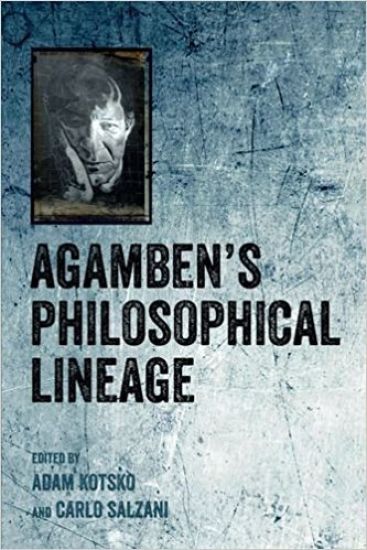
One of the greatest challenges Agamben presents to his readers is the vast and often bewildering range of sources he draws upon in his work. Looking at figures including Michel Foucault, St Paul, Nietzsche, the Marquis de Sade, Simone Weil and Hannah Arendt, this one-stop reference to Agamben's influences covers 30 thinkers: his primary interlocutors, his secondary references, and the figures who lurk in the background of his arguments without being directly mentioned.
One of the greatest challenges Agamben presents to his readers is the vast and often bewildering range of sources he draws upon in his work. Looking at figures including Michel Foucault, St Paul, Nietzsche, the Marquis de Sade, Simone Weil and Hannah Arendt, this one-stop reference to Agamben's influences covers 30 thinkers: his primary interlocutors, his secondary references, and the figures who lurk in the background of his arguments without being directly mentioned.
L'Uomo senza qualita di Robert Musil si muove in modo costante tra i due poli di crisi e possibilita. Questo studio analizza tre categorie, assi portanti della modernita, che nel romanzo illustrano questo movimento dialettico: il Soggetto, lo Stato, la Storia. Con feroce ironia Musil mostra il tramonto di queste categorie e ne rivela la decomposizione, ma al tempo stesso cerca una via d'uscita per rifondare l'essenza, la socialita e la temporalita dell'agire umano. Il soggetto cartesiano, "forte", "sovrano" ed autocentrato, si sfalda; e tuttavia il romanzo cerca di scovare le possibilita di una sua rifondazione utopica nello spazio lasciato libero dalla sua dissoluzione. Nell'Impero austro-ungarico, lo Stato come identita sovrana e fondante viene meno; ma la Cacania musiliana, presentando l'esasperazione della crisi delle categorie tradizionali della modernita, e il terreno di sperimentazione piu adatto per nuove possibilita. La causalita e la finalita del processo storico si frantumano; ma la tensione utopica che anima la ricerca di Musil lo porta a tentare di "reinventare" la storia su modelli diversi ed eterogenei. L'Utopia e infatti la categoria portante del romanzo e guida tutta la pars construens della filosofia musiliana: Musil non si accontenta di descrivere ed analizzare la crisi ed il tramonto di un mondo, ma propone sempre un suo superamento.
How to read Walter Benjamin today? This book argues that the proper way is through an approach which recognizes and respects his own peculiar theorization of the act of reading and the politics of interpretation that this entails. The approach must be figural, that is, focused on images, and driven by the notion of actualization. Figural reading, in the very sui generis Benjaminian way, understands figures as constellations, whereby an image of the past juxtaposes them with an image of the present and is thus actualized. To apply this method to Benjamin’s own work means first to identify some figures. The book singles out the Flâneur, the Detective, the Prostitute and the Ragpicker, and then sets them alongside a contemporary account of the same figure: the Flâneur in Juan Goytisolo’s Landscapes after the Battle (1982), the Detective in Paul Auster’s New York Trilogy (1987), the Prostitute in Dacia Maraini’s Dialogue between a Prostitute and her Client (1973), and the Ragpicker in Mudrooroo’s The Mudrooroo/Müller Project (1993). The book thereby, on the one hand, analyses the politics of reading Benjamin today and, on the other, sets his work against a variety of contemporary aesthetics and politics of interpretation.