
Kirjailija
Carlos Berenguer
Kirjat ja teokset yhdessä paikassa: 30 kirjaa, julkaisuja vuosilta 2016-2024, suosituimpien joukossa Huella Estadounidense en Cuba. Vertaile teosten hintoja ja tarkista saatavuus suomalaisista kirjakaupoista.
30 kirjaa
Kirjojen julkaisuhaarukka 2016-2024.
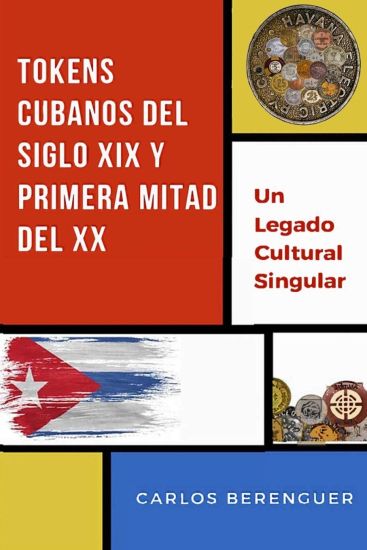
Tokens Cubanos del Siglo XIX Y Primera Mitad del XX: (Color) Un legado Cultural Singular
Carlos Berenguer
Independently Published
2019
nidottu
Durante el dominio espa ol en la Isla de Cuba, llamada en aquellos tiempos "La siempre fiel Isla de Cuba", los pagos, ya sean por transacciones comerciales, consumo de productos, servicios o simplemente por honrar un o el medio Real de plata, que honraba su denominaci n, en funci n de su valor material espec fico, ya que en general estaban confeccionadas con metales preciosos, oro, plata, etc.El costo de la elaboraci n de estas monedas era alto y los materiales preciosos que se necesitaban eran escasos, fue por esa raz n que se elaboraron monedas con materiales de inferior valor como bronce, cobre, aluminio, n quel o lat n para denominaciones de menor denominaci n. Algunos due os de Ingenios azucareros, colonos, comerciantes, etc. decidieron acu ar sus propias monedas, estableciendo en sus entornos una manera viable de pagar y ser pagado. Realmente, hasta dondese conoce, fueron pocos los que emitieron sus propias monedas, esos tokens o fichas, que, aunque hoy se han convertido en una curiosidad numism tica, en sus tiempos sirvieron como moneda fiduciaria y modo de intercambio, hoy son unas piezas verdaderamente raras y dif cil de encontrar. Al lograr el fraccionamiento de los valores, mejor el sistema de pagos e intercambio, a esas monedas de bajo valor seles conoc a como calderilla. Sin duda, las fichas o tokens de la industria azucareracubana son el rengl n m s importante de esta historia.Este sistema se generaliz y sobrepas los l mites de los Centrales azucareros, se emitieron Tokens en cosechadoras, recogida de productos, tiendas, transportes, como premios e incentivos o simplemente como propaganda, que variaban desde un jornal, medio jornal, un matul de tabaco recogido, un trago en una cantina, un pasaje en un carruaje o una lancha al vapor o una simple entrada a alg n evento, etc. Suvalor era siempre local, solo en algunas excepciones eran redimibles en moneda corriente legitima, aunque se conoce que eran motivo de especulaci n, ofreciendoen ocasiones el cambio con descuentos y aprovech ndose de necesidades para obtenerlas a un precio inferior a su valor real. De una manera u otra este tipo de moneda fiduciaria circul en Cuba en m ltiples variantes hasta que el gobierno del Mayor General Jos Miguel G mez solicito legislar sobre la prohibici n de talm todo, fue entrada la d cada del 30 que su uso fue declarado ilegal en la Isla. No obstante, su prohibici n algunas de ellas continuaron en circulaci n por muchos a os, en ocasiones sin nombre, solo alg n troquelado que las identificase por los due os, sin permitir ser detectadas por las autoridades.
Tokens Cubanos del Siglo XIX Y Primera Mitad del XX: (B&W) Un legado Cultural Singular
Carlos Berenguer
Independently Published
2019
nidottu
Durante el dominio espa ol en la Isla de Cuba, llamada en aquellos tiempos "La siempre fiel Isla de Cuba", los pagos, ya sean por transacciones comerciales, consumo de productos, servicios o simplemente por honrar un o el medio Real de plata, que honraba su denominaci n, en funci n de su valor material espec fico, ya que en general estaban confeccionadas con metales preciosos, oro, plata, etc.El costo de la elaboraci n de estas monedas era alto y los materiales preciosos que se necesitaban eran escasos, fue por esa raz n que se elaboraron monedas con materiales de inferior valor como bronce, cobre, aluminio, n quel o lat n para denominaciones de menor denominaci n. Algunos due os de Ingenios azucareros, colonos, comerciantes, etc. decidieron acu ar sus propias monedas, estableciendo en sus entornos una manera viable de pagar y ser pagado. Realmente, hasta dondese conoce, fueron pocos los que emitieron sus propias monedas, esos tokens o fichas, que, aunque hoy se han convertido en una curiosidad numism tica, en sus tiempos sirvieron como moneda fiduciaria y modo de intercambio, hoy son unas piezas verdaderamente raras y dif cil de encontrar. Al lograr el fraccionamiento de los valores, mejor el sistema de pagos e intercambio, a esas monedas de bajo valor seles conoc a como calderilla. Sin duda, las fichas o tokens de la industria azucareracubana son el rengl n m s importante de esta historia.Este sistema se generaliz y sobrepas los l mites de los Centrales azucareros, se emitieron Tokens en cosechadoras, recogida de productos, tiendas, transportes, como premios e incentivos o simplemente como propaganda, que variaban desde un jornal, medio jornal, un matul de tabaco recogido, un trago en una cantina, un pasaje en un carruaje o una lancha al vapor o una simple entrada a alg n evento, etc. Suvalor era siempre local, solo en algunas excepciones eran redimibles en moneda corriente legitima, aunque se conoce que eran motivo de especulaci n, ofreciendoen ocasiones el cambio con descuentos y aprovech ndose de necesidades para obtenerlas a un precio inferior a su valor real. De una manera u otra este tipo de moneda fiduciaria circul en Cuba en m ltiples variantes hasta que el gobierno del Mayor General Jos Miguel G mez solicito legislar sobre la prohibici n de talm todo, fue entrada la d cada del 30 que su uso fue declarado ilegal en la Isla. No obstante, su prohibici n algunas de ellas continuaron en circulaci n por muchos a os, en ocasiones sin nombre, solo alg n troquelado que las identificase por los due os, sin permitir ser detectadas por las autoridades.

Cuban Tokens of the XIX and Early XX Centuries: (B&W) A Unique Cultural Legacy
Carlos Berenguer
Independently Published
2019
nidottu
During the Spanish rule in the Island of Cuba, called in those times "The always faithful Island of Cuba", payments, whether for commercial transactions, consumption of products, services or simply for honoring one or the Real means of silver, that honored its denomination, depending on its specific material value, since in general they were made with precious metals, gold, silver, etc.The cost of making these coins was high and the precious materials that were needed were scarce, it was for this reason that coins were made with lower value materials such as bronze, copper, aluminum, nickel or brass for denominations of less denomination. Some owners of sugar mills, settlers, merchants, etc. They decided to coin their own coins, establishing in their environments a viable way to pay and be paid. Really, as far asIt is known, there were few who issued their own coins, those tokens or tokens, which, although today they have become a numismatic curiosity, in their time they served as fiat currency and mode of exchange, today they are truly rare and difficult pieces of find. By achieving the fractionation of the securities, the payment and exchange system improved, to those low value currenciesI knew them as calderilla. Without a doubt, the chips or tokens of the sugar industryCuban women are the most important line in this story.This system was generalized and exceeded the limits of the Sugar Centrals, Tokens were issued in harvesters, product collection, stores, transport, as prizes and incentives or simply as propaganda, which varied from a daily wage, half a journal, a matul of collected tobacco, a drink in a canteen, a passage in a carriage or a steamboat or a simple entrance to an event, etc. itsvalue was always local, only in some exceptions were they redeemable in legitimate current currency, although it is known that they were cause for speculation, offeringSometimes the change with discounts and taking advantage of needs to obtain them at a price lower than their real value. In one way or another this type of fiat currency circulated in Cuba in multiple variants until the government of Major General Jos Miguel G mez asked to legislate on the prohibition of suchmethod, it was entered the decade of the 30 that its use was declared illegal in the Island. Nevertheless, its prohibition some of them continued in circulation for many years, sometimes without name, only some die cut that identified them by the owners, without allowing Be detected by the authorities.
Cuban Tokens of the XIX and Early XX Centuries: (Color) A Unique Cultural Legacy
Carlos Berenguer
Independently Published
2019
nidottu
During the Spanish rule in the Island of Cuba, called in those times "The always faithful Island of Cuba", payments, whether for commercial transactions, consumption of products, services or simply for honoring one or the Real means of silver, that honored its denomination, depending on its specific material value, since in general they were made with precious metals, gold, silver, etc.The cost of making these coins was high and the precious materials that were needed were scarce, it was for this reason that coins were made with lower value materials such as bronze, copper, aluminum, nickel or brass for denominations of less denomination. Some owners of sugar mills, settlers, merchants, etc. They decided to coin their own coins, establishing in their environments a viable way to pay and be paid. Really, as far asIt is known, there were few who issued their own coins, those tokens or tokens, which, although today they have become a numismatic curiosity, in their time they served as fiat currency and mode of exchange, today they are truly rare and difficult pieces of find. By achieving the fractionation of the securities, the payment and exchange system improved, to those low value currenciesI knew them as calderilla. Without a doubt, the chips or tokens of the sugar industryCuban women are the most important line in this story.This system was generalized and exceeded the limits of the Sugar Centrals, Tokens were issued in harvesters, product collection, stores, transport, as prizes and incentives or simply as propaganda, which varied from a daily wage, half a journal, a matul of collected tobacco, a drink in a canteen, a passage in a carriage or a steamboat or a simple entrance to an event, etc. itsvalue was always local, only in some exceptions were they redeemable in legitimate current currency, although it is known that they were cause for speculation, offeringSometimes the change with discounts and taking advantage of needs to obtain them at a price lower than their real value. In one way or another this type of fiat currency circulated in Cuba in multiple variants until the government of Major General Jos Miguel G mez asked to legislate on the prohibition of suchmethod, it was entered the decade of the 30 that its use was declared illegal in the Island. Nevertheless, its prohibition some of them continued in circulation for many years, sometimes without name, only some die cut that identified them by the owners, without allowing Be detected by the authorities.
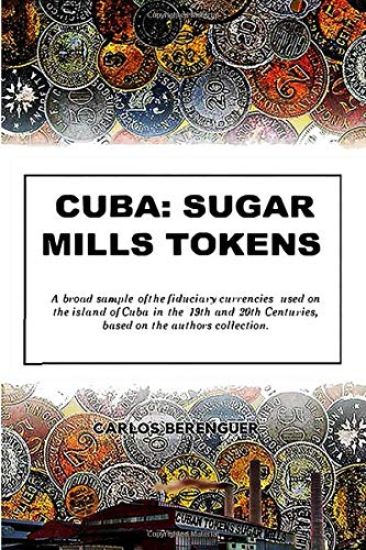
Cuba: SUGAR MILLS TOKENS: (Color) A broad sample of the fiduciary currencies used on the island of Cuba in the 19th and 20th
Carlos Berenguer
Independently Published
2019
nidottu
At the time of the Spanish rule on the Island of Cuba, then so-called "the ever faithful Island of Cuba", payments, whether they were financial transactions, consumption of goods, services or simply to honor an agreement, were made in strong currency, Spanish currency for the most part, the Real de Vell n1 or the medio Real de plata2, which honored its denomination on the basis of its specific material value, since they were mostly made of precious metals, gold, silver, etc. The cost of producing these coins was high and the amount of precious materials needed was scarce; that is why coins were made of materials of inferior value such as bronze, copper, aluminum, nickel or brass for denominations of a lower value, but even so, it was common for there to be a shortage of coins. They were not enough if we consider that the island was enjoying an economic boom at the time. Another factor was the necessary fragmentation of the coins and their values, very often those of a lesser denomination surpassed the value of articles or services that were cheaper. Consequently, in extreme cases, the coin was even physically cut in half, quarters or bits, since it was very difficult to make convenient payments for goods or services whose value did not reach that of the coin per se. These coins that had been divided into halves or bits were referred to as Macuquinas. This situation hindered financial transactions and became an obstacle for the development of the Island's economy. To illustrate this idea with an example, a gold peso coin, did it have enough intrinsic value to buy a cow? So how was it possible then to pay for a chicken? Or for a few eggs? Without the availability of enough lower denominations, it was a dilemma. Before the private coins or tokens (sometimes called pseudo-coins or chips) were made, some merchants accepted coins in circulation and because they had a greater value than that of the item purchased, storekeepers would give their change in pieces of brass, tin, or any other metal with die markings that had little or no ornamental or manufacturing rigor, and thus they gave credit for the difference between the cost of the product and the coin that had been handed over. The concept of fiduciary currency is not very far from what was known in those years as Fichas or Tokens, nor from the cryptocurrencies of today, which are nothing but high-tech Tokens. It was necessary to create equivalent coins, without any intrinsic value, made of materials that did not cover its actual value, but guaranteed an agreement, a payment, but not with precious materials but based on the trust and honesty of he who issued them. Just like the dollar today is nothing but a simple piece of paper, and its value is reflected in the trust of US economic and productive power applying the concept of inorganic or fiduciary currency, by 1600 Cromwell's government was already applying it in England with the use of Tokens. The Spanish government was no stranger to the need for fractional currency and in 1833, they began to send to the island copper coins of a lower value, 5 and 10 centimes, and they were referred to as perras chicas and perras gordas3, respectively. But not even so were they able to properly meet the need for fractional coins. Without a doubt, the Cuban sugar industry tokens are the most important items in this story, nevertheless, we present a large number of equally interesting tokens.

Cuba: SUGAR MILLS TOKENS: (B&W) A broad sample of the fiduciary currencies used on the island of Cuba in the 19th and 20th C
Carlos Berenguer
Independently Published
2019
nidottu
At the time of the Spanish rule on the Island of Cuba, then so-called "the ever faithful Island of Cuba", payments, whether they were financial transactions, consumption of goods, services or simply to honor an agreement, were made in strong currency, Spanish currency for the most part, the Real de Vell n1 or the medio Real de plata2, which honored its denomination on the basis of its specific material value, since they were mostly made of precious metals, gold, silver, etc. The cost of producing these coins was high and the amount of precious materials needed was scarce; that is why coins were made of materials of inferior value such as bronze, copper, aluminum, nickel or brass for denominations of a lower value, but even so, it was common for there to be a shortage of coins. They were not enough if we consider that the island was enjoying an economic boom at the time. Another factor was the necessary fragmentation of the coins and their values, very often those of a lesser denomination surpassed the value of articles or services that were cheaper. Consequently, in extreme cases, the coin was even physically cut in half, quarters or bits, since it was very difficult to make convenient payments for goods or services whose value did not reach that of the coin per se. These coins that had been divided into halves or bits were referred to as Macuquinas. This situation hindered financial transactions and became an obstacle for the development of the Island's economy. To illustrate this idea with an example, a gold peso coin, did it have enough intrinsic value to buy a cow? So how was it possible then to pay for a chicken? Or for a few eggs? Without the availability of enough lower denominations, it was a dilemma. Before the private coins or tokens (sometimes called pseudo-coins or chips) were made, some merchants accepted coins in circulation and because they had a greater value than that of the item purchased, storekeepers would give their change in pieces of brass, tin, or any other metal with die markings that had little or no ornamental or manufacturing rigor, and thus they gave credit for the difference between the cost of the product and the coin that had been handed over. The concept of fiduciary currency is not very far from what was known in those years as Fichas or Tokens, nor from the cryptocurrencies of today, which are nothing but high-tech Tokens. It was necessary to create equivalent coins, without any intrinsic value, made of materials that did not cover its actual value, but guaranteed an agreement, a payment, but not with precious materials but based on the trust and honesty of he who issued them. Just like the dollar today is nothing but a simple piece of paper, and its value is reflected in the trust of US economic and productive power applying the concept of inorganic or fiduciary currency, by 1600 Cromwell's government was already applying it in England with the use of Tokens. The Spanish government was no stranger to the need for fractional currency and in 1833, they began to send to the island copper coins of a lower value, 5 and 10 centimes, and they were referred to as perras chicas and perras gordas3, respectively. But not even so were they able to properly meet the need for fractional coins. Without a doubt, the Cuban sugar industry tokens are the most important items in this story, nevertheless, we present a large number of equally interesting tokens. ............
Memorabilia: TOKENS: Una amplia muestra, de las monedas fiduciarias, usadas en la Isla de Cuba en el siglo XIX y XX, basada en la colección del autor.
Carlos Berenguer
Independently Published
2019
nidottu
Memorabilia: TOKENS: Una amplia muestra, de las monedas fiduciarias, usadas en la Isla de Cuba en el siglo XIX y XX, basada en la coleccion del autor.
Carlos Berenguer
Independently Published
2019
nidottu
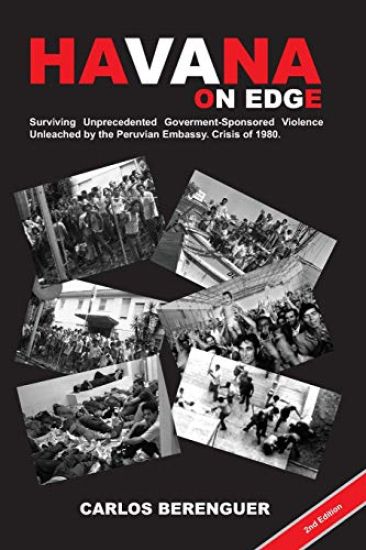
HAVANA on Edge: (Color2Ed). Surviving Unprecedented Government-Sponsored Violence Unleached on the Peruvian Embassy. Crisis of 1980.
Carlos Berenguer
Independently Published
2019
nidottu

HAVANA on Edge: (B&W2Ed). Surviving Unprecedented Government-Sponsored Violence Unleached on the Peruvian Embassy. Crisis of 1980.
Carlos Berenguer
Independently Published
2019
nidottu

Forex Technical Analysis: (b&w) English Edition
Carlos Berenguer
Independently Published
2019
nidottu
A book that offers what is necessary to enter the FOREX, a market that moves more than three trillion dollars each day. Explains step by step the main aspects of the technical analysis of the market. Written in a simple and easy way, without the secrets previously reserved by the big institutions. In these pages you will find a starting point towards a successful future.
Forex Technical Analysis: (color) English Version
Carlos Berenguer
Independently Published
2019
nidottu
A book that offers what is necessary to enter the FOREX, a market that moves more than three trillion dollars each day. Explains step by step the main aspects of the technical analysis of the market. Written in a simple and easy way, without the secrets previously reserved by the big institutions. In these pages you will find a starting point towards a successful future.
Penny Stocks. Análisis Técnico: Elementos Básicos Que Debemos Comprender, Para Incursionar de Manera Exitosa, En El Mundo de Los Penny Stocks, Mediant
Carlos Berenguer
Independently Published
2019
nidottu
Elementos b sicos que debemos comprender, para incursionar de manera exitosa, en el mundo de los PENNY STOCKS, mediante lo que nos ofrece el an lisis fundamental y usando a nuestro favor, el an lisis t cnico

Un libro ameno acerca del Forex y la importancia de los An lisis T cnicos para incursionar en este fabuloso mercado. Escrito para que se entienda, utilizando el espa ol, pero respetando los vocablos m s significativos en ambos idiomas. En este trabajo est n contemplados los elementos b sicos, sin los cuales no se puede ser parte de este fabuloso mercado, que mueve m s de tres trillones de d lares l d a.

Un libro ameno acerca del Forex y la importancia de los An lisis T cnicos para incursionar en este fabuloso mercado. Escrito para que se entienda, utilizando el espa ol, pero respetando los vocablos m s significativos en ambos idiomas. En este trabajo est n contemplados los elementos b sicos, sin los cuales no se puede ser parte de este fabuloso mercado, que mueve m s de tres trillones de d lares l d a.
Penny Stocks. Análisis Técnico: Elementos Básicos Que Debemos Comprender, Para Incursionar de Manera Exitosa, En El Mundo de Los Penny Stocks, Mediant
Carlos Berenguer
Independently Published
2019
nidottu
Elementos b sicos que debemos comprender, para incursionar de manera exitosa, en el mundo de los PENNY STOCKS, mediante lo que nos ofrece el an lisis fundamental y usando a nuestro favor, el an lisis t cnico
Diccionario Ilustrado Para Forex: (b&w) Con Los Terminos Mas Usados En El Comercio de Divisas
Carlos Berenguer
Independently Published
2019
nidottu
Diccionario Espa ol e Ingl s de los t rminos mas usados en el mercado de divisas Forex.
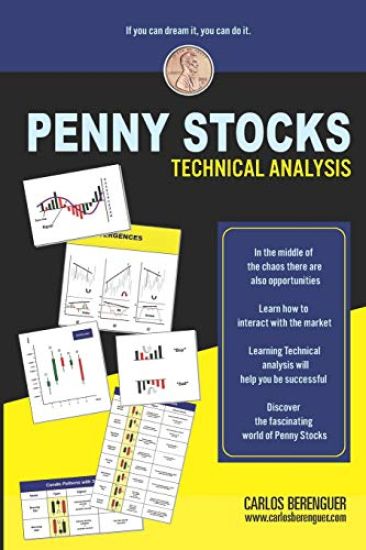
A book with the basic elements necessary to enter the fascinating world of the Penny Stocks. It is presented in a colloquial way, without secrets, with elements within reach of all those interested in a serious way in this market. It shows you step by step how to start, how to choose, how to trade in a way closer to success than failure. Hands on, let's start as soon as possible.
A book with the basic elements necessary to enter the fascinating world of the Penny Stocks. It is presented in a colloquial way, without secrets, with elements within reach of all those interested in a serious way in this market. It shows you step by step how to start, how to choose, how to trade in a way closer to success than failure. Hands on, let's start as soon as possible.