Kirjojen hintavertailu. Mukana 12 657 676 kirjaa ja 12 kauppaa.

Kirjailija

Carlos Muñoz

Kirjat ja teokset yhdessä paikassa: 7 kirjaa, julkaisuja vuosilta 2006-2023, suosituimpien joukossa The Global Imagination Of 1968. Vertaile teosten hintoja ja tarkista saatavuus suomalaisista kirjakaupoista.

Mukana myös kirjoitusasut: Carlos Munoz

7 kirjaa

Kirjojen julkaisuhaarukka 2006-2023.

Victory Is in the Struggle

Victory Is in the Struggle

Carlos Muñoz

Eastwind Books of Berkeley
2023
pokkari
Personal memoir of Chicano educator and social justice activist Dr. Carlos Mu oz, Jr. He was born in the "segundo barrio" in El Paso, Texas, and raised in the barrios of East Los Angeles, California. He is the son of poor working class Mexican immigrants. He earned his AA from Los Angeles City Community College, his BA with honors in Political Science from California State University at Los Angeles and his PhD in Government from the Claremont Graduate University. He is Professor Emeritus in the Department of Ethnic Studies and Adjunct Faculty, Center for Latin American Studies, University of California, Berkeley. After 47 years of teaching in higher education, he has gained international prominence as political scientist, historian, journalist, and public intellectual.
100 preguntas para todo emprendedor / 100 Questions for Every Entrepreneur
Con este libro Master Mu oz quiere ayudarte a escribir la primera hoja de tu vida como emprendedor y darte el arranque para alcanzar la libertad suprema. Su primera ense anza es: El hecho de cuestionar es el verdadero punto de partida de la innovaci n y del crecimiento. La respuesta principal que vienes a buscar en este libro, la de c mo llegar a la libertad a trav s del emprendimiento, se resuelve de forma muy sencilla: haz m s preguntas. Parece algo dif cil, pero s que puedo guiarte. Lo digo porque no soy de sangre azul. No hered millones para fundar mi empresa anterior. Soy como t , arranqu de cero, con los mismos miedos, preguntas, limitaciones que has sentido y quiz s sigas sintiendo. La diferencia es que encontr varios atajos y respuestras que hoy - despu s de hablar con cientos de emprendedores - s que no a todos. Sobre esas respuestas hablar en las siguientes p ginas.. Master Mu oz. ENGLISH DESCRIPTION With this book, Master Mu oz wants to help you write the first page of your life as an entrepreneur and give you a head start at achieving ultimate freedom. His first teaching is: Questioning is the true starting point for innovation and growth. The main answer you are looking for in this book, that of how to attain freedom through entrepreneurship, is solved very simply: ask more questions. It seems somewhat difficult, but I know I can guide you. I say this because I am not blue-blooded. I did not inherit millions to start my previous company. I am like you, I started from scratch, with the same fears, questions, limitations that you have felt and perhaps continue to feel. The difference is that I found several shortcuts and answers that today - after talking to hundreds of entrepreneurs - I know not all do. I will talk about these answers in the following pages. Master Mu oz.
La Mentira

La Mentira

Carlos Munoz; Lufer Musal

Createspace Independent Publishing Platform
2018
nidottu
Mientras se tranquilizaba, el japon s, al ver la reacci n de la joven se hab a escondido entre los arbustos. La respiraci n del mani tico estaba agitada, ten a vivos sus bajos instintos. Harry, despu s de la reuni n con sus amigos se dirig a a la casa de Rose. Sab a que a esa hora encontrar a a ella y a su padre. Deseaba verlo, pues por la interesada conducta del se or, l ten a todo para salir con la suya. Era una m quina de tramar cosas y mientras llegaba conduciendo su moderno autom vil, pensaba: - Se deben ver a escondidas. Ella lo debe querer. La furia lo invad a: - C mo era posible que interfiriera en su camino? Rose era la nica chica que nunca le hab a prestado atenci n. No ten a la culpa. Era l. S , l se hab a interpuesto. No habr a manera de sacarlo?
The Global Imagination Of 1968

The Global Imagination Of 1968

George Katsiaficas; Carlos Munoz

PM Press
2018
nidottu
With discussions of more than 50 countries, Katsiaficas articulates an understanding of the 1960s' social struggles not bound by national or continental divides nor focused on famous individuals. From the Prague revolt against Soviet communism to the French May uprising, the Vietnam Tet offensive, African anticolonial insurgencies, the civil rights movement, and campus eruptions in Latin America, Yugoslavia, and the United States, this book portrays the movements of the '60s as intuitively tied together. Student movements challenged authorities in almost every country, giving the insurgency a global character. As uprisings occur with increasing frequency in the 21st century, the lessons of 1968 provide useful insights for future struggles.
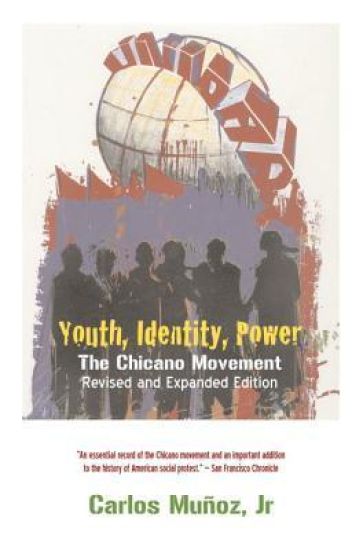
Youth, Identity, Power

Youth, Identity, Power

Carlos Muñoz

Verso Books
2007
nidottu
Youth, Identity, Power is the classic study of the origins of the 1960s Chicano civil rights movement. Written by a leader of the Chicano student movement who also played a key role in the creation of the wider Chicano Movement, this is the first full-length work to appear on the subject. It fills an important gap in the history of political and social protest in the United States.Carlos Muñoz places the Chicano Movement in the context of the political and intellectual development of people of Mexican descent in the USA, tracing the emergence of student activists and intellectuals in the 1930s and their initial challenge to the dominant white racial and class ideologies. He then documents the rise and fall of the Chicano Movement of the 1960s, situating it within the 1960s civil rights and radical movements and assessing the Chicano Movement's contribution to the development of the Mexican American population and the Latino population as a whole.In an afterword to this new edition, Muñoz charts the burgeoning growth of US Latino communities, assesses the nativist backlash against them, and argues that Latinos must play a central role in a new movement for multiracial democracy.
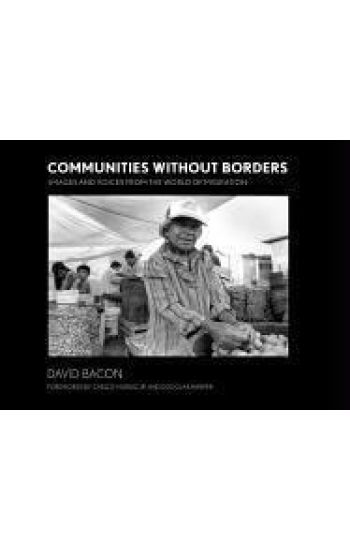
Communities Without Borders

Communities Without Borders

David Bacon; Douglas Harper; Carlos Muñoz

ILR Press
2006
pokkari
When we finally arrived at my brother's house in the United States, I thought about how far I was from home in Mexico. I looked back, saw the sun setting, and thought about my father and what he might be doing. I thought, 'Why did I come so far, and how am I going to return?' Before I left my father asked me why I wanted to leave. He said he thought we would never see each other again. My brother told him not to worry and that he would return me in a year.... He was right, because we never did.—Irma Luna recalls her experience of migration, from Communities without BordersIn his stunning work of photojournalism and oral history, David Bacon documents the new reality of migrant experience: the creation of transnational communities. Today's indigenous migrants don't simply move from one point to another but create new communities all along the northern road from Guatemala through Mexico into the United States, connected by common culture and history. Drawing on his experience as a photographer and a journalist and also as a former labor organizer, Bacon portrays the lives of the people who migrate between Guatemala and Mexico and the United States. He takes us inside these communities and illuminates the ties that bind them together, the influence of their working conditions on their families and health, and their struggle for better lives. Bacon portrays in photographs and their own words Mixtec and Triqui migrants in Oaxaca, Baja California, and California; Guatemalan migrants in Huehuetenango and Nebraska; miners and indigenous communities in Sonora and Arizona; and veterans of the bracero program of the 1940s and 1950s. Bacon's interviews with this first wave of guest workers are especially relevant in light of the current political focus on guest-worker programs as a model for reforming immigration, an approach with which Bacon strongly disagrees.Throughout Communities without Borders, Bacon emphasizes the social movements migrants organize to improve their own working conditions and the well-being of their enclaves. U.S. border policy treats undocumented immigrants as an aggregation of individuals, ignoring the social pressures that force whole communities to move and the networks of families and hometowns that sustain them on their journeys. Communities without Borders makes an urgent appeal for understanding the human reality that should inform our national debate over immigration.