Kirjojen hintavertailu. Mukana 12 657 676 kirjaa ja 12 kauppaa.

Kirjailija

Carmen Lee

Kirjat ja teokset yhdessä paikassa: 10 kirjaa, julkaisuja vuosilta 2013-2026, suosituimpien joukossa Doxxing Discourse. Vertaile teosten hintoja ja tarkista saatavuus suomalaisista kirjakaupoista.

10 kirjaa

Kirjojen julkaisuhaarukka 2013-2026.

Doxxing Discourse

Doxxing Discourse

Carmen Lee

Cambridge University Press
2026
pokkari
Doxxing is the deliberate, unauthorized disclosure of personal information, often with malicious intent. Notably, it became a key method of public shaming and vigilantism during the 2019–2020 Hong Kong protests. This Element understands and examines doxxing as a discursive practice. Using critical discourse analysis (CDA), it analyzes online forum discussions and survey and interview data from Hong Kong university students. Findings are examined alongside institutional legal texts to show how doxxing is discursively constructed, legitimized, and contested by different social actors. The case study identifies linguistic strategies such as metaphor, euphemism, and irony, along with legitimation discourses framing doxxing as social justice, deterrence, or moral self-defense. The Element also problematizes legal ambiguities and ethical tensions surrounding doxxing practices. By foregrounding the interplay between grassroots and legal discourses, it contributes to forensic linguistics scholarship on digital harm, power, and morality in contemporary mediated environments.
Doxxing Discourse

Doxxing Discourse

Carmen Lee

Cambridge University Press
2026
sidottu
Doxxing is the deliberate, unauthorized disclosure of personal information, often with malicious intent. Notably, it became a key method of public shaming and vigilantism during the 2019–2020 Hong Kong protests. This Element understands and examines doxxing as a discursive practice. Using critical discourse analysis (CDA), it analyzes online forum discussions and survey and interview data from Hong Kong university students. Findings are examined alongside institutional legal texts to show how doxxing is discursively constructed, legitimized, and contested by different social actors. The case study identifies linguistic strategies such as metaphor, euphemism, and irony, along with legitimation discourses framing doxxing as social justice, deterrence, or moral self-defense. The Element also problematizes legal ambiguities and ethical tensions surrounding doxxing practices. By foregrounding the interplay between grassroots and legal discourses, it contributes to forensic linguistics scholarship on digital harm, power, and morality in contemporary mediated environments.
Language Online

Language Online

David Barton; Carmen Lee

TAYLOR FRANCIS LTD
2025
sidottu
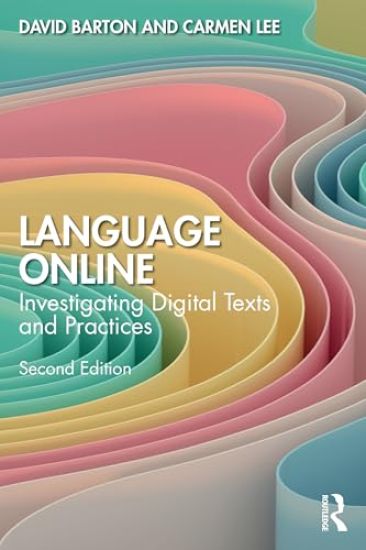
In Language Online, David Barton and Carmen Lee explore the evolving landscape of digital communication. This extensively updated second edition reflects the latest research and developments, addressing key contemporary issues such as online aggression, digital activism, and the growing impact of AI on human communication. It also examines how digital communication has shaped and been shaped by global events like the COVID-19 pandemic and incorporates multimodal discourse.With case studies from diverse geographical contexts, languages, and platforms, the book illustrates how digital language practices vary across cultures. This edition places greater emphasis on the intersection between online and offline communication, highlighting how digital interactions are deeply integrated into everyday life.Written in a clear and accessible style, Language Online balances theory with practical analysis, providing valuable insights into the relationship between language and digital technologies. Complete with discussion topics and real-world examples, this is an essential read for students and scholars of new media, literacy, and multimodality in language and linguistics.
Language Online

Language Online

David Barton; Carmen Lee

TAYLOR FRANCIS LTD
2025
nidottu
In Language Online, David Barton and Carmen Lee explore the evolving landscape of digital communication. This extensively updated second edition reflects the latest research and developments, addressing key contemporary issues such as online aggression, digital activism, and the growing impact of AI on human communication. It also examines how digital communication has shaped and been shaped by global events like the COVID-19 pandemic and incorporates multimodal discourse.With case studies from diverse geographical contexts, languages, and platforms, the book illustrates how digital language practices vary across cultures. This edition places greater emphasis on the intersection between online and offline communication, highlighting how digital interactions are deeply integrated into everyday life.Written in a clear and accessible style, Language Online balances theory with practical analysis, providing valuable insights into the relationship between language and digital technologies. Complete with discussion topics and real-world examples, this is an essential read for students and scholars of new media, literacy, and multimodality in language and linguistics.
Researching Language and Social Media

Researching Language and Social Media

Ruth Page; David Barton; Carmen Lee; Johann Wolfgang Unger; Michele Zappavigna

TAYLOR FRANCIS LTD
2022
nidottu
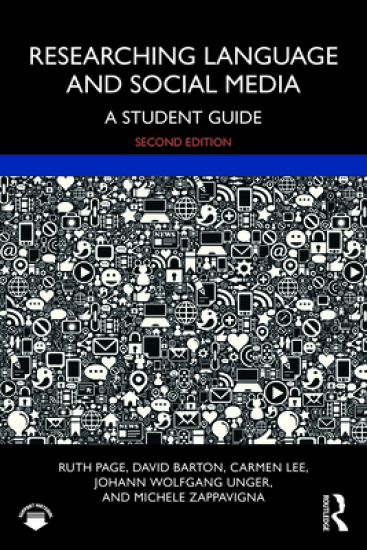
Researching Language and Social Media: A Student Guide introduces the linguistic frameworks currently used to analyse language found in social media contexts. This highly accessible guidebook outlines the practical steps and ethical guidelines entailed when gathering linguistic data from social media sites and platforms. In this new edition, the authors update the range of social media interactions used as examples and draw attention to important developments such as “fake news” and new areas of debate such as hate speech. Expanding the geographical and multilingual aspects, this edition also includes examples from Asia and the Arabic-speaking world. With updated methods that help students study the language of social media from a multimodal perspective, the recent uptake in image sharing, video-chat, and graphicons will also be addressed. Each chapter begins with a clear summary of the topics covered and also suggests sources for further reading to supplement the initial discussion and case studies.This timely book is an essential guide for students of English language and linguistics, media, and communication studies.
Researching Language and Social Media

Researching Language and Social Media

Ruth Page; David Barton; Carmen Lee; Johann Wolfgang Unger; Michele Zappavigna

TAYLOR FRANCIS LTD
2022
sidottu
Researching Language and Social Media: A Student Guide introduces the linguistic frameworks currently used to analyse language found in social media contexts. This highly accessible guidebook outlines the practical steps and ethical guidelines entailed when gathering linguistic data from social media sites and platforms. In this new edition, the authors update the range of social media interactions used as examples and draw attention to important developments such as “fake news” and new areas of debate such as hate speech. Expanding the geographical and multilingual aspects, this edition also includes examples from Asia and the Arabic-speaking world. With updated methods that help students study the language of social media from a multimodal perspective, the recent uptake in image sharing, video-chat, and graphicons will also be addressed. Each chapter begins with a clear summary of the topics covered and also suggests sources for further reading to supplement the initial discussion and case studies.This timely book is an essential guide for students of English language and linguistics, media, and communication studies.
Multilingualism Online

Multilingualism Online

Carmen Lee

Routledge
2016
sidottu
By the co-author of Language Online, this book builds on the earlier work while focusing on multilingualism in the digital world. Drawing on a range of digital media – from email to chatrooms and social media such as Facebook, Instagram, and YouTube – Lee demonstrates how online multilingualism is closely linked to people's offline literacy practices and identities, and examines the ways in which people draw on multilingual resources in their internet participation. Bringing together central concepts in sociolinguistics and internet linguistics, the eight chapters cover key issues such as: language choice code-switching identities language ideologies minority languages online translation. Examples in the book are drawn from both all the major languages and many lesser-written ones such as Chinese dialects, Egyptian Arabic, Irish, and Welsh. A chapter on methodology provides practical information for students and researchers interested in researching online multilingualism from a mixed methods and practice-based approach.Multilingualism Online is key reading for all students and researchers in the area of multilingualism and new media, as well as those who want to know more about languages in the digital world.
Multilingualism Online

Multilingualism Online

Carmen Lee

Routledge
2016
nidottu
By the co-author of Language Online, this book builds on the earlier work while focusing on multilingualism in the digital world. Drawing on a range of digital media – from email to chatrooms and social media such as Facebook, Instagram, and YouTube – Lee demonstrates how online multilingualism is closely linked to people's offline literacy practices and identities, and examines the ways in which people draw on multilingual resources in their internet participation. Bringing together central concepts in sociolinguistics and internet linguistics, the eight chapters cover key issues such as: language choice code-switching identities language ideologies minority languages online translation. Examples in the book are drawn from both all the major languages and many lesser-written ones such as Chinese dialects, Egyptian Arabic, Irish, and Welsh. A chapter on methodology provides practical information for students and researchers interested in researching online multilingualism from a mixed methods and practice-based approach.Multilingualism Online is key reading for all students and researchers in the area of multilingualism and new media, as well as those who want to know more about languages in the digital world.
Language Online

Language Online

David Barton; Carmen Lee

Routledge
2013
nidottu
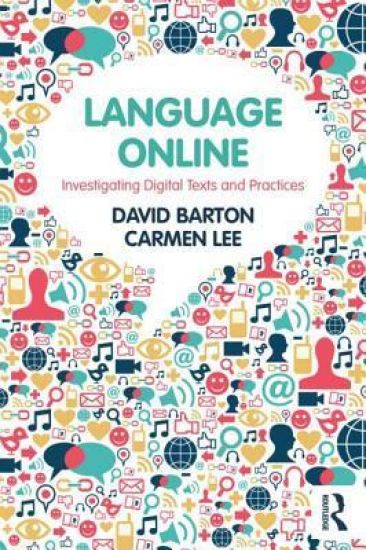
In Language Online, David Barton and Carmen Lee investigate the impact of the online world on the study of language.The effects of language use in the digital world can be seen in every aspect of language study, and new ways of researching the field are needed. In this book the authors look at language online from a variety of perspectives, providing a solid theoretical grounding, an outline of key concepts, and practical guidance on doing research.Chapters cover topical issues including the relation between online language and multilingualism, identity, education and multimodality, then conclude by looking at how to carry out research into online language use. Throughout the book many examples are given, from a variety of digital platforms, and a number of different languages, including Chinese and English.Written in a clear and accessible style, this is a vital read for anyone new to studying online language and an essential textbook for undergraduates and postgraduates working in the areas of new media, literacy and multimodality within language and linguistics courses.
Language Online

Language Online

David Barton; Carmen Lee

Routledge
2013
sidottu
In Language Online, David Barton and Carmen Lee investigate the impact of the online world on the study of language.The effects of language use in the digital world can be seen in every aspect of language study, and new ways of researching the field are needed. In this book the authors look at language online from a variety of perspectives, providing a solid theoretical grounding, an outline of key concepts, and practical guidance on doing research.Chapters cover topical issues including the relation between online language and multilingualism, identity, education and multimodality, then conclude by looking at how to carry out research into online language use. Throughout the book many examples are given, from a variety of digital platforms, and a number of different languages, including Chinese and English.Written in a clear and accessible style, this is a vital read for anyone new to studying online language and an essential textbook for undergraduates and postgraduates working in the areas of new media, literacy and multimodality within language and linguistics courses.