Kirjojen hintavertailu. Mukana 12 595 353 kirjaa ja 12 kauppaa.

Kirjailija

Carol Apollonio

Kirjat ja teokset yhdessä paikassa: 5 kirjaa, julkaisuja vuosilta 2009-2026, suosituimpien joukossa Dostoevsky's Secrets. Vertaile teosten hintoja ja tarkista saatavuus suomalaisista kirjakaupoista.

5 kirjaa

Kirjojen julkaisuhaarukka 2009-2026.

Dostoevsky's Secrets

Dostoevsky's Secrets

Carol Apollonio

Academic Studies Press
2026
pokkari
When Fyodor Dostoevsky proclaims that he is a “realist in a higher sense,” it is because the facts are irrelevant to his truth. And it is in this spirit that Apollonio approaches Dostoevsky’s work, reading through the facts—the text—of his canonical novels for the deeper truth that they distort, mask, and, ultimately, disclose. This sort of reading against the grain is, Apollonio suggests, precisely what these works, with their emphasis on the hidden and the private and their narrative reliance on secrecy and slander, demand. In each work Apollonio focuses on one character or theme caught in the compromising, self-serving, or distorting narrative lens. Who, she asks, really exploits whom in “Poor Folk”? Does “White Nights” ever escape the dream state? What is actually lost—and what is won—in “The Gambler”? Is Svidrigailov, of such ill repute in “Crime and Punishment”, in fact an exemplar of generosity and truth? Who, in “Demons,” is truly demonic? Here we see how Dostoevsky has crafted his novels to help us see these distorting filters and develop the critical skills to resist their unaesthetic effect. Apollonio’s readings show how Dostoevsky’s paradoxes counter and usurp our comfortable assumptions about the way the world is and offer access to a deeper, immanent essence. His works gain power when we read beyond the primitive logic of external appearances and recognize the deeper life of the text.
Simply Chekhov

Simply Chekhov

Carol Apollonio

Simply Charly
2020
pokkari
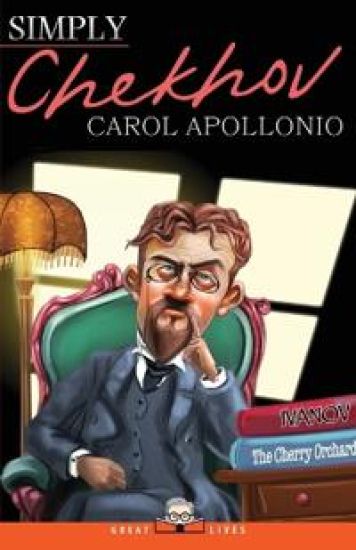
Born in the port city of Taganrog in southern Russia, Anton Chekhov (1860-1904) survived a difficult childhood with an abusive father and put himself through school (while supporting his family), qualifying as a physician in 1884. At the same time he began practicing medicine, he also became celebrated for his short fiction, which redefined the genre with its formal innovations and psychological depth. His first serious play, The Seagull, was booed at its premiere in 1896, but-along with his other plays Uncle Vanya, Three Sisters, and The Cherry Orchard-it came to be seen as a masterpiece, bringing a new realism to the theater and to acting, which continues to reverberate today. Afflicted with ill health for much of his life, Chekhov died of tuberculosis at the age of 44, prematurely depriving the world of a great writer and a great humanist.In Simply Chekhov, Professor Carol Apollonio provides a concise and accessible introduction to Chekhov, both within his time and place (Russia on the eve of revolution) and as a master of world literature. Readers will meet the major figures of Chekhov's era-as well as his colorful family, lovers, colleagues, and friends-and gain an appreciation for the ways in which this real-life cast of characters are reflected in Chekhov's stories and plays.Drawing on insights from her more than three decades of Chekhov scholarship, Apollonio not only presents strikingly original insights into Chekhov's major works, but explores the concerns-from the place of humans in the natural world to the threat of homelessness-that made him such a compelling figure and that remain relevant to the crises we face today.
Dostoevsky's Secrets

Dostoevsky's Secrets

Carol Apollonio

Academic Studies Press
2020
sidottu
When Fyodor Dostoevsky proclaims that he is a “realist in a higher sense,” it is because the facts are irrelevant to his truth. And it is in this spirit that Apollonio approaches Dostoevsky’s work, reading through the facts—the text—of his canonical novels for the deeper truth that they distort, mask, and, ultimately, disclose. This sort of reading against the grain is, Apollonio suggests, precisely what these works, with their emphasis on the hidden and the private and their narrative reliance on secrecy and slander, demand. In each work Apollonio focuses on one character or theme caught in the compromising, self-serving, or distorting narrative lens. Who, she asks, really exploits whom in “Poor Folk”? Does “White Nights” ever escape the dream state? What is actually lost—and what is won—in “The Gambler”? Is Svidrigailov, of such ill repute in “Crime and Punishment”, in fact an exemplar of generosity and truth? Who, in “Demons,” is truly demonic? Here we see how Dostoevsky has crafted his novels to help us see these distorting filters and develop the critical skills to resist their unaesthetic effect. Apollonio’s readings show how Dostoevsky’s paradoxes counter and usurp our comfortable assumptions about the way the world is and offer access to a deeper, immanent essence. His works gain power when we read beyond the primitive logic of external appearances and recognize the deeper life of the text.
Dostoevsky's Secrets

Dostoevsky's Secrets

Carol Apollonio

Northwestern University Press
2018
nidottu
When Fyodor Dostoevsky proclaims that he is a ""realist in a higher sense,"" it is because the facts are irrelevant to his truth. And it is in this spirit that Apollonio approaches Dostoevsky's work, reading through the facts-the text-of his canonical novels for the deeper truth that they distort, mask, and, ultimately, disclose. This sort of reading against the grain is, Apollonio suggests, precisely what these works, with their emphasis on the hidden and the private and their narrative reliance on secrecy and slander, demand.In each work Apollonio focuses on one character or theme caught in the compromising, self-serving, or distorting narrative lens. Who, she asks, really exploits whom in Poor Folk? Does ""White Nights"" ever escape the dream state? What is actually lost-and what is won-in The Gambler? Is Svidrigailov, of such ill repute in Crime and Punishment, in fact an exemplar of generosity and truth? Who, in Demons, is truly demonic? Here we see how Dostoevsky has crafted his novels to help us see these distorting filters and develop the critical skills to resist their anaesthetic effect. Apollonio's readings show how Dostoevsky's paradoxes counter and usurp our comfortable assumptions about the way the world is and offer access to a deeper, immanent essence. His works gain power when we read beyond the primitive logic of external appearances and recognize the deeper life of the text.
Dostoevsky's Secrets

Dostoevsky's Secrets

Carol Apollonio

Northwestern University Press
2009
sidottu
When Fyodor Dostoevsky proclaims that he is a 'realist in a higher sense,' it is because the facts are irrelevant to his truth. And it is in this spirit that Apollonio approaches Dostoevsky's work, reading through the facts - the text - of his canonical novels for the deeper truth that they distort, mask, and, ultimately, disclose. This sort of reading against the grain is, Apollonio suggests, precisely what these works, with their emphasis on the hidden and the private and their narrative reliance on secrecy and slander, demand.In each work, Apollonio focuses on one character or theme caught in the compromising, self-serving, or distorting narrative lens. Who, she asks, really exploits whom in Poor Folk? Does 'White Nights' ever escape the dream state? What is actually lost - and what is won - in The Gambler? Is Svidrigailov, of such ill repute in Crime and Punishment, in fact an exemplar of generosity and truth? Who, in Demons, is truly demonic? Here we see how Dostoevsky has crafted his novels to help us see these distorting filters and develop the critical skills to resist their anaesthetic effect. Apollonio's readings show how Dostoevsky's paradoxes counter and usurp our comfortable assumptions about the way the world is and offer access to a deeper, immanent essence. His works gain power when we read beyond the primitive logic of external appearances and recognize the deeper life of the text.