Kirjojen hintavertailu. Mukana 12 260 004 kirjaa ja 12 kauppaa.

Kirjailija

Carol Batdorf

Kirjat ja teokset yhdessä paikassa: 5 kirjaa, julkaisuja vuosilta 1983-2018, suosituimpien joukossa Seawolf. Vertaile teosten hintoja ja tarkista saatavuus suomalaisista kirjakaupoista.

5 kirjaa

Kirjojen julkaisuhaarukka 1983-2018.

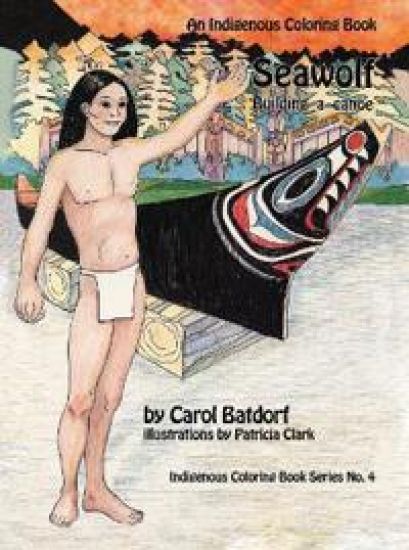
Seawolf

Seawolf

Carol Batdorf; Patricia Clark

Hancock House Publishers
2018
pokkari
Canoes were important to the Indigenous people who lived long ago on the shores of the northwest coast. Wherever they went, they traveled by dugout canoes. Some of their canoes could carry fifty and more people across open ocean water. others were small and were only used on quiet, sheltered bays. There were canoes made to be poled up rivers and those designed to carry huge loads of freight from place to place.There were light canoes made for women to use, fishing canoes, and even canoes for war.Only a carver who had the special skills, a "gift" the people called it, could carve a canoe from a cedar tree. Those men were honored for their work and were well paid with food, blankets, boxes or tools. It was considered a privilege for an Indigenous boy to be able to learn to make a canoe from such a carver. Koni, in our story, was such a boy.Once a canoe was carved and it proved to be a good craft, it was very valuable., The people respected it as if it were a living thing. They gave names to their canoes and took good care of them.This coloring book is about an Indigenous canoe and how it came to be. As you color the pictures, you will learn what it was like to be a First Peoples boy of long ago and how carvers transformed giant cedar logs into large, sturdy canoes.Since there is a lot of detail in the pictures, you might want to use felt pens or even colored pencils instead of crayons. Whatever you decide to use, most importantly, have fun
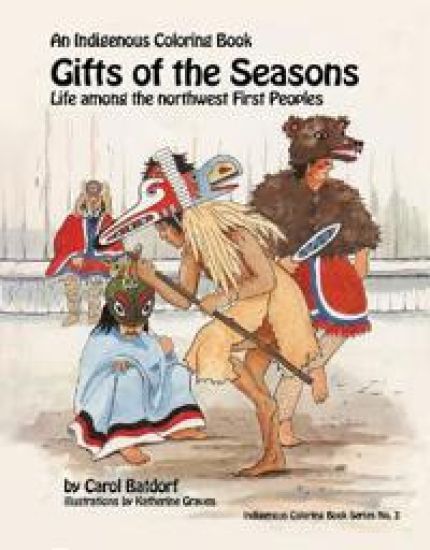
Gifts of the Season

Gifts of the Season

Carol Batdorf; Katherine Graves

Hancock House Publishers
2018
pokkari
Long ago, Indigenous people lived in villages along the beaches and rivers of the northwest coast. Their houses were made of planks cut from huge cedar trees. They carved beautiful canoes, big enough to carry many people on long voyages across ocean waters. They made clothes out of skins and furs for special occasions and to keep themselves warm. They also used cattails and cedar bark for everyday clothes. They wove warm blankets of mountain goat hair and dog fur, mixing it with feathers and other soft materials.Their food came mostly from the sea. The men fished and some caught huge whales. The women dug clams and gathered roots and greens to cook and eat. They worked hard, but there was food for all and time to enjoy themselves, too.Children learned by watching the grownups work and then they worked too. There was no school to go to, but every day was a time to learn new things. They played too. A favorite game was a tug-of war. They played hiding things and finding them, and they raced each other to see who was the fastest. They loved the water and spent much time swimming and paddling small canoes.When you color the pages of this book, you can learn some of these things those children did long ago. Since there is a lot of detail in the pictures, you might want to use felt pens, or colored pencils instead of crayons. Whatever you decide to use, most importantly, have fun