Kirjojen hintavertailu. Mukana 12 390 323 kirjaa ja 12 kauppaa.

Kirjailija

Carol G. Thomas

Kirjat ja teokset yhdessä paikassa: 7 kirjaa, julkaisuja vuosilta 2003-2014, suosituimpien joukossa Finding People in Early Greece. Vertaile teosten hintoja ja tarkista saatavuus suomalaisista kirjakaupoista.

7 kirjaa

Kirjojen julkaisuhaarukka 2003-2014.

Greece

Greece

Carol G. Thomas

John Wiley Sons Inc
2014
nidottu
Greece: A Short History of a Long Story presents a comprehensive overview of the history of Greece by exploring the continuity of Greek culture from its Neolithic origins to the modern era. Tells the story of Greece through individual personalities that inhabited various periods in the lengthy sweep of Greek historyUses an approach based on recent research that includes DNA analysis and analyses of archaeological materialsExplores ways in which the nature of Greek culture was continually reshaped over timeFeatures illustrations that portray the people of different eras in Greek history along with maps that demonstrate the physical sphere of Greece and major events in each of the periods
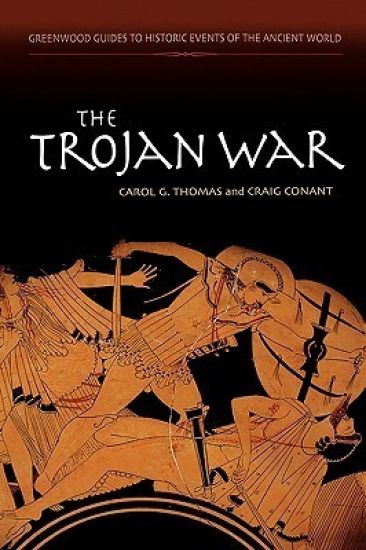
The Trojan War

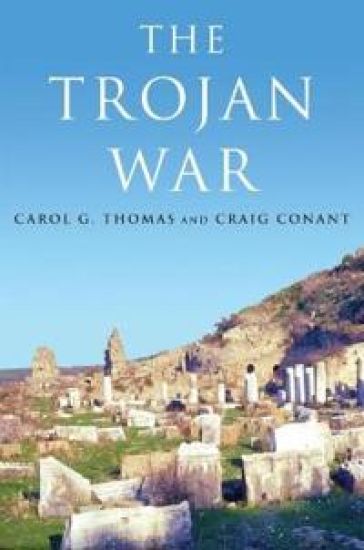
The Trojan War

Carol G. Thomas; Craig Conant

University of Oklahoma Press
2007
nidottu
Different as the Trojan War was to Greeks and Romans, the two peoples united in an identical longing for a heroism that was attainable in the present only by reaching out for an impossible past. Carol G. Thomas and Craig Conant's broad and varied account of the Trojan War allows readers to investigate the archaeological and historical foundations that underlie the epic poems featuring Achilles and Aeneas, and to examine how the poems altered understanding of the war for the many cultures and civilizations touched by their narrative power.Conceived as an introduction to this critical event in the Western tradition, The Trojan War offers readers and researchers an engaging mixture of descriptive chapters, biographical sketches, and annotated primary documents. Also provided are an annotated bibliography and index.
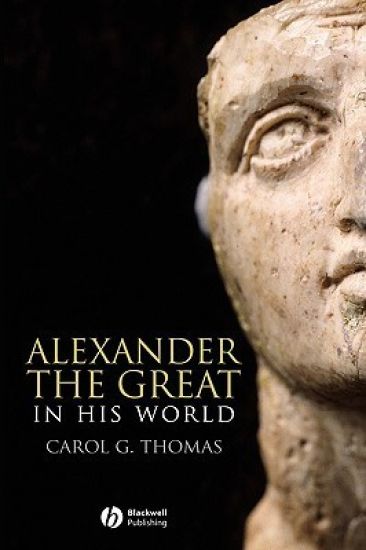
Alexander the Great in His World

Alexander the Great in His World

Carol G. Thomas

Wiley-Blackwell (an imprint of John Wiley Sons Ltd)
2006
nidottu
Alexander the Great is one of the most celebrated figures of antiquity. In this book, Carol G. Thomas places this powerful figure within the context of his time, place, culture, and ancestry in order to discover what influences shaped his life and career. The book begins with an exploration of the Macedonia that conditioned the lives of its inhabitants. It also traces such influences on Alexander’s life as his royal Argead ancestry, his father, Philip II, and his mother, Olympias. The author examines Alexander’s engagement with Greek culture, especially his relationship with Aristotle, and contemplates how other societal factors – especially the highly militarized Macedonian kingdom and the nature of Macedonia’s relationship with neighboring states – contributed to his achievement. What was the significance of these influences on the man who succeeded in conquering most of the known world from the Adriatic Sea to the Indus River? The author focuses on this question in exploring ancient landscapes and resurrecting key figures from antiquity in order to penetrate the motivation, goals, and inner being of Alexander the Great.
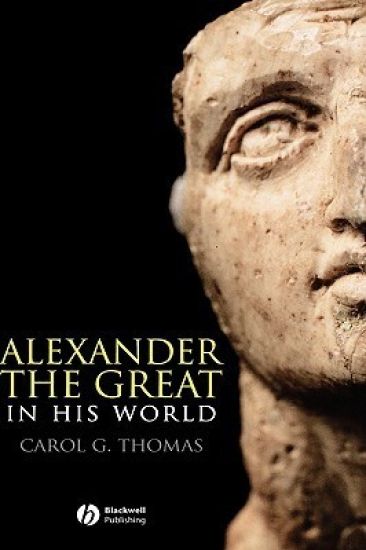
Alexander the Great in His World

Alexander the Great in His World

Carol G. Thomas

Blackwell Publishers
2006
sidottu
Alexander the Great is one of the most celebrated figures of antiquity. In this book, Carol G. Thomas places this powerful figure within the context of his time, place, culture, and ancestry in order to discover what influences shaped his life and career. The book begins with an exploration of the Macedonia that conditioned the lives of its inhabitants. It also traces such influences on Alexander’s life as his royal Argead ancestry, his father, Philip II, and his mother, Olympias. The author examines Alexander’s engagement with Greek culture, especially his relationship with Aristotle, and contemplates how other societal factors – especially the highly militarized Macedonian kingdom and the nature of Macedonia’s relationship with neighboring states – contributed to his achievement. What was the significance of these influences on the man who succeeded in conquering most of the known world from the Adriatic Sea to the Indus River? The author focuses on this question in exploring ancient landscapes and resurrecting key figures from antiquity in order to penetrate the motivation, goals, and inner being of Alexander the Great.
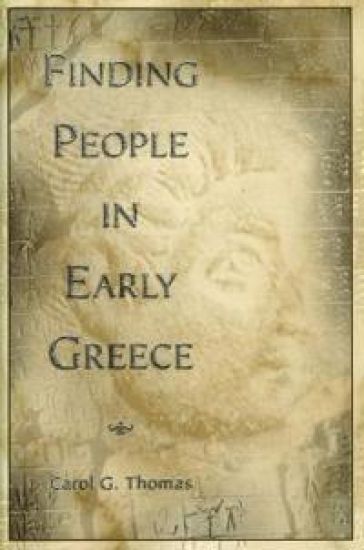
Finding People in Early Greece

Finding People in Early Greece

Carol G. Thomas

University of Missouri Press
2005
sidottu
Progress toward a fuller understanding of preclassical Greece was steady until the 1950s, when a general crisis in all the human-centered disciplines erupted. Scholars undertook a serious reexamination of their tools and data, producing new brands of history, geography, anthropology, archaeology, economics, and sociology. Although these new approaches were widely adopted, the developments also bred a countercurrent beginning in the 1980s and 1990s. The fallout from this backlash was serious in several respects, one of the most important of which was the elimination of the human element in the products of the ""new"" human-centered disciplines. In Finding People in Early Greece, Carol Thomas addresses these developments and the recent accommodation and rapprochement of the ""old"" and ""new"" that has emerged. She then offers two case studies: Jason and the voyage of the Argo, deriving from the ""Age of Heroes,"" and Hesiod, probably the first literate European, who lived ca. 700 BCE during the ""Age of Revolution,"" which catapulted Greece out of its long Dark Age into the vibrant Classical Age. With these two examples, Thomas shows that through a combination of scientific tools and historically oriented scholarship, a larger context in which individual subjects lived can be offered.
The Trojan War

The Trojan War

Craig C. Conant; Carol G. Thomas

Greenwood Press
2005
sidottu
For Ancient Greece as well as Ancient Rome, the Trojan War provided a history that seemed possessed of a power as magnetic as it was malleable; thus, in this single source these two great civilizations were able to find two distinct sets of heroes, two distinct sets of virtues, and two eternal poets. But different as Greece and Rome's experience of the Trojan War may have been, they united in an identical longing for a heroism that was attainable in the present only by reaching out for an impossible past. In Carol Thomas and Craig Conant's broad and varied account, the reader will have the opportunity to investigate the shadowy historical foundation that underlay the poetic environment of Achilles and Aeneas; as well as examine how the poetic experience altered the understanding of the Trojan War for the many cultures and civilizations that were touched by its expansive forces. Designed as an accessible introduction to this critical event in the Western tradition, The Trojan War offers readers and researchers an engaging mixture of descriptive chapters, biographical sketches, and annotated primary documents. An overview of Troy and the world of the late Bronze Age is presented in the first chapter, followed by sections on: finding Troy and the Trojan War, Homer and the epic tradition, the force of legend, and Troy in the 21st century. An annotated bibliography and index are also included in this work.
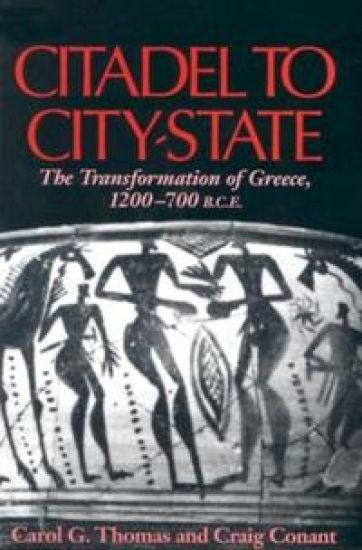
Citadel to City-State

Citadel to City-State

Carol G. Thomas; Craig Conant

Indiana University Press
2003
pokkari
"Citadel to City-State serves as an excellent summarization of our present knowledge of the not-so-dark Dark Age as well as an admirable prologue to the understanding of the subsequent Archaeic and Classical periods." —David Rupp, Phoenix The Dark Age of Greece is one of the least understood periods of Greek history. A terra incognita between the Mycenaean civilization of Late Bronze Age Greece and the flowering of Classical Greece, the Dark Age was, until the last few decades, largely neglected. Now new archaeological methods and the discovery of new evidence have made it possible to develop a more comprehensive view of the entire period. Citadel to City-State explores each century from 1200 to 700 B.C.E. through an individual site—Mycenae, Nichoria, Athens, Lefkandi, Corinth, and Ascra—that illustrates the major features of each period. This is a remarkable account of the historical detective work that is beginning to shed light on Dark Age Greece.