Kirjojen hintavertailu. Mukana 12 595 353 kirjaa ja 12 kauppaa.

Kirjailija

Carol Harrison

Kirjat ja teokset yhdessä paikassa: 9 kirjaa, julkaisuja vuosilta 1992-2019, suosituimpien joukossa On Music, Sense, Affect and Voice. Vertaile teosten hintoja ja tarkista saatavuus suomalaisista kirjakaupoista.

9 kirjaa

Kirjojen julkaisuhaarukka 1992-2019.

On Music, Sense, Affect and Voice

On Music, Sense, Affect and Voice

Carol Harrison

Bloomsbury Academic USA
2019
nidottu
This book explores early reflections on music and its effects on the mind and soul. Augustine is an obvious choice for such an analysis, as his De Musica is the only treatise on music by a Christian writer in the first five centuries AD; concerned not only with poetic metre and rhythm, but also with an ontology of music. Focusing on the six books of De Musica, the Confessions and the Homilies on the Psalms, Carol Harrison argues that Augustine establishes a psychology, ethics and aesthetics of musical perception, which considered together form an effective theology of music. For Augustine, music—both heard and performed— becomes the means by which we can sense and participate in divine grace. Composed by one of the world’s foremost Augustine scholars, this book is a concise and powerful exploration of Augustine’s writing and reflections on music and, by extension, the intimate relationship between music, religion, and philosophy.
On Music, Sense, Affect and Voice

On Music, Sense, Affect and Voice

Carol Harrison

Bloomsbury Academic USA
2019
sidottu
This book explores early reflections on music and its effects on the mind and soul. Augustine is an obvious choice for such an analysis, as his De Musica is the only treatise on music by a Christian writer in the first five centuries AD; concerned not only with poetic metre and rhythm, but also with an ontology of music. Focusing on the six books of De Musica, the Confessions and the Homilies on the Psalms, Carol Harrison argues that Augustine establishes a psychology, ethics and aesthetics of musical perception, which considered together form an effective theology of music. For Augustine, music—both heard and performed— becomes the means by which we can sense and participate in divine grace. Composed by one of the world’s foremost Augustine scholars, this book is a concise and powerful exploration of Augustine’s writing and reflections on music and, by extension, the intimate relationship between music, religion, and philosophy.
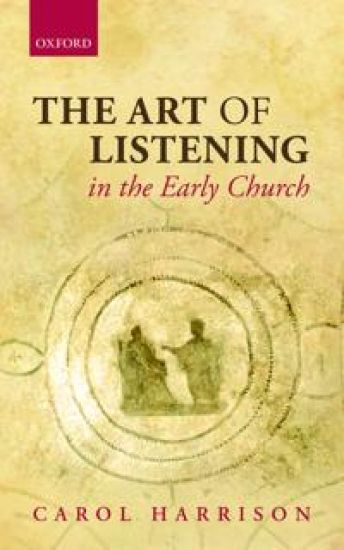
The Art of Listening in the Early Church

The Art of Listening in the Early Church

Carol Harrison

Oxford University Press
2015
nidottu
How did people think about listening in the ancient world, and what evidence do we have of it in practice? The Christian faith came to the illiterate majority in the early Church through their ears. This proved problematic: the senses and the body had long been held in suspicion as all too temporal, mutable and distracting. Carol Harrison argues that despite profound ambivalence on these matters, in practice, the senses, and in particular the sense of hearing, were ultimately regarded as necessary - indeed salvific -constraints for fallen human beings. By examining early catechesis, preaching and prayer, she demonstrates that what illiterate early Christians heard both formed their minds and souls and, above all, enabled them to become 'literate' listeners; able not only to grasp the rule of faith but also tacitly to follow the infinite variations on it which were played out in early Christian teaching, exegesis and worship. It becomes clear that listening to the faith was less a matter of rationally appropriating facts and more an art which needed to be constantly practiced: for what was heard could not be definitively fixed and pinned down, but was ultimately the Word of the unknowable, transcendent God. This word demanded of early Christian listeners a response - to attend to its echoes, recollect and represent it, stretch out towards it source, and in the process, be transformed by it.
The Art of Listening in the Early Church

The Art of Listening in the Early Church

Carol Harrison

Oxford University Press
2013
sidottu
How did people think about listening in the ancient world, and what evidence do we have of it in practice? The Christian faith came to the illiterate majority in the early Church through their ears. This proved problematic: the senses and the body had long been held in suspicion as all too temporal, mutable and distracting. Carol Harrison argues that despite profound ambivalence on these matters, in practice, the senses, and in particular the sense of hearing, were ultimately regarded as necessary - indeed salvific -constraints for fallen human beings. By examining early catechesis, preaching and prayer, she demonstrates that what illiterate early Christians heard both formed their minds and souls and, above all, enabled them to become 'literate' listeners; able not only to grasp the rule of faith but also tacitly to follow the infinite variations on it which were played out in early Christian teaching, exegesis and worship. It becomes clear that listening to the faith was less a matter of rationally appropriating facts and more an art which needed to be constantly practiced: for what was heard could not be definitively fixed and pinned down, but was ultimately the Word of the unknowable, transcendent God. This word demanded of early Christian listeners a response - to attend to its echoes, recollect and represent it, stretch out towards it source, and in the process, be transformed by it.
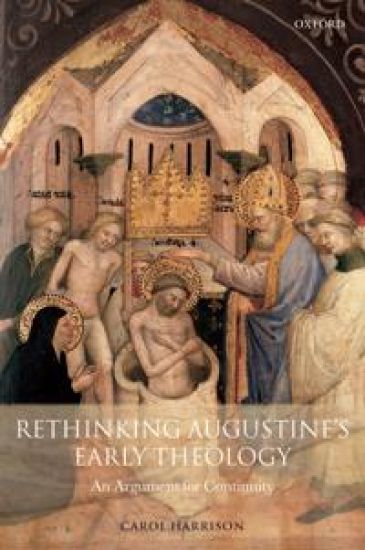
Rethinking Augustine's Early Theology

Rethinking Augustine's Early Theology

Carol Harrison

Oxford University Press
2008
nidottu
Carol Harrison counters the assumption that Augustine of Hippo's (354-430) theology underwent a revolutionary transformation around the time he was consecrated Bishop in 396. Instead, she argues that there is a fundamental continuity in his thought and practice from the moment of his conversion in 386. The book thereby challenges the general scholarly trend to begin reading Augustine with his Confessions (396), which were begun ten years after his conversion, and refocuses attention on his earlier works, which undergird his whole theological system.
Rethinking Augustine's Early Theology

Rethinking Augustine's Early Theology

Carol Harrison

Oxford University Press
2006
sidottu
Carol Harrison counters the assumption that Augustine of Hippo's (354-430) theology underwent a revolutionary transformation around the time he was consecrated Bishop in 396. Instead, she argues that there is a fundamental continuity in his thought and practice from the moment of his conversion in 386. The book thereby challenges the general scholarly trend to begin reading Augustine with his Confessions (396), which were begun ten years after his conversion, and refocuses attention on his earlier works, which undergird his whole theological system.
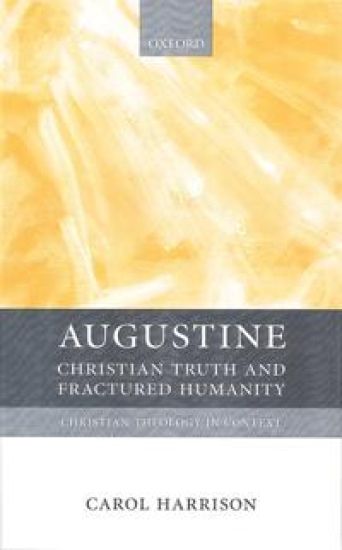
Augustine

Augustine

Carol Harrison

Oxford University Press
2000
sidottu
St. Augustine, the North African bishop of Hippo (AD 354-430), has been much studied. But there has been no systematic attempt to consider the context which shaped his life and thought. Augustine's long and controversial career and his vast literary output provide unrivalled evidence for understanding the diverse ways in which Christianity confronted, assimilated, and finally transformed the traditional society of late antiquity. This book sets Augustine in his cultural and social context showing how, as a Christian, he came to terms with the philosophical and rhetorical ideals of classical culture, and, as a bishop, with the ecclesiastical, ascetic, and political structures of late antique society. According to Augustine, the Fall of man and Original sin fracture and vitiate mankind's ability to know or to will the good. This is revealed as the keystone of his theology, effecting a decisive break with classical ideals of perfection and shaping the distinctive theology of Western Christendom.
Augustine

Augustine

Carol Harrison

Oxford University Press
2000
nidottu
St. Augustine, the North African bishop of Hippo (AD 354-430), has been much studied. But there has been no systematic attempt to consider the context which shaped his life and thought. Augustine's long and controversial career and his vast literary output provide unrivalled evidence for understanding the diverse ways in which Christianity confronted, assimilated, and finally transformed the traditional society of late antiquity. This book sets Augustine in his cultural and social context showing how, as a Christian, he came to terms with the philosophical and rhetorical ideals of classical culture, and, as a bishop, with the ecclesiastical, ascetic, and political structures of late antique society. According to Augustine, the Fall of man and Original sin fracture and vitiate mankind's ability to know or to will the good. This is revealed as the keystone of his theology, effecting a decisive break with classical ideals of perfection and shaping the distinctive theology of Western Christendom.
Beauty and Revelation in the Thought of Saint Augustine
Carol Harrison places Saint Augustine's theology in a new and illuminating context by considering what he has to say about beauty. She demonstrates how a theological understanding of beauty revealed in the created, temporal realm enabled Augustine to form a positive appreciation of this realm and the saving power of beauty within it. It therefore reintroduces aesthetics alongside philosophy and ethics in Augustine's treatment of God. Unlike previous works, it shifts the emphasis away from Augustine's early and most theoretical treatises to his mature reflections as a bishop and pastor on how God communicates with fallen man. Using his theory of language as a paradigm, it shows how divine beauty, revealed in creation and history, serves to inspire fallen man's faith, hope, and most especially his love - thereby reforming him and restoring the form or beauty he had lost.