Kirjojen hintavertailu. Mukana 12 541 762 kirjaa ja 12 kauppaa.

Kirjailija

Carol Mills-Nichol

Kirjat ja teokset yhdessä paikassa: 11 kirjaa, julkaisuja vuosilta 2012-2022, suosituimpien joukossa Dry Goods, Cotton and Cane. Vertaile teosten hintoja ja tarkista saatavuus suomalaisista kirjakaupoista.

11 kirjaa

Kirjojen julkaisuhaarukka 2012-2022.

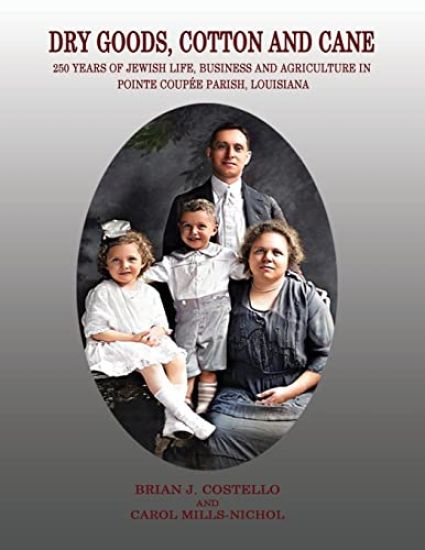
Dry Goods, Cotton and Cane

Dry Goods, Cotton and Cane

Brian J Costello; Carol Mills-Nichol

Janaway Publishing, Inc.
2022
pokkari
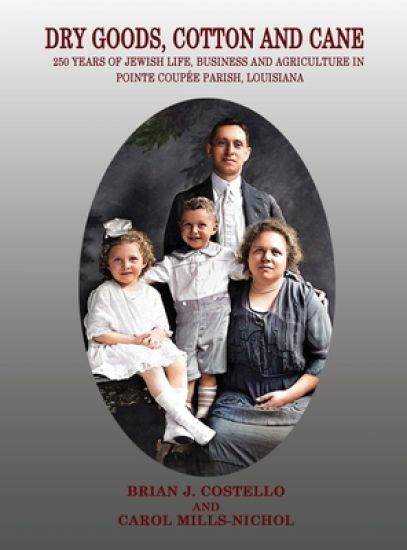
DRY GOODS, COTTON AND CANE: 250 YEARS OF JEWISH LIFE, BUSINESS AND AGRICULTURE IN POINTE COUP E PARISH, LOUISIANA. With a record of permanent settlement since the 1720s, Pointe Coup e Parish is one of the oldest communities in the Mississippi River Valley. Cr ole in culture, owing to the predominance of its French, African, and blended ethnicities, the parish, however, owes much to its Jewish families, who once numbered in the hundreds and whose presence dated from the 1760s. In the wake of the Civil War, when the traditional plantation system collapsed, Jewish financiers, merchants, livestock dealers, and sugar and cotton brokers played prominent roles in shoring up Pointe Coup e's war-torn economy. Jews were held in respect and friendship, and not infrequently married into the larger Gentile population. The earliest Jewish families in Pointe Coup e hailed from the Iberian Peninsula, via the Netherlands and the Caribbean. They were succeeded by successive waves of immigrants from France, the German states, and, at the turn of the 19th-20th centuries, from Austria-Hungary, Prussia, Romania and the Russian Empire. Their numbers were relatively small, but some communities had a particularly Jewish stamp, including the Lower Chenal of False River and Upper, or northern, Pointe Coup e. The Jewish people of Pointe Coup e Parish shared in the economic successes of their Gentile neighbors, and like them suffered from levee failures and disastrous floods, hurricanes, epidemics and crop failures. Most moved to better economic and educational opportunities in New Orleans and the cities of the American North and West. In the 21st century, the Jewish legacy lives on not only in local place names but in these immigrants' dedication to local education and philanthropy, thereby providing a rich tile in the cultural mosaic that is Pointe Coup e Parish, Louisiana.
The Aubrys - Free People of Color in Early New Orleans

The Aubrys - Free People of Color in Early New Orleans

Carol Mills-Nichol

Janaway Publishing, Inc.
2021
pokkari
The Aubrys - Free People of Color in Early New Orleans and other Allied Families including: Allain, Bonneval, Bringier, Chiapella, Coudrain, Dalcour, Delachaise, Domingon, Dupuy, Edmunds, Flot, Foy, Grandmaison, Lassize, Latrobe, Lemelle, Lorreins, Ozenne, Pinta, Raby, Rigaud, St. Hubert, Watkinson, & Whittaker. The Aubry sisters who came of age at the very beginning of American domination in colonial New Orleans, were, while it may seem ironic to some, certainly freer than their white female married counterparts. Since the beginning of the Spanish regime in 1769, Louisiana's free women of color, could buy and sell property, make contracts, and sue for their rights in court, all without interference from a spouse, father or guardian. While life in general during these times was often beset by periodic epidemics, floods and famine, the Aubrys, carved a niche for themselves in early New Orleans using their wits, their education and their financial acumen to make a better life for themselves and their children. They forged bonds with many existing Caucasian, African American, and racially-mixed families, some of whom had been in Louisiana for generations, and others who had recently arrived from Saint-Domingue. While the Civil War and its aftermath brought hope of equality, it was only after the end of Reconstruction, when the heavy hand of Jim Crow discrimination was reintroduced by the democrat party, that some of these long-time New Orleanians of color abandoned Louisiana. This is the story, not only of the Aubrys, but also the Chiapella, Coudrain, Foy, Lemelle, Delachaise, Lorreins, Dupuy, Allain, Bonneval, Ozenne, Edmunds, Flot, Bringier, Pinta, Grandmaison, Dalcour, Raby, St. Hubert, Latrobe, Domingon, Lassize, Rigaud, Cassan, Watkinson, Grasse, and other related families who populated the multicultural landscape of early New Orleans.
The Aubrys - Free People of Color in Early New Orleans

The Aubrys - Free People of Color in Early New Orleans

Carol Mills-Nichol

Janaway Publishing, Inc.
2021
sidottu
The Aubrys - Free People of Color in Early New Orleans and other Allied Families including: Allain, Bonneval, Bringier, Chiapella, Coudrain, Dalcour, Delachaise, Domingon, Dupuy, Edmunds, Flot, Foy, Grandmaison, Lassize, Latrobe, Lemelle, Lorreins, Ozenne, Pinta, Raby, Rigaud, St. Hubert, Watkinson, & Whittaker. The Aubry sisters who came of age at the very beginning of American domination in colonial New Orleans, were, while it may seem ironic to some, certainly freer than their white female married counterparts. Since the beginning of the Spanish regime in 1769, Louisiana's free women of color, could buy and sell property, make contracts, and sue for their rights in court, all without interference from a spouse, father or guardian. While life in general during these times was often beset by periodic epidemics, floods and famine, the Aubrys, carved a niche for themselves in early New Orleans using their wits, their education and their financial acumen to make a better life for themselves and their children. They forged bonds with many existing Caucasian, African American, and racially-mixed families, some of whom had been in Louisiana for generations, and others who had recently arrived from Saint-Domingue. While the Civil War and its aftermath brought hope of equality, it was only after the end of Reconstruction, when the heavy hand of Jim Crow discrimination was reintroduced by the democrat party, that some of these long-time New Orleanians of color abandoned Louisiana. This is the story, not only of the Aubrys, but also the Chiapella, Coudrain, Foy, Lemelle, Delachaise, Lorreins, Dupuy, Allain, Bonneval, Ozenne, Edmunds, Flot, Bringier, Pinta, Grandmaison, Dalcour, Raby, St. Hubert, Latrobe, Domingon, Lassize, Rigaud, Cassan, Watkinson, Grasse, and other related families who populated the multicultural landscape of early New Orleans.
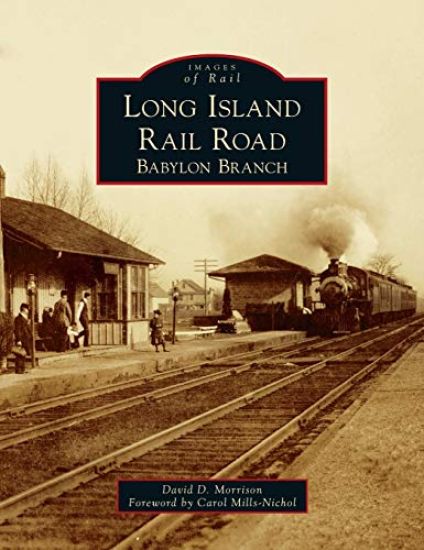
Long Island Rail Road

Long Island Rail Road

David D Morrison; Carol Mills-Nichol

Arcadia Pub (Sc)
2021
sidottu
The Long Island Rail Road is the oldest railroad in the country still operating under its original name. It is the busiest railroad in North America, with 90 million annual riders on 735 trains covering 11 different branches. The Babylon Branch, which serves 15 stations from Valley Stream to Babylon, carries 18 million annual riders over its 20-mile right-of-way. The branch has been totally electrified since 1925 and has not had any street crossings at grade since 1979. There are three signal towers and four junctions for other branches on this line. Two railroad museums are housed in former branch station buildings, those being Wantagh and Lindenhurst.
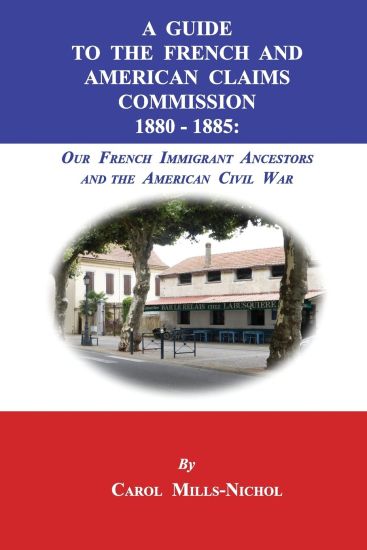
A Guide to the French and American Claims Commission 1880-1885: Our French Immigrant Ancestors and the American Civil War
The U.S. Civil War was fought mostly on southern soil where many foreign residents suffered significant monetary and personal losses. In 1880 the United States and France set up a commission to examine claims from French citizens living or doing business in America between 1861 and 1866. Over 700 claims were adjudicated although few were paid any significant amount of money. The case files, housed at the National Archives, are a treasure-trove of information about these immigrants and their families, their origins, their occupations, as well as the operations and conduct of both southern and northern troops who fought literally in their backyards. The majority of the claims were filed from Louisiana, although a hundred or so came from Mississippi, Alabama, Arkansas, California, Georgia, Illinois, Indiana, Kentucky, Missouri, Pennsylvania, Rhode Island, South Carolina, Tennessee, Texas and Virginia. These French immigrants had come from metropolitan France, most from small villages, although a few hailed from large venues such as Paris, Bordeaux, Nice, Nantes and Nancy. A substantial number also came from the French Antilles: Saint-Domingue (Ha ti) and Martinique. Others were natives of southern Belgium, the Rhinepfalz (Bavaria, Germany) and Monaco, born French between 1799 and 1815 during the reign of Napoleon. A select few of the claimants were wealthy businessmen and French noblemen who had assets, but had never resided, in the United States. Although the claimants' wealth and social status varied greatly, tragedy and hardship beset them equally. From Champagne Charlie Heidsieck, who earned, lost, and recovered a fortune in America, to women like Marie Dugout, who fled France with her daughter and her paramour to start life over in Louisiana, each story is unique and compelling. Sadly, only a handful of claimants, or their heirs, received enough money to compensate for their losses.
A Guide to the French and American Claims Commission 1880-1885: Our French Immigrant Ancestors and the American Civil War
The U.S. Civil War was fought mostly on southern soil where many foreign residents suffered significant monetary and personal losses. In 1880 the United States and France set up a commission to examine claims from French citizens living or doing business in America between 1861 and 1866. Over 700 claims were adjudicated although few were paid any significant amount of money. The case files, housed at the National Archives, are a treasure-trove of information about these immigrants and their families, their origins, their occupations, as well as the operations and conduct of both southern and northern troops who fought literally in their backyards. The majority of the claims were filed from Louisiana, although a hundred or so came from Mississippi, Alabama, Arkansas, California, Georgia, Illinois, Indiana, Kentucky, Missouri, Pennsylvania, Rhode Island, South Carolina, Tennessee, Texas and Virginia. These French immigrants had come from metropolitan France, most from small villages, although a few hailed from large venues such as Paris, Bordeaux, Nice, Nantes and Nancy. A substantial number also came from the French Antilles: Saint-Domingue (Ha ti) and Martinique. Others were natives of southern Belgium, the Rhinepfalz (Bavaria, Germany) and Monaco, born French between 1799 and 1815 during the reign of Napoleon. A select few of the claimants were wealthy businessmen and French noblemen who had assets, but had never resided, in the United States. Although the claimants' wealth and social status varied greatly, tragedy and hardship beset them equally. From Champagne Charlie Heidsieck, who earned, lost, and recovered a fortune in America, to women like Marie Dugout, who fled France with her daughter and her paramour to start life over in Louisiana, each story is unique and compelling. Sadly, only a handful of claimants, or their heirs, received enough money to compensate for their losses.
Louisiana's Jewish Immigrants from the Bas-Rhin, Alsace, France

Louisiana's Jewish Immigrants from the Bas-Rhin, Alsace, France

Carol Mills-Nichol

Janaway Publishing, Inc.
2014
sidottu
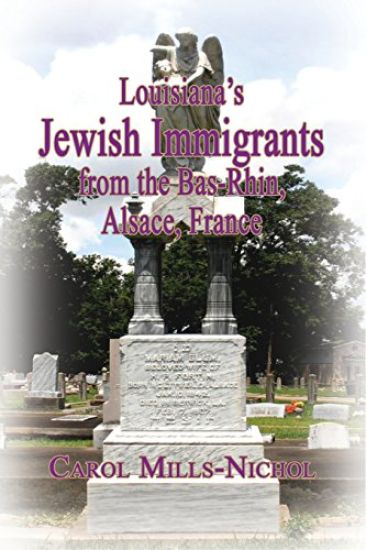
In this her latest book, Ms. Mills-Nichol has written about the French Jewish immigrants from the Bas-Rhin who settled in forty-nine of the sixty-four Louisiana parishes over the course of the last two centuries. She begins by explaining the special pitfalls of Jewish genealogical research, then goes on to show how to use both French and English on-line records in order to unlock the secrets of long-departed ancestors. Ms. Mills-Nichol includes four case studies as examples of how to tackle certain genealogical brick walls. While the novice researcher can expect to unlock many secrets from the past, there will also be many frustrations in store for him, many unanswered questions, and some details which may take years to uncover. Patience is the watchword for the competent genealogist. The remainder of the book is devoted to the study of over six hundred Jewish immigrants who left from places in the Bas-Rhin, Alsace, such as Strasbourg, Haguenau, Hoenheim, Harskirchen, Rothbach, Ingwiller, Schirrhoffen, Schliethal, and Oberlauterbach, to name just a few. Some unlucky souls never even completed the journey. They may have died of disease in European ports while awaiting passage, or perished at sea during the arduous voyage. Those lucky enough to arrive did not always settle in New Orleans. Many journeyed still farther inland to big towns such as Shreveport, Baton Rouge, Alexandria, Opelousas, Donaldsonville or smaller villages like Chackbay, Waterloo, Livonia, Mansura, Hohen Solms, Bunkie, Berwick, Big Cane, Bayou Goula, or Pointe- -la-H che. Still others were employed as store keepers on plantations such as Azima, Belmont, Cinclare, Cora, Cote Blanche, Cypress Hall, Live Oak, and Tezcuco. While many of them prospered in Louisiana, others suffered unspeakable tragedies in their adopted homeland. Some were murdered. Others ended their own lives. A frightening number of them succumbed to cholera, typhoid, or yellow fever, many within a few years of their arrival. Whatever their story, the reader cannot help but be caught up in the drama of the existence of these immigrants who risked everything to start anew in Louisiana.
Louisiana's Jewish Immigrants from the Bas-Rhin, Alsace, France

Louisiana's Jewish Immigrants from the Bas-Rhin, Alsace, France

Carol Mills-Nichol

Janaway Publishing, Inc.
2014
nidottu
In this her latest book, Ms. Mills-Nichol has written about the French Jewish immigrants from the Bas-Rhin who settled in forty-nine of the sixty-four Louisiana parishes over the course of the last two centuries. She begins by explaining the special pitfalls of Jewish genealogical research, then goes on to show how to use both French and English on-line records in order to unlock the secrets of long-departed ancestors. Ms. Mills-Nichol includes four case studies as examples of how to tackle certain genealogical brick walls. While the novice researcher can expect to unlock many secrets from the past, there will also be many frustrations in store for him, many unanswered questions, and some details which may take years to uncover. Patience is the watchword for the competent genealogist. The remainder of the book is devoted to the study of over six hundred Jewish immigrants who left from places in the Bas-Rhin, Alsace, such as Strasbourg, Haguenau, Hoenheim, Harskirchen, Rothbach, Ingwiller, Schirrhoffen, Schliethal, and Oberlauterbach, to name just a few. Some unlucky souls never even completed the journey. They may have died of disease in European ports while awaiting passage, or perished at sea during the arduous voyage. Those lucky enough to arrive did not always settle in New Orleans. Many journeyed still farther inland to big towns such as Shreveport, Baton Rouge, Alexandria, Opelousas, Donaldsonville or smaller villages like Chackbay, Waterloo, Livonia, Mansura, Hohen Solms, Bunkie, Berwick, Big Cane, Bayou Goula, or Pointe- -la-H che. Still others were employed as store keepers on plantations such as Azima, Belmont, Cinclare, Cora, Cote Blanche, Cypress Hall, Live Oak, and Tezcuco. While many of them prospered in Louisiana, others suffered unspeakable tragedies in their adopted homeland. Some were murdered. Others ended their own lives. A frightening number of them succumbed to cholera, typhoid, or yellow fever, many within a few years of their arrival. Whatever their story, the reader cannot help but be caught up in the drama of the existence of these immigrants who risked everything to start anew in Louisiana.