Kirjailija
Caroline Moorehead
Kirjat ja teokset yhdessä paikassa: 34 kirjaa, julkaisuja vuosilta 2004-2027, suosituimpien joukossa Iris Origo. Vertaile teosten hintoja ja tarkista saatavuus suomalaisista kirjakaupoista.
34 kirjaa
Kirjojen julkaisuhaarukka 2004-2027.
Iris Origo was one of the twentieth century's most attractive and intriguing women, a brilliantly perceptive historian and biographer whose works remain widely admired. Iris grew up in Italy where she became part of the colourful and privileged Anglo-Florentine set that included Edith Wharton, Harold Acton and the Berensons. When Iris married Antonio Origo, they bought and revived La Foce, a derelict stretch of the beautiful Val d'Orcia valley in Tuscany and created an estate that thrives to this day. During World War II they sided firmly with the Allies, taking considerable risks in protecting children and sheltering partisans and Iris's diary from that time, War in Val d'Orcia, is now considered a modern classic. Caroline Moorehead has drawn on many previously unpublished letters, diaries, and papers to write the definitive biography of a very remarkable woman.
Born in Paris 1893, a precocious and tough Freya Stark spent her childhood wondering across Europe, speaking three languages by the time she was five. She became one of the twentieth-century's most remarkable and inspirational women. Renowned for her flamboyant and unorthodox behaviour, Freya was also self-disciplined, courageous and remained fearlessly independent throughout her life. As an explorer she was unconventional, always travelling alone, without money or support. Her expeditions in Persia and the Hadhramaut during the thirties established her reputation not only as a great traveller and writer, but also as a geographer, historian and archaeologist. Caroline Moorehead brilliantly captures Freya's extraordinary and eventful life that was tempered by a constant struggle against ill health and loneliness, in this compelling biography.
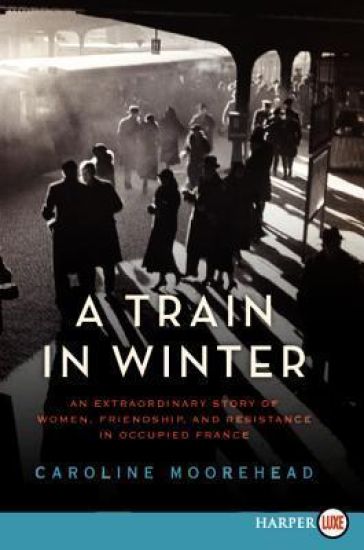
In January 1943, 230 women of the French Resistance were sent to the death camps by the Nazis who had invaded and occupied their country. This is their story, told in full for the first time--a searing and unforgettable chronicle of terror, courage, defiance, survival, and the power of friendship. Caroline Moorehead, a distinguished biographer, human rights journalist, and the author of Dancing to the Precipice and Human Cargo, brings to life an extraordinary story that readers of Mitchell Zuckoff's Lost in Shangri-La, Erik Larson's In the Garden of Beasts, and Laura Hillenbrand's Unbroken will find an essential addition to our retelling of the history of World War II--a riveting, rediscovered story of courageous women who sacrificed everything to combat the march of evil across the world.
Discover the life of one of the twentieth century's most significant and notorious war correspondents, and the third wife of Ernest Hemingway.Martha Gellhorn's journalism tracks many of the flashpoints of the twentieth century; as a young woman she witnessed the suffering of the American Depression and risked her life in the Spanish Civil War. Her dispatches from the front made her a legend, yet her private life was often messy and volcanic. Her determination to be a war correspondent - and her conspicuous success - contributed to the breakdown of her infamously stormy marriage to Ernest Hemingway. In this mesmerising biography of a life that spanned the twentieth century, Moorehead reveals how passionately Martha fought against injustice, and how determined she was to catch the human story.'A deeply sympathetic portrait... [it shows] an overwhelming sense of what it is to be human' Daily Telegraph
Corruption, sleaze and violence were woven into the fabric of twentieth-century Sicilian life, as the Mafia rose to dominance. This is the story of one man who stood in opposition. In 1986, the largest Mafia trial in Italy’s history took place in Sicily. The maxi-processo saw 471 men and 4 women take the stand, accused of kidnapping, extortion, drug trafficking and many thousands of murders. Sitting in the gallery was Leonardo Sciascia, then aged sixty-five. One of the greatest European writers of the twentieth century, he had published the first Mafia novel, The Day of the Owl, in 1961, and was widely seen by Italians as a true moral figure in a country where corruption had seeped into every corner of public and private life. Sciascia was born in 1921 and came of age as the Mafia grew to prominence across Sicily. Widespread poverty and hardship following the First World War meant that many Sicilians no longer recognised Rome’s leadership, which had left a void for local gangsters to fill. Witnessing the scale of corruption and violence, Sciascia predicted it would soon spread north, and he was right: by the 1980s, the Mafia had infiltrated every level of Italian politics and grown into an international, highly successful business. In A Sicilian Man, prize-winning historian and biographer Caroline Moorehead charts Sciascia’s life against the rise of the Mafia, and lays out the thrilling and devastating struggle that ensued for Italy’s soul.
Corruption, sleaze and violence were woven into the fabric of 20th-century Sicilian life, as the Mafia rose to dominance; this is the story of the one man who stood in opposition.In 1986, the largest Mafia trial in Italy’s history took place in Sicily. The maxi-processo saw 462 men and 4 women take the stand, accused of kidnapping, extortion, drug trafficking and thousands upon thousands of murders. Sitting in the galley was Leonardo Sciascia, then aged 65. One of the greatest European writers of the 20th century, he had published the only fictional account of the Mafia, The Day of the Owl, in 1961, and was widely seen by Italians as the one true moral figure in a county where corruption had seeped into every corner of public and private life.Sciascia was born in 1921 and came of age alongside the then-adolescent Mafia. Following the First World War, Sicily faced extreme poverty and hardship, and many Sicilians did not recognise Rome’s leadership, leaving a void local gangsters would soon fill. Witnessing the spread of corruption and violence in his own hometown, Sciascia predicted it would soon spread north, and he was right: by the 1980s, the Mafia had infiltrated every level of Italian politics and grown into an international, highly successful business.In A Sicilian Man, prize-winning historian and biographer Caroline Moorehead charts Sciascia’s life against the rise of the Mafia, and lays out the thrilling and devastating struggle that ensued for Italy’s soul.
Edda byla starshim i ljubimym rebenkom italjanskogo diktatora Benito Mussolini, zhenoj grafa Galeatstso Chiano, ministra inostrannykh del Italii, i odnoj iz samykh vlijatelnykh zhenschin Evropy 1930-kh godov. Neverojatno silnoj dukhom, krajne umnoj i obajatelnoj, etoj zhenschine prishlos projti cherez kolossalnye trudnosti i utraty: rasstrel muzha po prigovoru ottsa; otrechenie ot diktatora-ottsa i ego politicheskikh vzgljadov; pobeg v Shvejtsariju; zakljuchenie pod strazhu i ssylka po obvineniju v posobnichestve fashistam; dalnejshaja zhizn s klejmom na vsej seme. Eta kniga posvjaschena ne tolko tragicheskoj istorii Eddy Mussolini (Chiano), no i istorii Italii i uzhasajuschej sile fashizma, tomu, kak besprepjatstvenno on zakrepilsja v strane, oslablennoj vojnoj, i na kontinente, pogrjazshem v khaose i otchajanno stremjaschemsja k miru.Kniga osnovana na arkhivnykh materialakh, nekotorye iz kotorykh byli nedavno opublikovany, a takzhe memuarakh i intervju.
Mussolini's Daughter: The Most Dangerous Woman in Europe
Caroline Moorehead
HARPER PERENNIAL
2023
nidottu
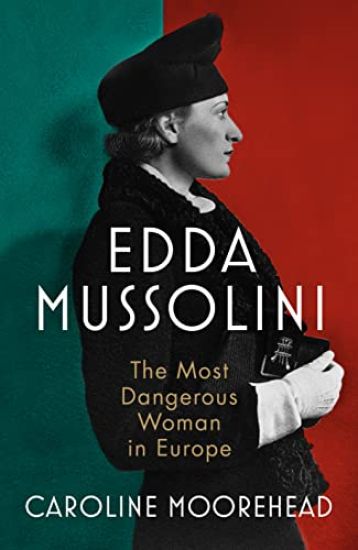
A thrilling biography of Edda Mussolini--Benito Mussolini's favorite daughter, one of the most influential women in 1930s Europe--and a heart-stopping account of the unraveling of the Fascist dream in Italy, from award-winning historian and author of the acclaimed Resistance Quartet, Caroline Moorehead "Reads like a page-turning thriller."--BookPageEdda Mussolini was the Italian dictator Benito Mussolini's oldest and favorite child. At 19, she was married to Count Galleazzo Ciano, Il Duce's Minister for Foreign Affairs during the 1930s, the most turbulent decade in Italy's fascist history. In the years preceding World War II, Edda ruled over Italy's aristocratic families and the cultured and middle classes while selling Fascism on the international stage. How a young woman wielded such control is the heart of Moorehead's fascinating history. The issues that emerge reveal not only a great deal about the power of fascism, but also the ease with which dictatorship so easily took hold in a country weakened by war and a continent mired in chaos and desperate for peace.Drawing on a wealth of archival material, some newly released, along with memoirs and personal papers, Mussolini's Daughter paints a portrait of a woman in her twenties whose sheer force of character and ruthless narcissism helped impose a brutal and vulgar movement on a pliable and complicit society. Yet as Moorehead shows, not even Edda's colossal willpower, her scheming, nor her father's avowed love could save her husband from Mussolini's brutal vengeance.As she did in her Resistance Quartet, Moorehead delves deep into the past, exploring what fascism felt like to those living under it, how it blossomed and grew, and how fascists and aristocrats joined forces to pursue ten years of extravagance, amorality, and excessive luxury--greed, excess, and ambition that set the world on fire. The result is a powerful portrait of a young woman who played a key role in one of the most terrifying and violent periods in human history.
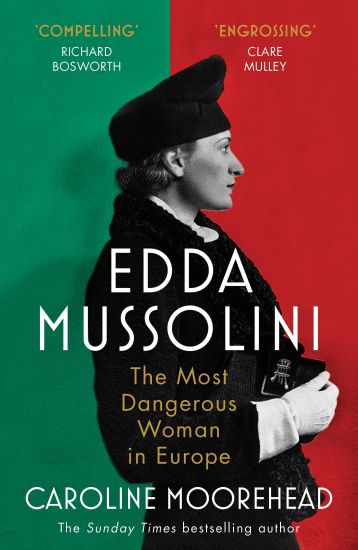
A thrilling biography of Benito Mussolini's favourite daughter, and a heart-stopping account of the unravelling of the Fascist dream in Italy'Engrossing... Moorehead has a spirited turn of phrase, a keen eye for the telling detail and pungent quote, and a gift for marshaling complex material' Jenny Uglow, New York Times Book ReviewEdda Mussolini was Benito's favourite daughter: spoilt, venal and uneducated but also clever, brave, and ultimately loyal. She was her father's confidante during the 20 years of Fascist rule and married Foreign Secretary Galeazzo Ciano, making them the most celebrated couple in Roman fascist society.Their fortunes turned in 1943, when Ciano voted against Mussolini in a plot to bring him down. In a dramatic story that takes in hidden diaries, her father's fall and her husband's execution, we come to know a complicated, bold and determined woman who emerges not just as a witness but as a key player in some of the twentieth century's defining moments.'Vividly told, engrossing history' CLARE MULLEY, author of The Women Who Flew for Hitler'Precise, empathic . . . a profoundly satisfying, albeit wistful, read and . . . a worryingly relevant one' GUARDIAN
A thrilling biography of Edda Mussolini--Benito Mussolini's favorite daughter, one of the most influential women in 1930s Europe--and a heart-stopping account of the unraveling of the Fascist dream in Italy, from award-winning historian and author of the acclaimed Resistance Quartet, Caroline Moorehead "Reads like a page-turning thriller."--BookPageEdda Mussolini was the Italian dictator Benito Mussolini's oldest and favorite child. At 19, she was married to Count Galleazzo Ciano, Il Duce's Minister for Foreign Affairs during the 1930s, the most turbulent decade in Italy's fascist history. In the years preceding World War II, Edda ruled over Italy's aristocratic families and the cultured and middle classes while selling Fascism on the international stage. How a young woman wielded such control is the heart of Moorehead's fascinating history. The issues that emerge reveal not only a great deal about the power of fascism, but also the ease with which dictatorship so easily took hold in a country weakened by war and a continent mired in chaos and desperate for peace.Drawing on a wealth of archival material, some newly released, along with memoirs and personal papers, Mussolini's Daughter paints a portrait of a woman in her twenties whose sheer force of character and ruthless narcissism helped impose a brutal and vulgar movement on a pliable and complicit society. Yet as Moorehead shows, not even Edda's colossal willpower, her scheming, nor her father's avowed love could save her husband from Mussolini's brutal vengeance.As she did in her Resistance Quartet, Moorehead delves deep into the past, exploring what fascism felt like to those living under it, how it blossomed and grew, and how fascists and aristocrats joined forces to pursue ten years of extravagance, amorality, and excessive luxury--greed, excess, and ambition that set the world on fire. The result is a powerful portrait of a young woman who played a key role in one of the most terrifying and violent periods in human history.
'Vividly told, engrossing history' CLARE MULLEY, author of The Women Who Flew for Hitler'Precise, empathic . . . a profoundly satisfying, albeit wistful, read and . . . a worryingly relevant one' GUARDIANA thrilling biography of Benito Mussolini's favourite daughter, and a heart-stopping account of the unravelling of the Fascist dream in ItalyEdda Mussolini was Benito's favourite daughter: spoilt, venal, uneducated but clever, faithless but flamboyant, a brilliant diplomat, wild but brave, and ultimately strong and loyal.She was her father's confidante during the 20 years of Fascist rule, acting as envoy to both Germany and Britain, and playing a part in steering Italy to join forces with Hitler. From her early twenties she was effectively first lady of Italy. She married Galeazzo Ciano, who would become the youngest Foreign Secretary in Italian history, and they were the most celebrated and glamorous couple in elegant, vulgar Roman fascist society.Their fortunes turned in 1943, when Ciano voted against Mussolini in a plot to bring him down, and his father-in-law did not forgive him. In a dramatic story that takes in hidden diaries, her father's fall and her husband's execution, an escape into Switzerland and a period in exile, we come to know a complicated, bold and determined woman who emerges not just as a witness but as a key player in some of the twentieth century's defining moments. And we see Fascist Italy with all its glamour, decadence and political intrigue, and the turbulence before its violent end.
April 6, 1944. A detachment of German soldiers arrive in a rural French town, hunting down resistance fighters, many of whom are hiding in the region. More than sixty years later, the villagers clearly remember the day when four peasants from a nearby village were taken hostage and shot as an example to others. But do they remember the whole story? Jean-Marie Borzeix sets out to investigate the events of Holy Thursday 1944, and to reveal the hidden truths of that fateful day. He uncovers the story of a mysterious 'fifth man' shot alongside the resisters and eventually unravels a trail which leads him to Paris, Israel and into the darkest corners of the Holocaust in France. A captivating story, the events of this day in a small, entirely typical, town illuminate the true impact of World War II in France.
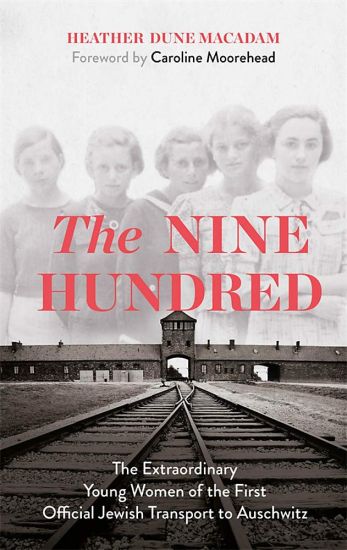
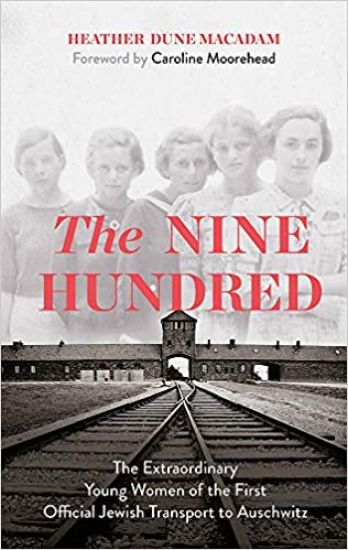
A remarkable story of courage in the face of injustice and brutality in the Second World War Books such as this are essential: they remind modern readers of events that should never be forgotten' - Caroline Moorehead On March 25, 1942, nearly a thousand young, unmarried Jewish women boarded a train in Poprad, Slovakia. Filled with a sense of adventure and national pride, they left their parents' homes wearing their best clothes and confidently waving good-bye. Believing they were going to work in a factory for a few months, they were eager to report for government service. That is not what happened. The young women - many of them teenagers - were sent on their way to Auschwitz. Their government paid 500 Reichsmarks (about £160) apiece for the Nazis to take them as cheap, forced labour. Of those 999 innocent deportees, only a few would survive.The facts of the first official Jewish transport to Auschwitz are little known, yet profoundly relevant today. These were not resistance fighters or prisoners of war. There were no men among them. Sent to almost certain death, the young women were rendered powerless and treated as insignificant not only because they were Jewish - but also because they were young women. Now, for the first time, acclaimed author Heather Dune Macadam reveals their poignant stories. Drawing on extensive interviews with survivors, and consulting with historians, witnesses, and relatives of those first deportees, The Nine Hundred sheds crucial light on an overlooked moment in the Holocaust, and in women's history in the twentieth century.
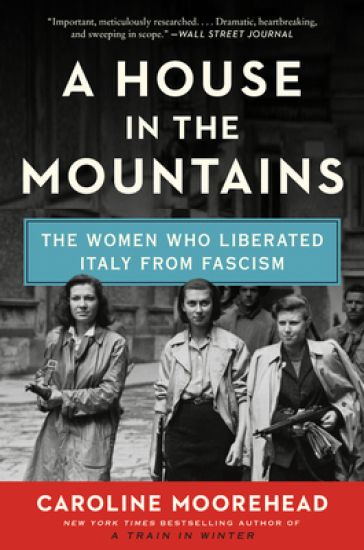
A House in the Mountains: The Women Who Liberated Italy from Fascism
Caroline Moorehead
HARPER PERENNIAL
2021
nidottu
"Dramatic, heartbreaking and sweeping in scope." --Wall Street JournalThe acclaimed author of A Train in Winter returns with the "moving finale" (The Economist) of her Resistance Quartet--the powerful and inspiring true story of the women of the partisan resistance who fought against Italy's fascist regime during World War II.In the late summer of 1943, when Italy broke with the Germans and joined the Allies after suffering catastrophic military losses, an Italian Resistance was born. Four young Piedmontese women--Ada, Frida, Silvia and Bianca--living secretly in the mountains surrounding Turin, risked their lives to overthrow Italy's authoritarian government. They were among the thousands of Italians who joined the Partisan effort to help the Allies liberate their country from the German invaders and their Fascist collaborators. What made this partisan war all the more extraordinary was the number of women--like this brave quartet--who swelled its ranks.The bloody civil war that ensued pitted neighbor against neighbor, and revealed the best and worst in Italian society. The courage shown by the partisans was exemplary, and eventually bound them together into a coherent fighting force. But the death rattle of Mussolini's two decades of Fascist rule--with its corruption, greed, and anti-Semitism--was unrelentingly violent and brutal.Drawing on a rich cache of previously untranslated sources, prize-winning historian Caroline Moorehead illuminates the experiences of Ada, Frida, Silvia, and Bianca to tell the little-known story of the women of the Italian partisan movement fighting for freedom against fascism in all its forms, while Europe collapsed in smoldering ruins around them.
A House in the Mountains: The Women Who Liberated Italy from Fascism
Caroline Moorehead
Harpercollins
2020
mp3 cd-levyllä
The acclaimed author of A Train in Winter returns with the final volume in her Resistance Quartet--the powerful and inspiring true story of the women of the partisan resistance who fought against Italy's fascist regime during World War II--as riveting, intimate, and cinematic as the novels The Nightingale and The Alice Network.In the late summer of 1943, when Italy broke with the Germans and joined the Allies after suffering catastrophic military losses, an Italian Resistance was born. Four young Piedmontese women--Ada, Frida, Silvia and Bianca--living secretly in the mountains surrounding Turin, risked their lives to overthrow Italy's authoritarian government. They were among the thousands of Italians who joined the Partisan effort to help the Allies liberate their country from the German invaders and their Fascist collaborators. What made this partisan war all the more extraordinary was the number of women--like this brave quartet--who swelled its ranks.The bloody civil war that ensued pitted neighbor against neighbor, and revealed the best and worst in Italian society. The courage shown by the partisans was exemplary, and eventually bound them together into a coherent fighting force. But the death rattle of Mussolini's two decades of Fascist rule--with its corruption, greed, and anti-Semitism--was unrelentingly violent and brutal. Drawing on a rich cache of previously untranslated sources, prize-winning historian Caroline Moorehead illuminates the experiences of Ada, Frida, Silvia, and Bianca to tell the little-known story of the women of the Italian partisan movement fighting for freedom against fascism in all its forms, while Europe collapsed in smoldering ruins around them.A House in the Mountains features black-and-white photographs throughout.
A House in the Mountains: The Women Who Liberated Italy from Fascism
Caroline Moorehead
Harper Large Print
2020
nidottu
"Dramatic, heartbreaking and sweeping in scope." --Wall Street JournalThe acclaimed author of A Train in Winter returns with the "moving finale" (The Economist) of her Resistance Quartet--the powerful and inspiring true story of the women of the partisan resistance who fought against Italy's fascist regime during World War II.In the late summer of 1943, when Italy broke with the Germans and joined the Allies after suffering catastrophic military losses, an Italian Resistance was born. Four young Piedmontese women--Ada, Frida, Silvia and Bianca--living secretly in the mountains surrounding Turin, risked their lives to overthrow Italy's authoritarian government. They were among the thousands of Italians who joined the Partisan effort to help the Allies liberate their country from the German invaders and their Fascist collaborators. What made this partisan war all the more extraordinary was the number of women--like this brave quartet--who swelled its ranks.The bloody civil war that ensued pitted neighbor against neighbor, and revealed the best and worst in Italian society. The courage shown by the partisans was exemplary, and eventually bound them together into a coherent fighting force. But the death rattle of Mussolini's two decades of Fascist rule--with its corruption, greed, and anti-Semitism--was unrelentingly violent and brutal.Drawing on a rich cache of previously untranslated sources, prize-winning historian Caroline Moorehead illuminates the experiences of Ada, Frida, Silvia, and Bianca to tell the little-known story of the women of the Italian partisan movement fighting for freedom against fascism in all its forms, while Europe collapsed in smoldering ruins around them.
A Bold and Dangerous Family: The Remarkable Story of an Italian Mother, Her Two Sons, and Their Fight Against Fascism
Caroline Moorehead
HARPER PERENNIAL
2018
nidottu
Shortlisted for the Costa AwardLonglisted for the Baillie Gifford PrizeThe acclaimed author of A Train in Winter and Village of Secrets delivers the next chapter in "The Resistance Quartet" the astonishing story of the aristocratic Italian family who stood up to Mussolini's fascism, and whose efforts helped define the path of Italy in the years between the World Wars--a profile in courage that remains relevant today.Members of the cosmopolitan, cultural aristocracy of Florence at the beginning of the twentieth century, the Rosselli family, led by their fierce matriarch, Amelia, were vocal anti-fascists. As populist, right-wing nationalism swept across Europe after World War I, and Italy's Prime Minister, Benito Mussolini, began consolidating his power, Amelia's sons Carlo and Nello led the opposition, taking a public stand against Il Duce that few others in their elite class dared risk. When Mussolini established a terrifying and brutal police state controlled by his Blackshirts--the squaddristi--the Rossellis and their anti-fascist circle were transformed into active resisters.In retaliation, many of the anti-fascists were arrested and imprisoned; others left the country to escape a similar fate. Tragically, Carlo and Nello were eventually assassinated by Mussolini's secret service. After Italy entered World War II in June 1940, Amelia, thanks to visas arranged by First Lady Eleanor Roosevelt herself, fled to New York City with the remaining members of her family.Renowned historian Caroline Moorehead paints an indelible picture of Italy in the first half of the twentieth century, offering an intimate account of the rise of Il Duce and his squaddristi; life in Mussolini's penal colonies; the shocking ambivalence and complicity of many prominent Italian families seduced by Mussolini's promises; and the bold, fractured resistance movement whose associates sacrificed their lives to fight fascism. In A Bold and Dangerous Family, Moorehead once again pays tribute to heroes who fought to uphold our humanity during one of history's darkest chapters.