Kirjojen hintavertailu. Mukana 12 595 353 kirjaa ja 12 kauppaa.

Kirjailija

Caroline Sturdy Colls

Kirjat ja teokset yhdessä paikassa: 6 kirjaa, julkaisuja vuosilta 2013-2026, suosituimpien joukossa Finding Treblinka. Vertaile teosten hintoja ja tarkista saatavuus suomalaisista kirjakaupoista.

6 kirjaa

Kirjojen julkaisuhaarukka 2013-2026.

Finding Treblinka

Finding Treblinka

Caroline Sturdy Colls

CORNELL UNIVERSITY PRESS
2026
sidottu
Finding Treblinka challenges the long-held belief that Treblinka, the second-deadliest extermination camp operated by Nazi Germany in occupied Poland, was completely destroyed. Even though Nazis demolished buildings, exhumed and burned victims' bodies, and planted trees to obscure the site, Caroline Sturdy Colls uncovers what still lies beneath the surface and what this material evidence reveals about the camp's operations, evolution, and afterlife. Sturdy Colls combines archival insight through newly uncovered and unpublished documents, photographs, maps, and testimonies with the first non-invasive archaeological surveys and excavations ever conducted at Treblinka. Developed in accordance with Jewish burial law (Halacha), her methods allow for ethical access to Holocaust landscapes long considered off limits to archaeologists and offer powerful material counterpoint to the myth of Treblinka's disappearance. Sturdy Colls not only demonstrates that traces of atrocity continue to shape how we remember and understand the Holocaust, but also how archaeology can confront absence with presence, silence with proof. Finding Treblinka reveals how genocide inscribes itself into the land, and how, with the right tools, we can still read it.
Finding Treblinka

Finding Treblinka

Caroline Sturdy Colls

CORNELL UNIVERSITY PRESS
2026
pokkari
Finding Treblinka challenges the long-held belief that Treblinka, the second-deadliest extermination camp operated by Nazi Germany in occupied Poland, was completely destroyed. Even though Nazis demolished buildings, exhumed and burned victims' bodies, and planted trees to obscure the site, Caroline Sturdy Colls uncovers what still lies beneath the surface and what this material evidence reveals about the camp's operations, evolution, and afterlife. Sturdy Colls combines archival insight through newly uncovered and unpublished documents, photographs, maps, and testimonies with the first non-invasive archaeological surveys and excavations ever conducted at Treblinka. Developed in accordance with Jewish burial law (Halacha), her methods allow for ethical access to Holocaust landscapes long considered off limits to archaeologists and offer powerful material counterpoint to the myth of Treblinka's disappearance. Sturdy Colls not only demonstrates that traces of atrocity continue to shape how we remember and understand the Holocaust, but also how archaeology can confront absence with presence, silence with proof. Finding Treblinka reveals how genocide inscribes itself into the land, and how, with the right tools, we can still read it.
'Adolf Island'

'Adolf Island'

Caroline Sturdy Colls; Kevin Colls

MANCHESTER UNIVERSITY PRESS
2022
sidottu
‘Adolf Island’ offers new forensic, archaeological and spatial perspectives on the Nazi forced and slave labour programme that was initiated on the Channel Island of Alderney during its occupation in the Second World War. Drawing on extensive archival research and the results of the first in-field investigations of the ‘crime scenes’ since 1945, the book identifies and characterises the network of concentration and labour camps, fortifications, burial sites and other material traces connected to the occupation, providing new insights into the identities and experiences of the men and women who lived, worked and died within this landscape. Moving beyond previous studies focused on military aspects of occupation, the book argues that Alderney was intrinsically linked to wider systems of Nazi forced and slave labour.
Holocaust Archaeologies

Holocaust Archaeologies

Caroline Sturdy Colls

Springer International Publishing AG
2016
nidottu
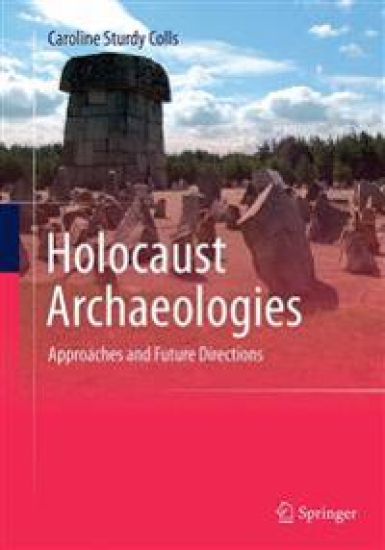
Holocaust Archaeologies: Approaches and Future Directions aims to move archaeological research concerning the Holocaust forward through a discussion of the variety of the political, social, ethical and religious issues that surround investigations of this period and by considering how to address them. It considers the various reasons why archaeological investigations may take place and what issues will be brought to bear when fieldwork is suggested. It presents an interdisciplinary methodology in order to demonstrate how archaeology can (uniquely) contribute to the history of this period. Case examples are used throughout the book in order to contextualise prevalent themes and a variety of geographically and typologically diverse sites throughout Europe are discussed. This book challenges many of the widely held perceptions concerning the Holocaust, including the idea that it was solely an Eastern European phenomena centred on Auschwitz and the belief that othersites connected to it were largely destroyed or are well-known. The typologically , temporally and spatial diverse body of physical evidence pertaining to this period is presented and future possibilities for investigation of it are discussed. Finally, the volume concludes by discussing issues relating to the “re-presentation” of the Holocaust and the impact of this on commemoration, heritage management and education. This discussion is a timely one as we enter an age without survivors and questions are raised about how to educate future generations about these events in their absence.
Holocaust Archaeologies

Holocaust Archaeologies

Caroline Sturdy Colls

Springer International Publishing AG
2015
sidottu
Holocaust Archaeologies: Approaches and Future Directions aims to move archaeological research concerning the Holocaust forward through a discussion of the variety of the political, social, ethical and religious issues that surround investigations of this period and by considering how to address them. It considers the various reasons why archaeological investigations may take place and what issues will be brought to bear when fieldwork is suggested. It presents an interdisciplinary methodology in order to demonstrate how archaeology can (uniquely) contribute to the history of this period. Case examples are used throughout the book in order to contextualise prevalent themes and a variety of geographically and typologically diverse sites throughout Europe are discussed. This book challenges many of the widely held perceptions concerning the Holocaust, including the idea that it was solely an Eastern European phenomena centred on Auschwitz and the belief that othersites connected to it were largely destroyed or are well-known. The typologically , temporally and spatial diverse body of physical evidence pertaining to this period is presented and future possibilities for investigation of it are discussed. Finally, the volume concludes by discussing issues relating to the “re-presentation” of the Holocaust and the impact of this on commemoration, heritage management and education. This discussion is a timely one as we enter an age without survivors and questions are raised about how to educate future generations about these events in their absence.
Forensic Approaches to Buried Remains

Forensic Approaches to Buried Remains

John Hunter; Barrie Simpson; Caroline Sturdy Colls

John Wiley Sons Inc
2013
nidottu
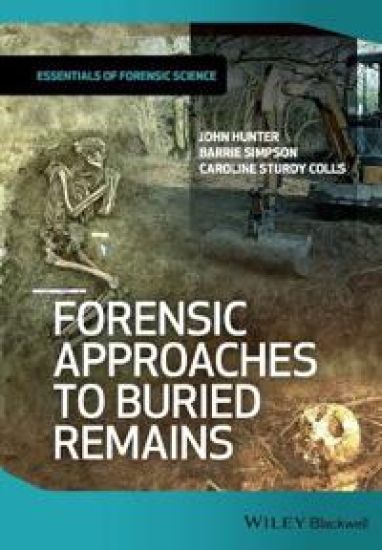
The field of forensic archaeology has developed over recent years from being a branch of conventional archaeology into a well-established discipline in its own right. Forensic Approaches to Buried Remains takes an innovative approach to the subject by placing the role of the forensic archaeologist within the wider forensic environment; it identifies new areas of interdisciplinary research and practice, and evaluates practical difficulties. The authors see this book as a reflection of the subject’s development, and as a knowledge base for the next generation of forensic archaeologists. Areas covered include: Search logistics, integration and specialist search scenariosLevels of confidence in site search and eliminationUrban and rural landscape reconstruction in both short and long term casesThe integration of cadaver dogs and earth-moving machineryThe recovery of multiple evidence typesSampling strategies, spatial relevance and datingMultiple burial scenarios As part of the Essential Forensic Science book series this book will provide students and practitioners alike with an invaluable resource outlining both the major developments in the discipline, as well as original approaches to the search for, and recovery of buried remains.