Kirjojen hintavertailu. Mukana 12 390 323 kirjaa ja 12 kauppaa.

Kirjailija

Caroline Warman

Kirjat ja teokset yhdessä paikassa: 3 kirjaa, julkaisuja vuosilta 2002-2020, suosituimpien joukossa Sade. Vertaile teosten hintoja ja tarkista saatavuus suomalaisista kirjakaupoista.

3 kirjaa

Kirjojen julkaisuhaarukka 2002-2020.

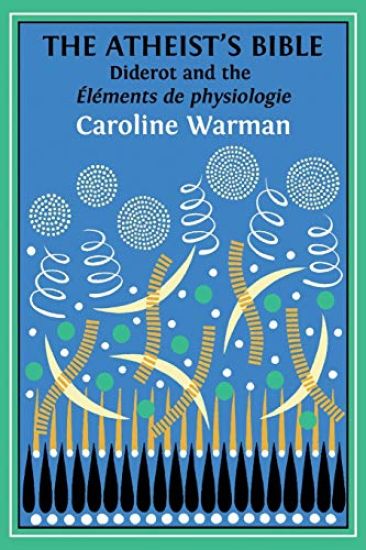
The Atheist's Bible

The Atheist's Bible

Caroline Warman

Open Book Publishers
2020
pokkari
'Love is harder to explain than hunger, for a piece of fruit does not feel the desire to be eaten' Denis Diderot's l ments de physiologie presents a world in flux, turning on the relationship between man, matter and mind. In this late work, Diderot delves playfully into the relationship between bodily sensation, emotion and perception, and asks his readers what it means to be human in the absence of a soul. The Atheist's Bible challenges prevailing scholarly views on Diderot's l ments, asserting its contemporary philosophical importance, and prompting its readers to inspect more closely this little-known and little-studied work. This book is accompanied by a digital edition of Jacques-Andr Naigeon's M moires historiques et philosophiques sur la vie et les ouvrages de Denis Diderot (1823), a work which, Warman argues, represents the first publication of Diderot's l ments, long before its official publication date of 1875. The Atheist's Bible constitutes a major contribution to the field of Diderot studies, and will be of further interest to scholars and students of materialist natural philosophy in the Age of Enlightenment and beyond.
The Atheist's Bible

The Atheist's Bible

Caroline Warman

Open Book Publishers
2020
sidottu
'Love is harder to explain than hunger, for a piece of fruit does not feel the desire to be eaten' Denis Diderot's l ments de physiologie presents a world in flux, turning on the relationship between man, matter and mind. In this late work, Diderot delves playfully into the relationship between bodily sensation, emotion and perception, and asks his readers what it means to be human in the absence of a soul. The Atheist's Bible challenges prevailing scholarly views on Diderot's l ments, asserting its contemporary philosophical importance, and prompting its readers to inspect more closely this little-known and little-studied work. This book is accompanied by a digital edition of Jacques-Andr Naigeon's M moires historiques et philosophiques sur la vie et les ouvrages de Denis Diderot (1823), a work which, Warman argues, represents the first publication of Diderot's l ments, long before its official publication date of 1875. The Atheist's Bible constitutes a major contribution to the field of Diderot studies, and will be of further interest to scholars and students of materialist natural philosophy in the Age of Enlightenment and beyond.

Sade

Sade

Caroline Warman

Voltaire Foundation
2002
nidottu
Sade’s personal fate has too long encouraged critics to concentrate on his personal isolation and personal revolt. Extraordinary as his life was, the light that it throws on his work casts into shade the intellectual context that was much more important to its generation than his actual experience. This book is about how Sade took a pure version of eighteenth-century materialism and rendered it into an even purer form of pornography. The eternal yet unequal clashing of atomic bodies became the endless torture of human ones. It traces the intellectual genealogy that links Sade to his materialist forebears (d’Holbach, Condillac, Buffon, Diderot, La Mettrie, Robinet, Delisle de Sales) and shows how the germs of cruel pleasure were already present in elements of their work, as much in their rhetoric and stylistics as in their arguments. Sade, aided by his grounding in the interpretative techniques of illicit clandestine and libertine literature, read them attentively and developed their presentation as well as their content into a flawlessly logical and self-referential system. Thus the arrogant philosopher (the author / the libertine) did not just mouth his cruel positions but enacted them, proving the behaviour of matter as he/she did so. This reading of Sade’s work refers its principal elements – shape, style and contents – back to the hardcore of materialism, offering an account which, while not making it more tolerable, renders it at once more accessible and more comprehensible.