Kirjojen hintavertailu. Mukana 12 390 323 kirjaa ja 12 kauppaa.

Kirjailija

Carolyn Ellis

Kirjat ja teokset yhdessä paikassa: 13 kirjaa, julkaisuja vuosilta 1995-2021, suosituimpien joukossa Revision. Vertaile teosten hintoja ja tarkista saatavuus suomalaisista kirjakaupoista.

13 kirjaa

Kirjojen julkaisuhaarukka 1995-2021.

Lead Conversations That Count

Lead Conversations That Count

Carolyn Ellis

Rowntree Press
2021
pokkari
Meetings Does your heart sink at the thought? When did you last attend a great one? Or are they wasted hours you'll never get back? Has meeting online only made things worse? In a busy and complex world, every conversation needs to count. We need constructive discussion, debate and decision-making processes, but technical expertise alone won't help you manage a roomful of people who disagree.If you are a meeting leader how you show up sets the bar for your meeting's success. Lead Conversations that Count offers a new approach to transform your meetings into productive and powerful events that people look forward to attending.Within these pages you'll learn the five COUNT building blocks that will prepare you to lead discussions, from online team meetings and daily standups to strategic retreats. Rich with tips, this book delivers a roadmap of practical tools to prepare for your next meeting in as little as ten minutes. If you are ready to ditch boring meetings and create meaningful, impactful dialogue with your team, then Lead Conversations that Count is for you.
Revision

Revision

Carolyn Ellis

Routledge
2020
nidottu
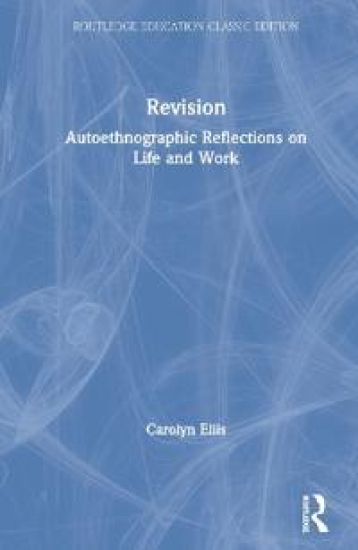
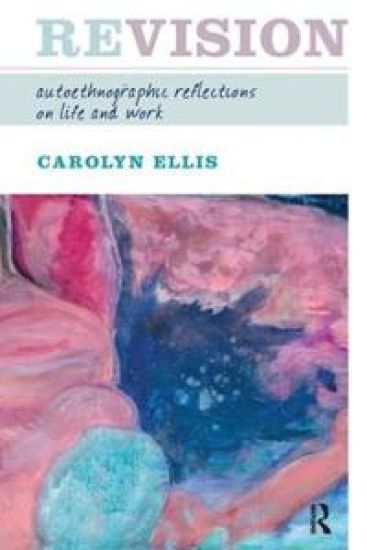
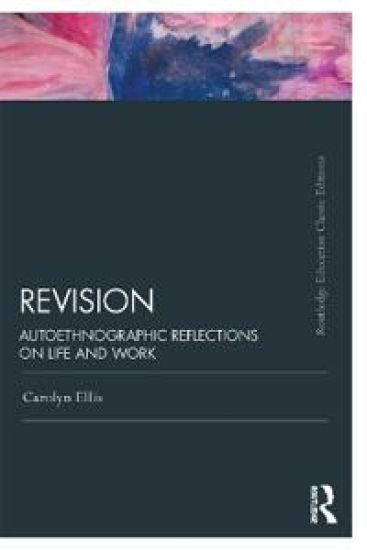
Carolyn Ellis is a prominent writer in the move toward personal, reflexive writing as an approach to academic research. In addition to her landmark books Final Negotiations and The Ethnographic I, she has authored numerous stories that demonstrate the emotional power and academic value of autoethnography. Now issued as a Routledge Education Classic Edition, Revision: Autoethnographic Reflections on Life and Work collects a dozen of Ellis’s stories—about the loss of her husband, brother and mother; of growing up in small town Virginia; about the ethical work of the ethnographer; and about emotionally charged life issues such as abortion, caregiving, and love. Atop these captivating stories, she adds the component of meta-autoethography—a layering of new interpretations, reflections, and vignettes to her older work. A new preface text by the author reflects on the subsequent developments in the author’s life and her vision for autoethnography since the book’s original publication. Demonstrating Carolyn’s extensive contribution to autoethnographic scholarship, this new edition offers compelling ideas and stories for qualitative researchers and a student-friendly text for courses.
Revision

Revision

Carolyn Ellis

Routledge
2020
sidottu
Carolyn Ellis is a prominent writer in the move toward personal, reflexive writing as an approach to academic research. In addition to her landmark books Final Negotiations and The Ethnographic I, she has authored numerous stories that demonstrate the emotional power and academic value of autoethnography. Now issued as a Routledge Education Classic Edition, Revision: Autoethnographic Reflections on Life and Work collects a dozen of Ellis’s stories—about the loss of her husband, brother and mother; of growing up in small town Virginia; about the ethical work of the ethnographer; and about emotionally charged life issues such as abortion, caregiving, and love. Atop these captivating stories, she adds the component of meta-autoethography—a layering of new interpretations, reflections, and vignettes to her older work. A new preface text by the author reflects on the subsequent developments in the author’s life and her vision for autoethnography since the book’s original publication. Demonstrating Carolyn’s extensive contribution to autoethnographic scholarship, this new edition offers compelling ideas and stories for qualitative researchers and a student-friendly text for courses.
Evocative Autoethnography

Evocative Autoethnography

Arthur Bochner; Carolyn Ellis

Left Coast Press Inc
2016
sidottu
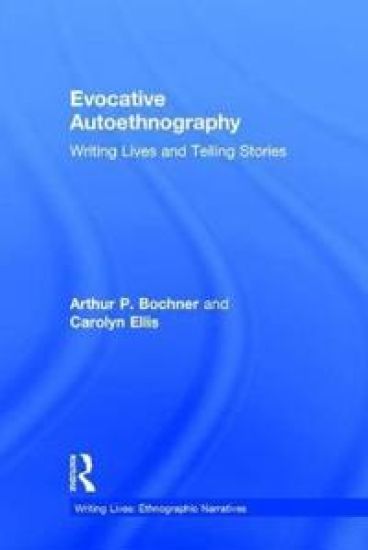
This comprehensive text is the first to introduce evocative autoethnography as a methodology and a way of life in the human sciences. Using numerous examples from their work and others, world-renowned scholars Arthur Bochner and Carolyn Ellis, originators of the method, emphasize how to connect intellectually and emotionally to the lives of readers throughout the challenging process of representing lived experiences. Written as the story of a fictional workshop, based on many similar sessions led by the authors, it incorporates group discussions, common questions, and workshop handouts. The book: describes the history, development, and purposes of evocative storytelling; provides detailed instruction on becoming a story-writer and living a writing life; examines fundamental ethical issues, dilemmas, and responsibilities;illustrates ways ethnography intersects with autoethnography; calls attention to how truth and memory figure into the works and lives of evocative autoethnographers.
Evocative Autoethnography

Evocative Autoethnography

Arthur Bochner; Carolyn Ellis

Left Coast Press Inc
2016
nidottu
This comprehensive text is the first to introduce evocative autoethnography as a methodology and a way of life in the human sciences. Using numerous examples from their work and others, world-renowned scholars Arthur Bochner and Carolyn Ellis, originators of the method, emphasize how to connect intellectually and emotionally to the lives of readers throughout the challenging process of representing lived experiences. Written as the story of a fictional workshop, based on many similar sessions led by the authors, it incorporates group discussions, common questions, and workshop handouts. The book: describes the history, development, and purposes of evocative storytelling; provides detailed instruction on becoming a story-writer and living a writing life; examines fundamental ethical issues, dilemmas, and responsibilities;illustrates ways ethnography intersects with autoethnography; calls attention to how truth and memory figure into the works and lives of evocative autoethnographers.
Autoethnography

Autoethnography

Tony E. Adams; Stacy Holman Jones; Carolyn Ellis

Oxford University Press Inc
2014
nidottu
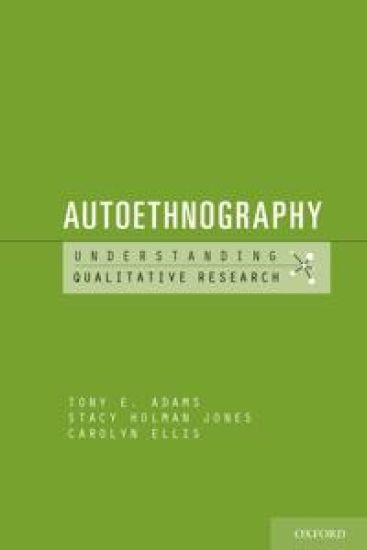
Autoethnography is a method of research that involves describing and analyzing personal experiences in order to understand cultural experiences. The method challenges canonical ways of doing research and recognizes how personal experience influences the research process. Autoethnography acknowledges and accomodates subjectivity, emotionality, and the researcher's influence on research. In this book, the authors provide a historical and conceptual overview of autoethnography. They share their stories of coming to autoethnography and identify key concerns and considerations that led to the development of the method. Next, they outline the purposes and practices--the core ideals--of autoethnography, how autoethnographers can accomplish these ideals, and why researchers might choose to do autoethnography. They describe the processes of doing autoethnography, conducting fieldwork, discussing ethics in research, and interpreting and analyzing personal experience, and they explore the various modes and techniques used and involved in writing autoethnography. They conclude with goals for creating and assessing autoethnography and describe the future of autoethnographic inquiry. Throughout, the authors provide numerous examples of their work and share key resources. This book will serve as both a guide to the practices of doing autoethnography and an exemplar of autoethnographic research processes and representations.
Revision

Revision

Carolyn Ellis

Left Coast Press Inc
2008
sidottu
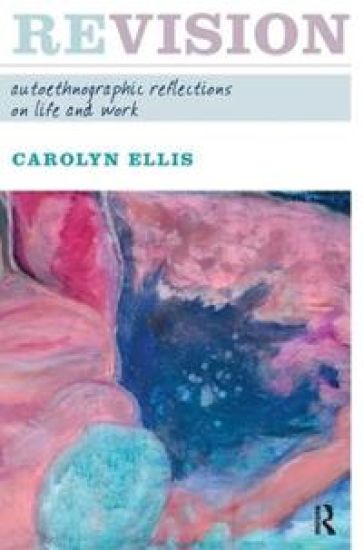
Carolyn Ellis is the leading writer in the move toward personal, autobiographical writing as a strategy for academic research. In addition to her landmark books Final Negotiations and The Ethnographic I, she has authored numerous stories that demonstrate the emotional power and academic value of autoethnography. This volume collects a dozen of Ellis’s stories—about the loss of her husband, brother and mother; of growing up in small town Virginia; about the work of the ethnographer; about emotionally charged life issues such as abortion, caregiving, and love. Atop these captivating stories, she adds the component of meta-autoethography—a layering of new interpretations, reflections, and vignettes to her older work. An important new work for qualitative researchers and a student-friendly text for courses.
Revision

Revision

Carolyn Ellis

Left Coast Press Inc
2008
nidottu
Carolyn Ellis is the leading writer in the move toward personal, autobiographical writing as a strategy for academic research. In addition to her landmark books Final Negotiations and The Ethnographic I, she has authored numerous stories that demonstrate the emotional power and academic value of autoethnography. This volume collects a dozen of Ellis’s stories—about the loss of her husband, brother and mother; of growing up in small town Virginia; about the work of the ethnographer; about emotionally charged life issues such as abortion, caregiving, and love. Atop these captivating stories, she adds the component of meta-autoethography—a layering of new interpretations, reflections, and vignettes to her older work. An important new work for qualitative researchers and a student-friendly text for courses.
The Ethnographic I

The Ethnographic I

Carolyn Ellis

AltaMira Press,U.S.
2003
nidottu
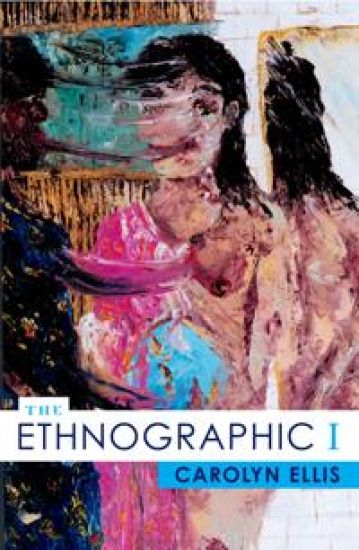
A methodological textbook on autoethnography should be easily distinguishable from the standard methods text. Carolyn Ellis, the leading proponent of these methods, does not disappoint. She weaves both methodological advice and her own personal stories into an intriguing narrative about a fictional graduate course she instructs. In it, you learn about her students and their projects and understand the wide array of topics and strategies that fall under the label autoethnography. Through Ellis's interactions with her students, you are given useful strategies for conducting a study, including the need for introspection, the struggles of the budding ethnographic writer, the practical problems in explaining results of this method to outsiders, and the moral and ethical issues that get raised in this intimate form of research. Anyone who has taken or taught a course on ethnography will recognize these issues and appreciate Ellis's humanistic, personal, and literary approach toward incorporating them into her work. A methods text or a novel? The Ethnographic 'I' answers yes to both.
Final Negotiations

Final Negotiations

Carolyn Ellis

Temple University Press,U.S.
1995
sidottu
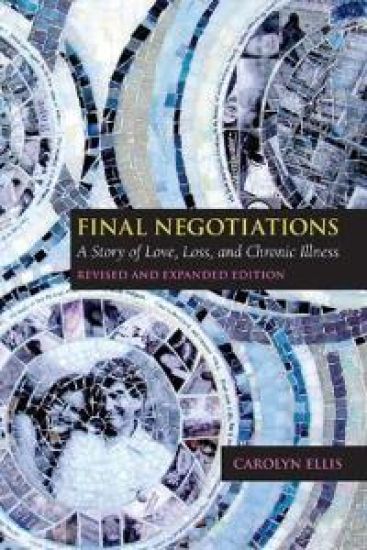
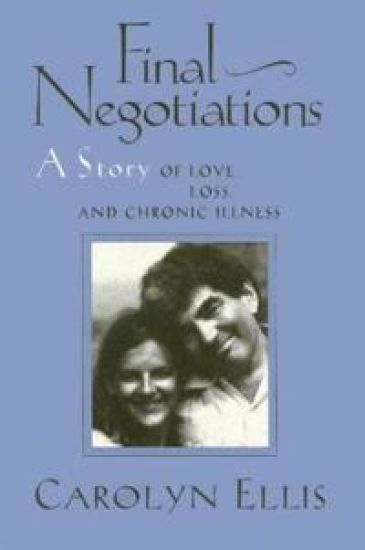
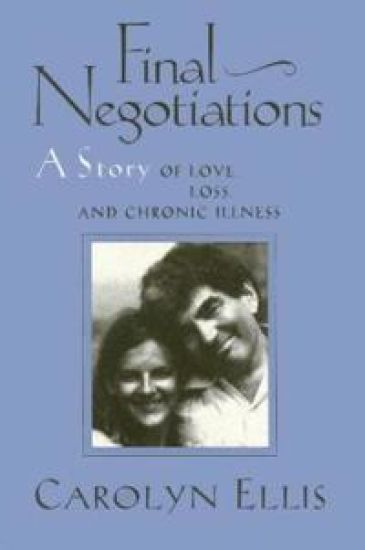
When Carolyn Ellis, a graduate student, and Gene Weinstein, her Professor, fell in love, he was experiencing the first stages of emphysema. As he became increasingly disabled and immobile, these two intensely connected partners fought to maintain their love and to live a meaningful life. They learned to negotiate their daily lives in a way that enabled each of them to feel sufficiently autonomous—him not always like a patient and her not always like a caretaker. Writing as a sociologist, Ellis protrays their life together as a way to understand the complexities of romance, of living with a progressive illness, and, in the final negotiation and reversal of positions, of coping with the loss of a loved one.This rare memoir full of often raw details and emotions becomes an intimate conversation about the intricacies of feeling and relating in a relationship. What Ellis calls experimental ethnography is a finely crafted, forthright, and daring story framed by the author's reflections on writing about and analyzing one's own life. Casting off the safe distance of most social science inquiry, she surrenders the private shroud of a complex relationship to bring sociology closer to literature.
Final Negotiations

Final Negotiations

Carolyn Ellis

Temple University Press,U.S.
1995
nidottu
When Carolyn Ellis, a graduate student, and Gene Weinstein, her Professor, fell in love, he was experiencing the first stages of emphysema. As he became increasingly disabled and immobile, these two intensely connected partners fought to maintain their love and to live a meaningful life. They learned to negotiate their daily lives in a way that enabled each of them to feel sufficiently autonomous—him not always like a patient and her not always like a caretaker. Writing as a sociologist, Ellis protrays their life together as a way to understand the complexities of romance, of living with a progressive illness, and, in the final negotiation and reversal of positions, of coping with the loss of a loved one.This rare memoir full of often raw details and emotions becomes an intimate conversation about the intricacies of feeling and relating in a relationship. What Ellis calls experimental ethnography is a finely crafted, forthright, and daring story framed by the author's reflections on writing about and analyzing one's own life. Casting off the safe distance of most social science inquiry, she surrenders the private shroud of a complex relationship to bring sociology closer to literature.