

Kirjailija
Carolyn Forché
Kirjat ja teokset yhdessä paikassa: 20 kirjaa, julkaisuja vuosilta 1994-2026, suosituimpien joukossa Otherwhere: New and Selected Poems, 1976-2026. Vertaile teosten hintoja ja tarkista saatavuus suomalaisista kirjakaupoista.
Mukana myös kirjoitusasut: Carolyn Forche
20 kirjaa
Kirjojen julkaisuhaarukka 1994-2026.
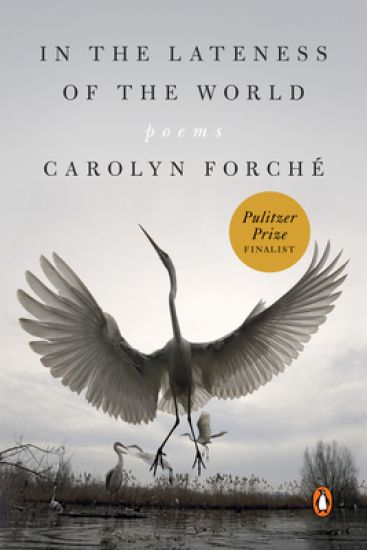
FINALIST FOR THE 2021 PULITZER PRIZE FOR POETRY2021 AMERICAN BOOK AWARD WINNER "An undisputed literary event." --NPR "History--with its construction and its destruction--is at the heart of In the Lateness of the World. . . . In it] one feels the poet cresting a wave--a new wave that will crash onto new lands and unexplored territories." --Hilton Als, The New Yorker Over four decades, Carolyn Forch 's visionary work has reinvigorated poetry's power to awaken the reader. Her groundbreaking poems have been testimonies, inquiries, and wonderments. They daringly map a territory where poetry asserts our inexhaustible responsibility to one another. Her first new collection in seventeen years, In the Lateness of the World is a tenebrous book of crossings, of migrations across oceans and borders but also between the present and the past, life and death. The world here seems to be steadily vanishing, but in the moments before the uncertain end, an illumination arrives and "there is nothing that cannot be seen." In the Lateness of the World is a revelation from one of the finest poets writing today.

Carolyn Forché (f. 1950) har kallats den stora amerikanska samvetsrösten och har i över fyra decennier varit en av de mest tongivande och inflytelserika diktarna inom den amerikanska poesin. Med sin diktning har Forché bevittnat och dokumenterat bland annat konflikterna i El Salvador vilket har kommit att ge namn åt den så kallade vittnespoesin för vilken hon har varit stilbildande. En poesi hon menar syftar till att återta det sociala från det politiska och i och med det försvara det individuella mot påtvingande former. Forchés förmåga att väva samman det politiska och personliga har hyllats av bland andra Joyce Carol Oates, som jämställt henne med Pablo Neruda. Mot slutet är ett större urval av Forchés författarskap gjort av författaren själv tillsammans med översättaren Lars Gustaf Andersson som också författat ett efterord till samlingen.
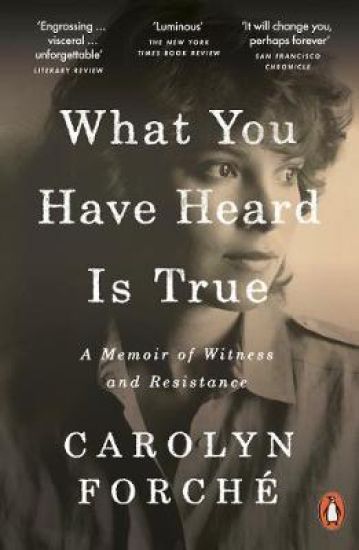
'Astonishing, powerful, so important at this time' - Margaret Atwood (on Twitter)'Riveting . . . intricate and surprising' - The New York Times'Reading it will change you, perhaps forever' - San Francisco ChronicleAn electrifying memoir set in the Salvadoran Civil War:the true story of a young poet who becomes an activist through a trial by fireCarolyn Forché, an American poet, is 27 when a mysterious stranger called Leonel appears on her doorstep, having driven direct from El Salvador. Her friend has heard rumours about who he might be - a communist, a CIA operative, a sharpshooter, a motorcycle racer, a revolutionary, a small coffee farmer - but nobody seems to know for certain. Captivated for reasons she doesn't fully understand, she accepts his invitation to visit and learn about his country, and so becomes enmeshed in the early stages of a brutal civil conflict which will ultimately see the Salvadoran state turn paramilitary death squads against its own people, and leave nearly 90,000 dead or disappeared. Leonel knows that war is coming, and he wants Carolyn - as a writer - to bear witness to it.Told across peasant shanties, protest marches, the grand homes of retired generals and safe houses on the run, What You Have Heard Is True is the devastating true story of a young woman's choice to engage with horror in order to help others, of an unlikely friendship which will change thecourse of her life, and of a remarkable man's doomed effort to save his people from disaster.
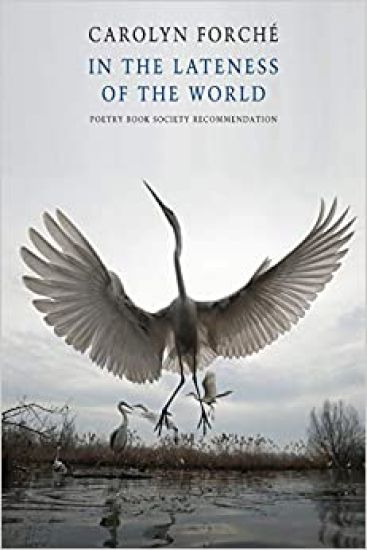
Carolyn Forché is one of America’s most important contemporary poets – renowned as a ‘poet of witness’ – as well as an indefatigable human rights activist. Over four decades, she has crafted visionary work that has reinvigorated poetry's power to awaken the reader. Her groundbreaking poems have been testimonies, enquiries and wonderments. They daringly map a territory where poetry asserts our inexhaustible responsibility to each other. In the Lateness of the World is a dark book of crossings, of migrations across oceans and borders but also between the present and the past, life and death. The poems call to the reader from the end of the world where they are sifting through the aftermath of history. Forché imagines a place where 'you could see everything at once… every moment you have lived or place you have been'. The world here seems to be steadily vanishing, but in the moments before the uncertain end, an illumination arrives and 'there is nothing that cannot be seen'. In the Lateness of the World is a revelation from one of the finest poets writing today. Her meditative poetry has a majestic sweep, with themes ranging from life on earth and human existence to history, war, genocide and the Holocaust. In the Lateness of the World is her first new collection in seventeen years, and follows three other collections published by Bloodaxe in Britain, The Country Between Us (1981/2018), The Angel of History (1994) and Blue Hour (2003). Jane Miller called Blue Hour ‘a masterwork for the 21st century’. According to Joyce Carol Oates (New York Times Book Review), Forché’s ability to wed the “political” with the “personal” places her in the company of such poets as Pablo Neruda, Philip Levine and Denise Levertov.
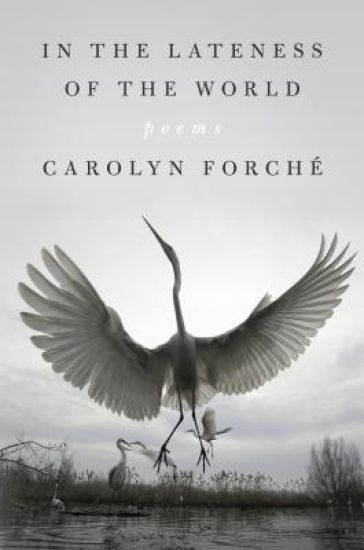
FINALIST FOR THE 2021 PULITZER PRIZE FOR POETRY "An undisputed literary event." --NPR "History--with its construction and its destruction--is at the heart of In the Lateness of the World. . . . In it] one feels the poet cresting a wave--a new wave that will crash onto new lands and unexplored territories." --Hilton Als, The New Yorker Over four decades, Carolyn Forch 's visionary work has reinvigorated poetry's power to awaken the reader. Her groundbreaking poems have been testimonies, inquiries, and wonderments. They daringly map a territory where poetry asserts our inexhaustible responsibility to one another. Her first new collection in seventeen years, In the Lateness of the World is a tenebrous book of crossings, of migrations across oceans and borders but also between the present and the past, life and death. The world here seems to be steadily vanishing, but in the moments before the uncertain end, an illumination arrives and "there is nothing that cannot be seen." In the Lateness of the World is a revelation from one of the finest poets writing today.
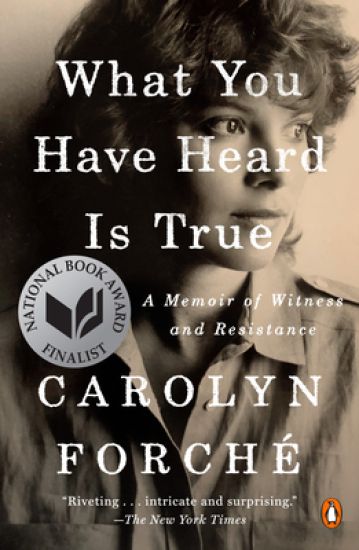
What You Have Heard Is True: A Memoir of Witness and Resistance
Carolyn Forché
PENGUIN BOOKS
2020
nidottu
2019 National Book Award Finalist "Reading it will change you, perhaps forever." --San Francisco Chronicle "Astonishing, powerful, so important at this time." --Margaret Atwood What You Have Heard is True is a devastating, lyrical, and visionary memoir about a young woman's brave choice to engage with horror in order to help others. Written by one of the most gifted poets of her generation, this is the story of a woman's radical act of empathy, and her fateful encounter with an intriguing man who changes the course of her life. Carolyn Forch is twenty-seven when the mysterious stranger appears on her doorstep. The relative of a friend, he is a charming polymath with a mind as seemingly disordered as it is brilliant. She's heard rumors from her friend about who he might be: a lone wolf, a communist, a CIA operative, a sharpshooter, a revolutionary, a small coffee farmer, but according to her, no one seemed to know for certain. He has driven from El Salvador to invite Forch to visit and learn about his country. Captivated for reasons she doesn't fully understand, she accepts and becomes enmeshed in something beyond her comprehension. Together they meet with high-ranking military officers, impoverished farm workers, and clergy desperately trying to assist the poor and keep the peace. These encounters are a part of his plan to educate her, but also to learn for himself just how close the country is to war. As priests and farm-workers are murdered and protest marches attacked, he is determined to save his country, and Forch is swept up in his work and in the lives of his friends. Pursued by death squads and sheltering in safe houses, the two forge a rich friendship, as she attempts to make sense of what she's experiencing and establish a moral foothold amidst profound suffering. This is the powerful story of a poet's experience in a country on the verge of war, and a journey toward social conscience in a perilous time.
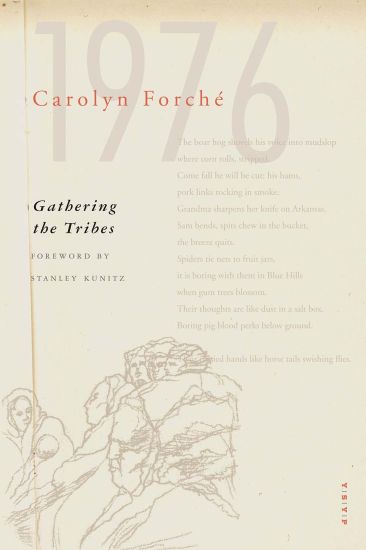
An examination of kinship and uprootedness, Gathering the Tribes is the first volume of poetry by Carolyn Forché and the 71st volume of the Yale Series of Younger Poets The poems in Gathering the Tribes recount experiences from the author’s adolescence and young-adult life, closely bound to the natural cycles of the seasons, of generations, of the body’s functioning. Many deal with uprootedness—hasty emigrations from Czechoslovakia and Kiev, the loss of grandparents and other elders, people leaving and being sent away. But this poetry is not a sentimental celebration of the goodness of nature and harmony with the world is never something assumed. The harmony Forché seeks goes deeper than simple submission to natural processes or identification with an ethnic group, and it must be fought for with a tenuous faith. The balance that must be found between the ugliness, the harshness of her history—both natural and social—and its intense beauty, is what distinguishes Forché’s poetry and gives it its depth and dimension.
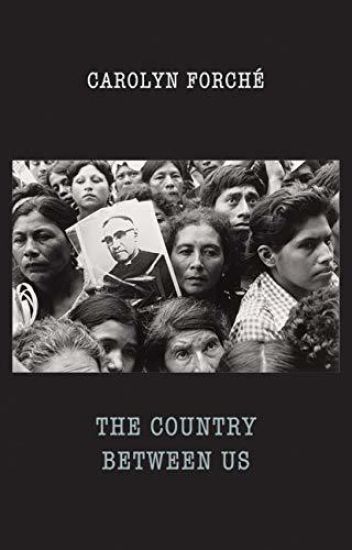
Carolyn Forché’s The Country Between Us bears witness to what she saw in El Salvador in the late 1970s, when she travelled around a country erupting into civil war. Documenting killings and other brutal human rights abuses, while working alongside Archbishop Oscar Romero’s church group, she found in her poetry the only possible way to come to terms with what she was experiencing first-hand. By 1980, when the fighting was becoming too dangerous, Archbishop Romero urged Forché to return home, asking her to ‘talk to the American people, tell them what is happening to us. Convince them to stop the military aid.' A week later he was assassinated (and is only now being made a saint). Back in the US, Forché gave readings and talks about US-backed oppression in Central America, but found publishers and critics uncomfortable with the startlingly different poems of her second collection, poems relating to torture, murder, injustice and trauma. When the book appeared in 1981, at a time when the conflict in El Salvador had finally forced its way into public awareness, it won her immediate recognition. Briefly available in Britain from Jonathan Cape in the 1980s, it was reissued by Bloodaxe to coincide with the publication by Penguin of Carolyn Forché’s long awaited memoir of those times, What You Have Heard Is True: a memoir of witness and resistance (Penguin, 2018) followed by a new collection from Bloodaxe, In the Lateness of the World (2020). The Country Between Us has sold tens of thousands of copies on the US, where it has never been out of print. It won the Poetry Society of America's Alice Fay di Castagnola Award, and was the Lamont Poetry Selection of the Academy of American Poets.
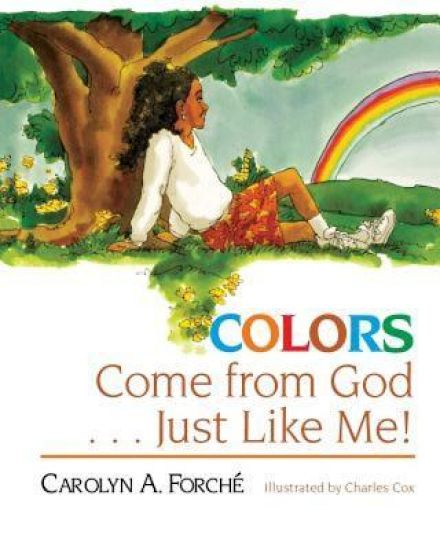
Follow a young African American girl as she discovers God's Creation and delights in its many colors. Through her adventures she realizes that she is also an amazing creation of God as she affirms "God made me a beautiful brown "
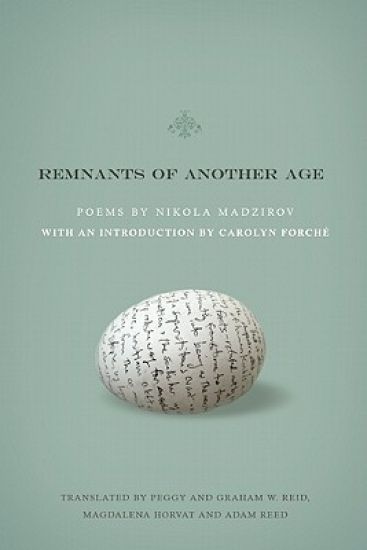
"These poems move mysteriously by means of a profound inner concentration, giving expression to the deepest laws of the mind. Their linguistic 'making' is informed by vivid evidence of a serious self-making, soul-making, and heart-making. We are lucky to have these English incarnations of Nikola Madzirov."--Li-Young Lee Born 1973 in a family of Balkan Wars refugees, Nikola Madzirov's poetry has already been translated into thirty languages and published in collections and anthologies in the United States, Europe, and Asia. A regular participant in international literary festivals, he has received several international awards including an International Writing Program fellowship at the University of Iowa. Remnants of Another Age is his first full-length American collection and carries a foreword by Carolyn Forche who writes, "Nikola Madzirov's Remnants of Another Age is aptly titled, as these poems seem to spring from elsewhere in time, reflective of a preternaturally wise and attentive sensibility. As we read these poems, they begin to inhabit us, and we are the better for having opened ourselves to them. Madzirov is a rare soul and a true poet." "I SAW DREAMS" I saw dreams that no one remembers and people wailing at the wrong graves. I saw embraces in a falling airplane and streets with open arteries. I saw volcanoes asleep longer than the roots of the family tree and a child who's not afraid of the rain. Only it was me no one saw, only it was me no one saw.
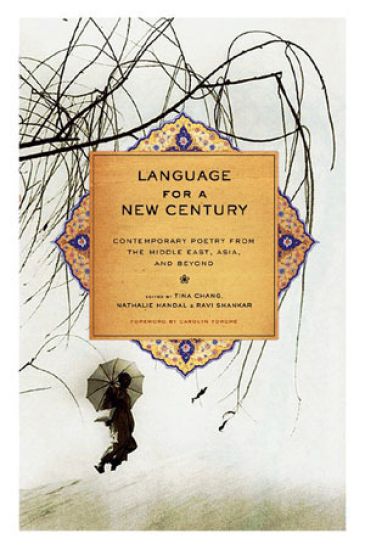
Language for a New Century celebrates the artistic and cultural forces flourishing today in the East, bringing together an unprecedented selection of works by South Asian, East Asian, Middle Eastern, and Central Asian poets as well as poets living in the Diaspora. Some poets, such as Bei Dao and Mahmoud Darwish, are acclaimed worldwide, but many more will be new to the reader. The collection includes 400 unique voices—political and apolitical, monastic and erotic—that represent a wider artistic movement that challenges thousand-year-old traditions, broadening our notion of contemporary literature. Each section of the anthology—organized by theme rather than by national affiliation—is preceded by a personal essay from the editors that introduces the poetry and exhorts readers to examine their own identities in light of these powerful poems. In an age of violence and terrorism, often predicated by cultural ignorance, this anthology is a bold declaration of shared humanity and devotion to the transformative power of art.
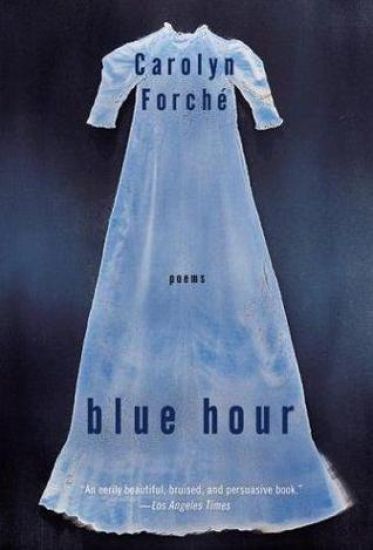
"Blue Hour is an elusive book, because it is ever in pursuit of what the German poet Novalis called 'the lost] presence beyond appearance.' The longest poem, 'On Earth, ' is a transcription of mind passing from life into death, in the form of an abecedary, modeled on ancient gnostic hymns. Other poems in the book, especially 'Nocturne' and 'Blue Hour, ' are lyric recoveries of the act of remembering, though the objects of memory seem to us vivid and irretrievable, the rage to summon and cling at once fierce and distracted."The voice we hear in Blue Hour is a voice both very young and very old. It belongs to someone who has seen everything and who strives imperfectly, desperately, to be equal to what she has seen. The hunger to know is matched here by a desire to be new, totally without cynicism, open to the shocks of experience as if perpetually for the first time, though unillusioned, wise beyond any possible taint of a false or assumed innocence."-- Robert Boyers
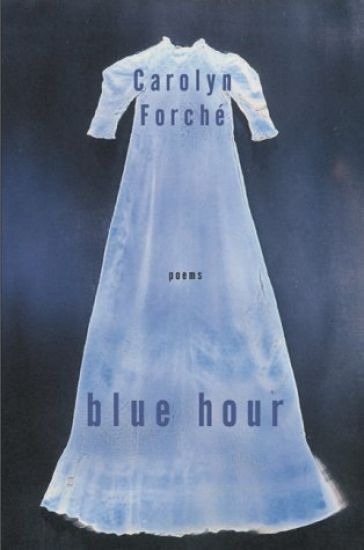
Carolyn Forché is one of America’s most important contemporary poets. Blue Hour is a visionary book, and includes On Earth, a extraordinary long poem, a meditation on human existence and life on earth. Jane Miller called Blue Hour ‘a masterwork for the 21st century’. John Bayley said that reading these poems is ‘an experience as calmly and restfully beautiful as looking at a group of related impressionist canvasses, like those of Monet’.
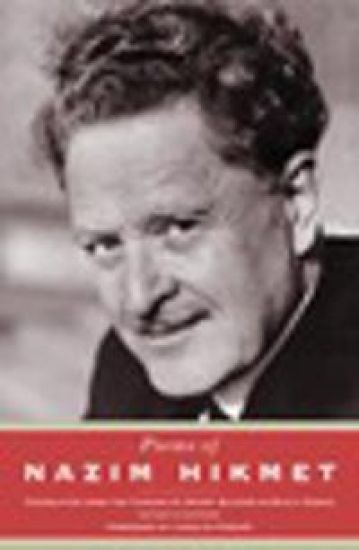
A centennial volume, with previously unavailable poems, by Turkey's greatest poet. Published in celebration of the poet's one hundredth birthday, this exciting edition of the poems of the Nazim Hikmet (1902-1963) collects work from his four previous selected volumes and adds more than twenty poems never before available in English. The Blasing/Konuk translations, acclaimed for the past quarter-century for their accuracy and grace, convey Hikmet's compassionate, accessible voice with the subtle music, innovative form, and emotional directness of the originals.

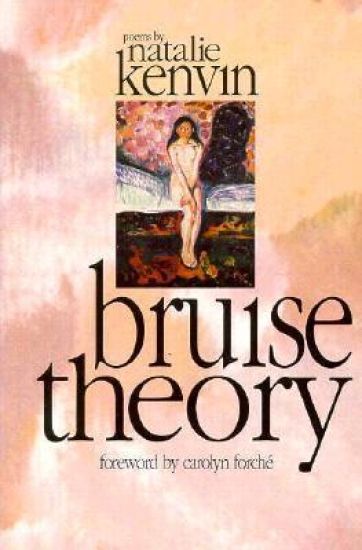
*Forword by Carolyn Forche
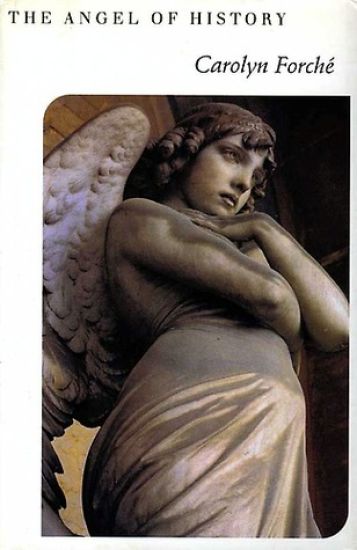
Placed in the context of twentieth-century moral disaster--war, genocide, the Holocaust, the atomic bomb--Forche's ambitious and compelling third collection of poems is a meditation of memory, specifically how memory survives the unimaginable. The poems reflect the effects of such experience: the lines, and often the images within them, are fragmented discordant. But read together, these lines become a haunting mosaic of grief, evoking the necessary accommodations human beings make to survive what is unsurvivable. As poets have always done, Forche attempts to give voice to the unutterable, using language to keep memory alive, relive history, and link the past with the future.
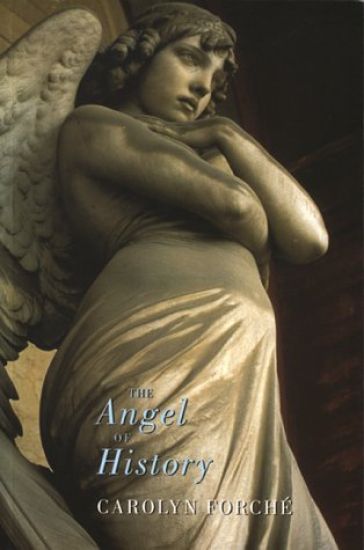
The Angel of History bears witness to the moral disasters of our times: war, genocide, the Holocaust, the atomic bomb. The book is a meditation on memory – how memory survives the unimaginable. The poems are fragmented, discordant, reflecting the effects of such experience, but forming a haunting mosaic of grief, evoking the necessary accommodations we make to survive what is unsurvivable. It is divided into five sections dealing with the atrocities of war in France, Japan and Germany as well as Carolyn Forché's own experiences in Beirut and El Salvador. The title figure, the Angel of History – a figure imagined by Walter Benjamin – can record the miseries of humanity yet is unable either to prevent these miseries from happening or from suffering from the pain associated with them. Kevin Walker, in the Detroit Free Press, called the book 'a meditation on destruction, survival and memory'. Don Bogen, in The Nation, saw this as a logical development, since Forché’s work with her poetry of witness anthology Against Forgetting was 'instrumental in moving her poetry beyond the politics of personal encounter. The Angel of History is rather an extended poetic mediation on the broader contexts – historical, aesthetic, philosophical – which include [the 20th]…century’s atrocities,' wrote Bogen. And Steven Ratiner, reviewing the work for the Christian Science Monitor, called it one that 'addresses the terror and inhumanity that have become standard elements in the twentieth-century political landscape – and yet affirms as well the even greater reservoir of the human spirit'.