Kirjojen hintavertailu. Mukana 12 198 233 kirjaa ja 12 kauppaa.

Kirjailija

Carolyn Strange

Kirjat ja teokset yhdessä paikassa: 7 kirjaa, julkaisuja vuosilta 1995-2025, suosituimpien joukossa The Death Penalty and Sex Murder in Canadian History. Vertaile teosten hintoja ja tarkista saatavuus suomalaisista kirjakaupoista.

7 kirjaa

Kirjojen julkaisuhaarukka 1995-2025.

Fatal Confession

Fatal Confession

Carolyn Strange

University of British Columbia Press
2025
pokkari
When the body of thirteen-year-old Linda Lampkin was found, raped and strangled, on Toronto's industrial waterfront in 1956, locals feared a sex maniac was on the loose. Within a day, detectives announced the arrest of Robert Fitton. He was charged with murder, although Fitton claimed the sex was consensual and the strangulation accidental. Fatal Confession is a compelling analysis of that violent encounter and the ensuing legal and political entanglements, which ended in the hanging of Fitton despite the jury's and judge's recommendation of mercy. The case exposed judicial ambivalence about the criminal definition of constructive murder in connection with rape, disagreements over the voluntariness of confessions to police, and widespread doubt over the culpability of males "tempted" by precocious females.Weaving together politics, culture, legal history, and biography, Fatal Confession unravels a case that ultimately called into question both capital punishment and masculinist legal interpretations of sexual consent.
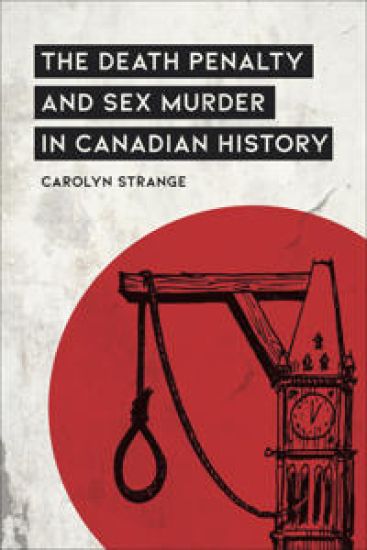
The Death Penalty and Sex Murder in Canadian History

The Death Penalty and Sex Murder in Canadian History

Carolyn Strange

University of Toronto Press
2020
sidottu
From Confederation to the partial abolition of the death penalty a century later, defendants convicted of sexually motivated killings and sexually violent homicides in Canada were more likely than any other condemned criminals to be executed for their crimes. Despite the emergence of psychiatric expertise in criminal trials, moral disgust and anger proved more potent in courtrooms, the public mind, and the hearts of the bureaucrats and politicians responsible for determining the outcome of capital cases. Wherever death has been set as the ultimate criminal penalty, the poor, minority groups, and stigmatized peoples have been more likely to be accused, convicted, and executed. Although the vast majority of convicted sex killers were white, Canada’s racist notions of "the Indian mind" meant that Indigenous defendants faced the presumption of guilt. Black defendants were also subjected to discriminatory treatment, including near lynchings. In debates about capital punishment, abolitionists expressed concern that prejudices and poverty created the prospect of wrongful convictions. Unique in the ways it reveals the emotional drivers of capital punishment in delivering inequitable outcomes, The Death Penalty and Sex Murder in Canadian History provides a thorough overview of sex murder and the death penalty in Canada. It serves as an essential history and a richly documented cautionary tale for the present.
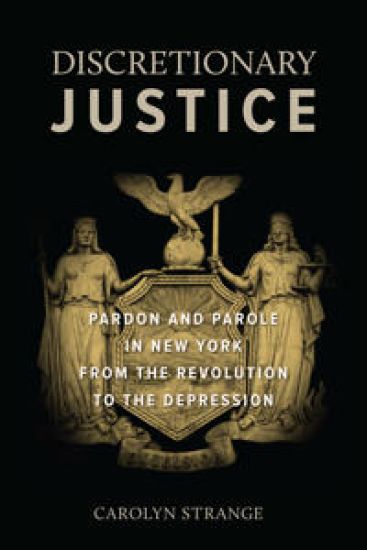
Discretionary Justice

Discretionary Justice

Carolyn Strange

New York University Press
2016
sidottu
The pardon is an act of mercy, tied to the divine right of kings. Why did New York retain this mode of discretionary justice after the Revolution? And how did governors' use of this prerogative change with the advent of the penitentiary and the introduction of parole? This book answers these questions by mining previously unexplored evidence held in official pardon registers, clemency files, prisoner aid association reports and parole records. This is the first book to analyze the histories of mercy and parole through the same lens, as related but distinct forms of discretionary decision-making. It draws on governors' public papers and private correspondence to probe their approach to clemency, and it uses qualitative and quantitative methods to profile petitions for mercy, highlighting controversial cases that stirred public debate. Political pressure to render the use of discretion more certain and less personal grew stronger over the nineteenth century, peaking during constitutional conventionsand reaching its height in the Progressive Era. Yet, New York's legislators left the power to pardon in the governor's hands, where it remains today. Unlike previous works that portray parole as the successor to the pardon, this book shows that reliance upon and faith in discretion has proven remarkably resilient, even in the state that led the world toward penal modernity.
Griffith Taylor

Griffith Taylor

Carolyn Strange; Alison Bashford

University of Toronto Press
2008
pokkari
Thomas Griffith Taylor (1880-1963) was a geographer, anthropologist, and world explorer. His travels took him from Captain Scott's final expedition in Antarctica to every continent on earth, in a professional life that stretched from the Boer War to the Cold War. Taylor's research ranged from microscopic analysis of fossils to the "races of man," the geographic basis of global politics, while his work as a professor led him from his Cambridge education to the Universities of Chicago and Sydney, as well as Harold A. Innis' recently-founded geography department in the University of Toronto. As a scientific secularist, Taylor made it his lifelong mission to enlighten the public on humankind's relation to the environment and was an early environmentalist. His progressive views on interracial marriage, as well as his criticisms of social Darwinist doctrines, anti-Semitism, and twentieth-century nationalism caused him to be constantly embroiled in controversy. Often dismissed by his contemporary political and intellectual opponents, many subsequent scientists and thinkers have come to regard his life as prophetic. This timely, beautifully produced, and copiously illustrated biography recounts and analyses the fascinating life of a remarkably contemporary man.
Making Good

Making Good

Carolyn Strange; Tina Loo

University of Toronto Press
1997
pokkari
Young Canada was often portrayed as a virginal woman or as a healthy frontiersman, and the ideals of purity, industry, and self-discipline were celebrated as essential features of the Canadian identity. To ensure that Canadians lived up to this image, different levels of government passed a variety of laws and created an expanding range of institutions to enforce them. Making Good looks at the changing relationship between law and morality in Canada during a critical phase of nation-building, from Confederation to the onset of the Second World War. The authors argue that though the law played a significant role in giving Canada a moral cast, the law's homogenizing tendencies did not always meet with anticipated success, as values deemed 'good' by the government were constantly repudiated by those on whom they were imposed. Strange and Loo examine both the major institutions which patrolled morality - the Department of Indian Affairs, the Ministry of Justice, and the North West Mounted Police - and the agencies that worked at local levels, such as police forces, schools, correctional facilities, juvenile and family courts, and morality squads. They also look at many fascinating acts of resistance to moral ordinances, showing that not all Canadians shared the same vision of goodness. Certain themes which run throughout the book include the concept of the internal threat to the foundations of national decency, the influence of the United States on Canada's moral order, and the regional discrepancies in the success of moral governance. Through topics as diverse as gambling, marriage and divorce, and sexual deviance, Making Good shows that character-building was critical to the broader project of nation-building. The book will be a welcome addition to undergraduate courses in Canadian history, and will interest social historians; historians of Native peoples, the working class, and women; criminologists; and political scientists.
Making Good

Making Good

Carolyn Strange; Tina Loo

University of Toronto Press
1997
sidottu
Young Canada was often portrayed as a virginal woman or as a healthy frontiersman, and the ideals of purity, industry, and self-discipline were celebrated as essential features of the Canadian identity. To ensure that Canadians lived up to this image, different levels of government passed a variety of laws and created an expanding range of institutions to enforce them. Making Good looks at the changing relationship between law and morality in Canada during a critical phase of nation-building, from Confederation to the onset of the Second World War. The authors argue that though the law played a significant role in giving Canada a moral cast, the law's homogenizing tendencies did not always meet with anticipated success, as values deemed 'good' by the government were constantly repudiated by those on whom they were imposed. Strange and Loo examine both the major institutions which patrolled morality - the Department of Indian Affairs, the Ministry of Justice, and the North West Mounted Police - and the agencies that worked at local levels, such as police forces, schools, correctional facilities, juvenile and family courts, and morality squads. They also look at many fascinating acts of resistance to moral ordinances, showing that not all Canadians shared the same vision of goodness. Certain themes which run throughout the book include the concept of the internal threat to the foundations of national decency, the influence of the United States on Canada's moral order, and the regional discrepancies in the success of moral governance. Through topics as diverse as gambling, marriage and divorce, and sexual deviance, Making Good shows that character-building was critical to the broader project of nation-building. The book will be a welcome addition to undergraduate courses in Canadian history, and will interest social historians; historians of Native peoples, the working class, and women; criminologists; and political scientists.
Toronto's Girl Problem

Toronto's Girl Problem

Carolyn Strange

University of Toronto Press
1995
pokkari
With the turn of the century came increased industrialization and urbanization, and in Toronto one of the most visible results of this modernization was the influx of young, single women to the city. They came seeking work, independence, and excitement, but they were not to realize these goals without contention. Carolyn Strange examines the rise of the Toronto 'working girl,' the various agencies that 'discovered' her, the nature of 'the girl problem' from the point of view of moral overseers, the various strategies devised to solve this 'problem,' and lastly, the young women's responses to moral regulation. The 'working girl' seemed a problem to reformers, evangelists, social investigators, police, the courts, and journalists - men, mostly, who saw women's debasement as certain and appointed themselves as protectors of morality. They portrayed single women as victims of potential economic and sexual exploitation and urban immorality. Such characterization drew attention away from the greater problems these women faced: poverty, unemployment, poor housing and nutrition, and low wages. In the course of her investigation, Strange suggests fresh approaches to working-class and urban history. Her sources include the census, court papers, newspaper accounts, philanthropic society reports, and royal commissions, but Strange also employs less conventional sources, such as photographs and popular songs. She approaches the topic from a feminist viewpoint that is equally sensitive to the class and racial dimensions of the 'girl problem,' and compares her findings with the emergence of the working woman in contemporary United States and Great Britain. The overriding observation is that Torontonians projected their fears and hopes about urban industrialization onto the figure of the working girl. Young women were regulated from factories and offices, to streetcars and dancehalls, in an effort to control the deleterious effects of industrial capitalism. By the First World War however, their value as contributors to the expanding economy began to outweigh fear of their moral endangerment. As Torontonians grew accustomed to life in the industrial metropolis, the 'working girl' came to be seen as a valuable resource.