Kirjojen hintavertailu. Mukana 12 299 732 kirjaa ja 12 kauppaa.

Kirjailija

Carrie Friese

Kirjat ja teokset yhdessä paikassa: 5 kirjaa, julkaisuja vuosilta 2013-2025, suosituimpien joukossa A Mouse in a Cage. Vertaile teosten hintoja ja tarkista saatavuus suomalaisista kirjakaupoista.

5 kirjaa

Kirjojen julkaisuhaarukka 2013-2025.

A Mouse in a Cage

A Mouse in a Cage

Carrie Friese

NEW YORK UNIVERSITY PRESS
2025
sidottu
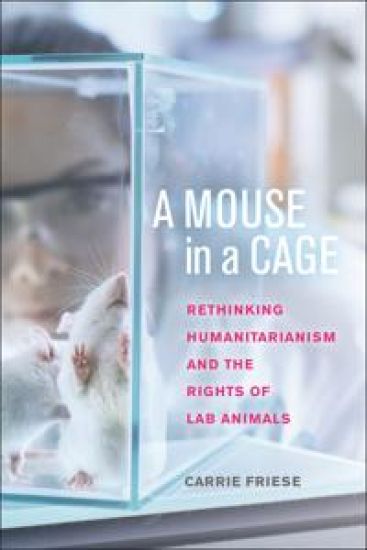
Questions the treatment of laboratory animals in biomedical research Laboratory animals are often used to develop medical treatments: vaccines, antibiotics, and organ transplants have all relied upon animal testing to ensure safety and success for human benefit. Yet the relationship between the scientific community's dependence on laboratory animals and the recognition of the need to treat these animals with respect and compassion has given rise to a profound tension. As animals are increasingly understood to have rights and autonomy, Carrie Friese posits that, while care and compassion for a distant other who suffers are central to humanitarianism, the idea of a distant other itself, which has shaped work with laboratory animals both historically and today, has enacted forms of highly problematic paternalism, creating a double bind. Focusing on the lives of laboratory mice and rats in the United Kingdom, and on the people who take care of, and often kill, these animals, Friese gives the name of "more-than-human humanitarianism" to contradictory practices of suffering and compassion, killing and sacrifice, and compassion and consent that she witnessed in a variety of animal facilities and laboratories. Friese proposes a new approach to the treatment of laboratory animals that recognizes the interconnectedness of all species and how human actions impact the welfare of other species and the planet as a whole. A Mouse in a Cage is an essential contribution to the ongoing conversation about the ethical treatment of animals.
A Mouse in a Cage

A Mouse in a Cage

Carrie Friese

NEW YORK UNIVERSITY PRESS
2025
pokkari
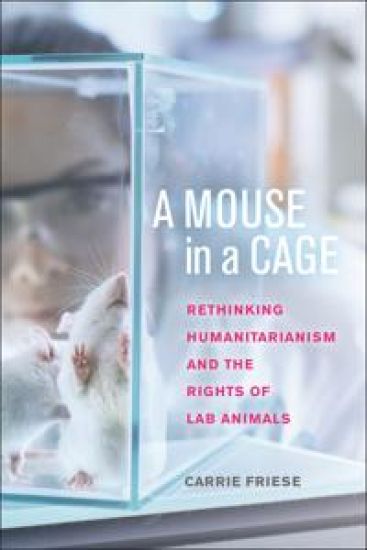
Questions the treatment of laboratory animals in biomedical research Laboratory animals are often used to develop medical treatments: vaccines, antibiotics, and organ transplants have all relied upon animal testing to ensure safety and success for human benefit. Yet the relationship between the scientific community's dependence on laboratory animals and the recognition of the need to treat these animals with respect and compassion has given rise to a profound tension. As animals are increasingly understood to have rights and autonomy, Carrie Friese posits that, while care and compassion for a distant other who suffers are central to humanitarianism, the idea of a distant other itself, which has shaped work with laboratory animals both historically and today, has enacted forms of highly problematic paternalism, creating a double bind. Focusing on the lives of laboratory mice and rats in the United Kingdom, and on the people who take care of, and often kill, these animals, Friese gives the name of "more-than-human humanitarianism" to contradictory practices of suffering and compassion, killing and sacrifice, and compassion and consent that she witnessed in a variety of animal facilities and laboratories. Friese proposes a new approach to the treatment of laboratory animals that recognizes the interconnectedness of all species and how human actions impact the welfare of other species and the planet as a whole. A Mouse in a Cage is an essential contribution to the ongoing conversation about the ethical treatment of animals.
Situational Analysis

Situational Analysis

Adele E. Clarke; Carrie Friese; Rachel Washburn

SAGE Publications Inc
2017
nidottu
The Second Edition of Situational Analysis: Grounded Theory After the Interpretive Turn offers an innovative extension of grounded theory useful in qualitative research projects that draws on interviews, observations, and visual, narrative, and historical discourse materials. To engage the dense complexities of real world situations, Situational Analysis (SA) braids together Strauss's ecological social worlds/arenas theory, Foucault’s discourse analysis, and Deleuze and Guattari’s rhizomes and assemblages. In SA, the situation itself becomes the fundamental unit of analysis. Using extensive examples, the authors discuss getting started, how to create three kinds of maps emphasizing differences and relationality (situational maps, social world/arena maps, and positional maps), the kinds of analytic work they accomplish, and how to write up the results centered on the distinctive strengths of the method. The book will serve as an invaluable resource for advanced undergraduate and graduate-level students, as well as professional researchers and consultants from diverse backgrounds pursuing qualitative projects.
Cloning Wild Life

Cloning Wild Life

Carrie Friese

New York University Press
2013
sidottu
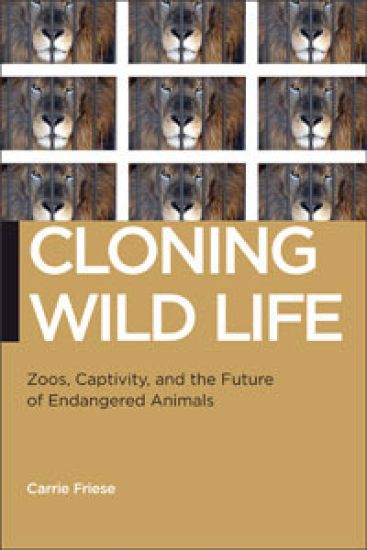
The natural world is marked by an ever-increasing loss of varied habitats, a growing number of species extinctions, and a full range of new kinds of dilemmas posed by global warming. At the same time, humans are also working to actively shape this natural world through contemporary bioscience and biotechnology. In Cloning Wild Life, Carrie Friese posits that cloned endangered animals in zoos sit at the apex of these two trends, as humans seek a scientific solution to environmental crisis. Often fraught with controversy, cloning technologies, Friese argues, significantly affect our conceptualizations of and engagements with wildlife and nature. By studying animals at different locations, Friese explores the human practices surrounding the cloning of endangered animals. She visits zoos—the San Diego Zoological Park, the Audubon Center in New Orleans, and the Zoological Society of London—to see cloning and related practices in action, as well as attending academic and medical conferences and interviewing scientists, conservationists, and zookeepers involved in cloning. Ultimately, she concludes that the act of recalibrating nature through science is what most disturbs us about cloning animals in captivity, revealing that debates over cloning become, in the end, a site of political struggle between different human groups. Moreover, Friese explores the implications of the social role that animals at the zoo play in the first place—how they are viewed, consumed, and used by humans for our own needs. A unique study uniting sociology and the study of science and technology, Cloning Wild Life demonstrates just how much bioscience reproduces and changes our ideas about the meaning of life itself.
Cloning Wild Life

Cloning Wild Life

Carrie Friese

New York University Press
2013
pokkari
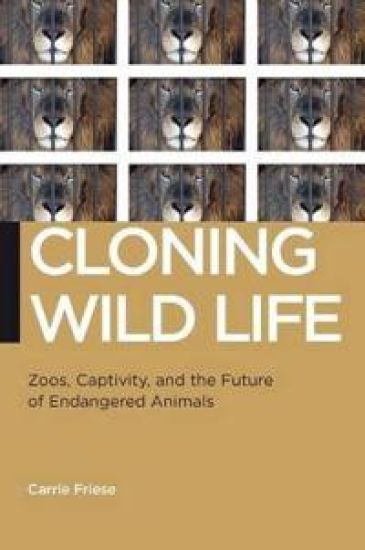
The natural world is marked by an ever-increasing loss of varied habitats, a growing number of species extinctions, and a full range of new kinds of dilemmas posed by global warming. At the same time, humans are also working to actively shape this natural world through contemporary bioscience and biotechnology. In Cloning Wild Life, Carrie Friese posits that cloned endangered animals in zoos sit at the apex of these two trends, as humans seek a scientific solution to environmental crisis. Often fraught with controversy, cloning technologies, Friese argues, significantly affect our conceptualizations of and engagements with wildlife and nature. By studying animals at different locations, Friese explores the human practices surrounding the cloning of endangered animals. She visits zoos—the San Diego Zoological Park, the Audubon Center in New Orleans, and the Zoological Society of London—to see cloning and related practices in action, as well as attending academic and medical conferences and interviewing scientists, conservationists, and zookeepers involved in cloning. Ultimately, she concludes that the act of recalibrating nature through science is what most disturbs us about cloning animals in captivity, revealing that debates over cloning become, in the end, a site of political struggle between different human groups. Moreover, Friese explores the implications of the social role that animals at the zoo play in the first place—how they are viewed, consumed, and used by humans for our own needs. A unique study uniting sociology and the study of science and technology, Cloning Wild Life demonstrates just how much bioscience reproduces and changes our ideas about the meaning of life itself.