Kirjojen hintavertailu. Mukana 12 390 323 kirjaa ja 12 kauppaa.

Kirjailija

Carsten Roever

Kirjat ja teokset yhdessä paikassa: 9 kirjaa, julkaisuja vuosilta 2007-2024, suosituimpien joukossa Language Testing. Vertaile teosten hintoja ja tarkista saatavuus suomalaisista kirjakaupoista.

9 kirjaa

Kirjojen julkaisuhaarukka 2007-2024.

Language Testing

Language Testing

Tim McNamara; Carsten Roever

JOHN WILEY AND SONS LTD
2007
nidottu
Winner of the SAGE/ILTA Award for Best Book on Language Testing 2009 This volume focuses on the social aspects of language testing, including assessment of socially situated language use and societal consequences of language tests. The authors argue that traditional approaches to ensuring social fairness in tests go some way to addressing social concerns, but a broader perspective is necessary to examine the functions of tests on a societal scale. Considers these issues in relation to language assessment in oral proficiency interviews, and to the assessment of second language pragmatics. Argues that traditional approaches to ensuring social fairness in tests go some way to addressing social concerns, but a broader perspective is necessary if we are to fully understand the social dimension of language assessment.
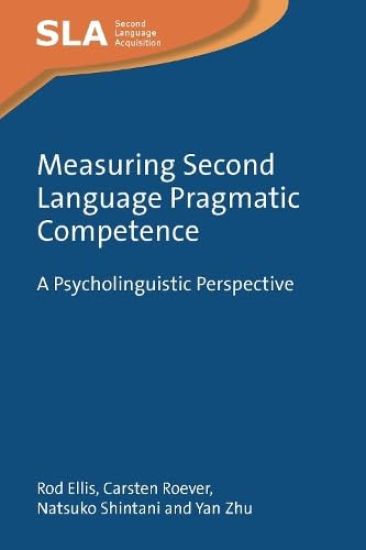
Measuring Second Language Pragmatic Competence

Measuring Second Language Pragmatic Competence

Rod Ellis; Carsten Roever; Natsuko Shintani; Yan Zhu

MULTILINGUAL MATTERS
2024
sidottu
Taking a psycholinguistic perspective, this book investigates how second language (L2) learners’ pragmatic abilities in English can be measured. It complements and extends earlier work on the testing of implicit and explicit grammar. The authors present a set of tests they developed using both well-established methods of measuring pragmatic knowledge (e.g. a Metapragmatic Knowledge Test and role plays) and more original tests (e.g. an Irony Test and an Elicited Imitation Test). They explain the development of the tests and report the results of their work with native speakers of English and Chinese and Japanese L2 learners. A confirmatory factor analysis lends support to the theoretical basis of the tests. The authors also report studies that explored the use of the tests to investigate L2 linguistic proficiency, study abroad and formal instruction. In concluding, they consider the strengths and limitations of the tests and propose some directions for future research.
Measuring Second Language Pragmatic Competence

Measuring Second Language Pragmatic Competence

Rod Ellis; Carsten Roever; Natsuko Shintani; Yan Zhu

MULTILINGUAL MATTERS
2024
nidottu
Taking a psycholinguistic perspective, this book investigates how second language (L2) learners’ pragmatic abilities in English can be measured. It complements and extends earlier work on the testing of implicit and explicit grammar. The authors present a set of tests they developed using both well-established methods of measuring pragmatic knowledge (e.g. a Metapragmatic Knowledge Test and role plays) and more original tests (e.g. an Irony Test and an Elicited Imitation Test). They explain the development of the tests and report the results of their work with native speakers of English and Chinese and Japanese L2 learners. A confirmatory factor analysis lends support to the theoretical basis of the tests. The authors also report studies that explored the use of the tests to investigate L2 linguistic proficiency, study abroad and formal instruction. In concluding, they consider the strengths and limitations of the tests and propose some directions for future research.
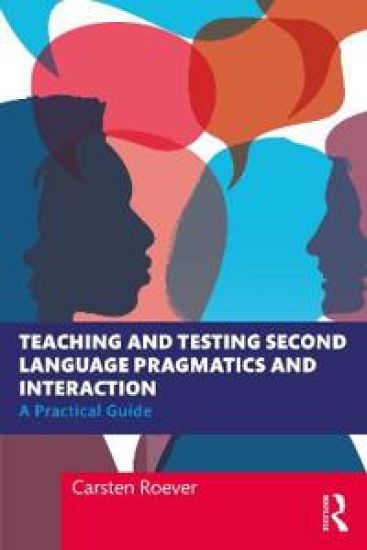
Teaching and Testing Second Language Pragmatics and Interaction
Pragmatic ability is crucial for second language learners to communicate appropriately and effectively; however, pragmatics is underemphasized in language teaching and testing. This book remedies that situation by connecting theory, empirical research, and practical curricular suggestions on pragmatics for learners of different proficiency levels: It surveys the field comprehensively and, with useful tasks and activities, offers rich guidance for teaching and testing L2 pragmatics. Mainly referring to pragmatics of English and with relevant examples from multiple languages, it is an invaluable resource for practicing teachers, graduate students, and researchers in language pedagogy and assessment.
Teaching and Testing Second Language Pragmatics and Interaction
Pragmatic ability is crucial for second language learners to communicate appropriately and effectively; however, pragmatics is underemphasized in language teaching and testing. This book remedies that situation by connecting theory, empirical research, and practical curricular suggestions on pragmatics for learners of different proficiency levels: It surveys the field comprehensively and, with useful tasks and activities, offers rich guidance for teaching and testing L2 pragmatics. Mainly referring to pragmatics of English and with relevant examples from multiple languages, it is an invaluable resource for practicing teachers, graduate students, and researchers in language pedagogy and assessment.
Quantitative Methods for Second Language Research

Quantitative Methods for Second Language Research

Carsten Roever; Aek Phakiti

Routledge
2017
nidottu
Quantitative Methods for Second Language Research introduces approaches to and techniques for quantitative data analysis in second language research, with a primary focus on second language learning and assessment research. It takes a conceptual, problem-solving approach by emphasizing the understanding of statistical theory and its application to research problems while paying less attention to the mathematical side of statistical analysis. The text discusses a range of common statistical analysis techniques, presented and illustrated through applications of the IBM Statistical Package for Social Sciences (SPSS) program. These include tools for descriptive analysis (e.g., means and percentages) as well as inferential analysis (e.g., correlational analysis, t-tests, and analysis of variance [ANOVA]). The text provides conceptual explanations of quantitative methods through the use of examples, cases, and published studies in the field. In addition, a companion website to the book hosts slides, review exercises, and answer keys for each chapter as well as SPSS files. Practical and lucid, this book is the ideal resource for data analysis for graduate students and researchers in applied linguistics.
Quantitative Methods for Second Language Research

Quantitative Methods for Second Language Research

Carsten Roever; Aek Phakiti

Routledge
2017
sidottu
Quantitative Methods for Second Language Research introduces approaches to and techniques for quantitative data analysis in second language research, with a primary focus on second language learning and assessment research. It takes a conceptual, problem-solving approach by emphasizing the understanding of statistical theory and its application to research problems while paying less attention to the mathematical side of statistical analysis. The text discusses a range of common statistical analysis techniques, presented and illustrated through applications of the IBM Statistical Package for Social Sciences (SPSS) program. These include tools for descriptive analysis (e.g., means and percentages) as well as inferential analysis (e.g., correlational analysis, t-tests, and analysis of variance [ANOVA]). The text provides conceptual explanations of quantitative methods through the use of examples, cases, and published studies in the field. In addition, a companion website to the book hosts slides, review exercises, and answer keys for each chapter as well as SPSS files. Practical and lucid, this book is the ideal resource for data analysis for graduate students and researchers in applied linguistics.
Second Language Pragmatics

Second Language Pragmatics

Naoko Taguchi; Carsten Roever

Oxford University Press
2017
nidottu
Taguchi and Roever present the latest developments in second language pragmatics research, combining acquisitional and sociolinguistic perspectives. They cover theories of pragmatics learning and research methods in investigating pragmatics, linking these with findings on the acquisition of second language pragmatics and with practice in teaching and assessing pragmatics. Discussing pragmatics in the context of multilingual societies and diverse contexts of use, they offer a broad perspective on this growing area.
Testing ESL Sociopragmatics

Testing ESL Sociopragmatics

Carsten Roever; Catherine Elder

Peter Lang AG
2014
sidottu
Testing of second language pragmatics has grown as a research area but still suffers from a tension between construct coverage and practicality. In this book, the authors describe the development and validation of a web-based test of second language pragmatics for learners of English. The test has a sociopragmatic orientation and strives for a broad coverage of the construct by assessing learners’ metapragmatic judgments as well as their ability to co-construct discourse. To ensure practicality, the test is delivered online and is scored partially automatically and partially by human raters. We used the argument-based approach to validation, which showed that the test can support low-stakes decisions about learners’ knowledge of sociopragmatics in English.