Kirjojen hintavertailu. Mukana 12 595 353 kirjaa ja 12 kauppaa.
Kirjailija
Carsten Stage
Kirjat ja teokset yhdessä paikassa: 10 kirjaa, julkaisuja vuosilta 2014-2020, suosituimpien joukossa Kulturteori og kultursociologi. Vertaile teosten hintoja ja tarkista saatavuus suomalaisista kirjakaupoista.
Anne Scott Sørensen; Henning Mathias Goldbæk; Anders Petersen; Anni Greve; Annick Prieur; Christian Borch; Henning Bech; Michael Hviid Jacobsen; Ole B. Jensen; Sara Malou Strandvad; Casper Bruun Jensen; Bjørn Schiermer Andersen; Mikkel Bolt Rasmussen; Stine Willum Adrian; Jakob Skjøtt-Larsen; Morten Kyndrup; Jørgen Bruhn; Britta Timm Knudsen; Mads Krogh; Anja Mølle Lindelof; Camilla Jalving; Carsten Stage; Sanne Krogh Groth; Martin Zerlang; Ulrik Schmidt; Marie Bruvik Heinskou
Kultursociologi og kulturstudier placerer sig i mellemrummet mellem samfundsvidenskab og humaniora og beskæftiger sig med kulturelle fænomener af enhver slags: med kunst og subkultur, med æstetik og sociale omgangsformer, med følelsernes kultur, med seksualitetens kultur, med oplevelsen af byens rum og med byudvikling, og i det hele taget med grundlæggende perspektiver på sammenhængen mellem samfund, kultur, magt og politik. Kultursociologien udgør en kernedisciplin i sociologien, og med opblomstringen af humanistiske kulturstudieuddannelser på en række danske universiteter de senere årtier er også store dele af de humanistiske fag orienteret i en kulturteoretisk og sociologisk retning. Denne bog giver en autoritativ indføring i klassiske og nyere tendenser, tænkere og teorier i kultursociologi og kulturteori i tre dele: Ny teori, som for en stor del præsenteres for første gang på dansk Klassiske og nyklassiske teorier, som på forskellige måder tegner fagets tradition Temaer og begreber, der indkredser de vigtigste områder, som kultursociologien og kulturteorien beskæftiger sig med. Bogen vil kunne fungere som en vigtig støtte i arbejdet med kultursociologiske eller kulturteoretiske originaltekster både for undervisere og studerende på de højere læreanstalter. Men den henvender sig også til den ”kulturarbejdende” eller blot kulturinteresserede læser uden for universitetet, som gerne vil have udvidet eller opdateret sin teoretiske horisont.

Ny kulturteori præsenterer samtidens væsentlige kulturteoretiske strømninger. Bogen kan læses som en bredtfavnende introduktion til aktuel kulturteori. Eller den kan læses som en teoretisk opdateret introduktion til temaer, der er vigtige i den aktuelle kultur. Ny kulturteori er en teoretisk grundbog, men teorierne leverer også inspiration, begreber og redskaber til analyse af aktuelle kulturelle fænomener. Alle bogens 25 kapitler supplerer teorierne med konkrete eksempler. Samlet giver de en omfattende, nuanceret og opdateret viden om nye strømninger og aktuelle temaer på det kulturteoretiske felt. Kultur kan ikke betragtes løsrevet fra andre samfundsmæssige fænomener, og kulturteori er afgørende for at forstå politiske, økonomiske og sociale aspekter af vores samtid. "Kulturteori" præsenteres her som teoridannelser, der kan skabe ny indsigt og refleksion i de dele af humaniora og samfundsvidenskaberne, der er optaget af samtidens kulturproduktion, smal eller bred. Alle kapitlerne er skrevet af eksperter, som har stræbt mod at præsentere de aktuelle begreber, tendenser og diskussioner på en nuanceret og tilgængelig måde. Hvert kapitel ledsages af anbefalinger til videre læsning og er også i den forstand en indgang til videre fordybelse og udforskning. Bogen er redigeret af Birgit Eriksson, professor i kulturstudier ved Institut for Kommunikation og Kultur på Aarhus Universitet og af Bjørn Schiermer, professor i sociologi på Institutt for sosiologi og samfunnsgeografi på Oslo Universitet.
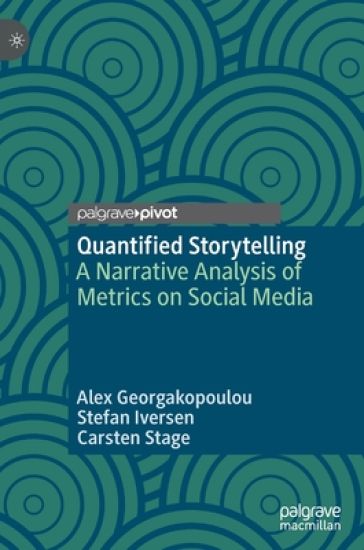
This book interrogates the role of quantification in stories on social media: how do visible numbers (e.g. of views, shares, likes) and invisible algorithmic measurements shape the stories we post and engage with? The links of quantification with stories have not been explored sufficiently in storytelling research or in social media studies, despite the fact that platforms have been integrating sophisticated metrics into developing facilities for sharing stories, with a massive appeal to ordinary users, influencers and businesses alike. With case-studies from Instagram, Reddit and Snapchat, the authors show how three types of metrics, namely content metrics, interface metrics and algorithmic metrics, affect the ways in which cancer patients share their experiences, the circulation of specific stories that mobilize counter-publics and the design of stories as facilities on platforms. The analyses document how numbers structure elements in stories, indicate and produce engagement and become resources for the tellers’ self-presentation. This book will be of interest to students and scholars working in the fields of narrative and social media studies, including narratology, biography studies, digital storytelling, life-writing, narrative psychology, sociological approaches to narrative, discourse and sociolinguistic perspectives.
Skam gor os ilde tilpas. Sa snart vi foler os negativt bedomt, pibler sveden frem, rodmen stiger op i kinderne, og vi kigger febrilsk efter et musehul at krybe i. Heldigvis ser andre mennesker os ikke nodvendigvis sadan, som vi frygter. Alligevel er der ifolge Carsten Stage, blufAerdig skamforsker ved Aarhus Universitet, ingen grund til at bide hovedet af al skam. Skam kan vAere en konstruktiv kilde til selvrefleksion og endda til politisk mobilisering. For uden nogen skam i livet ville vi ikke slet ikke kunne finde ud af at leve sammen.
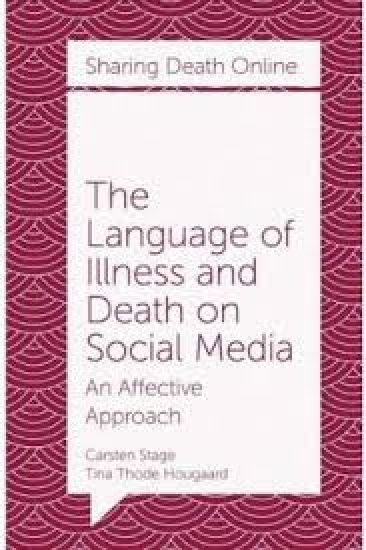
This book investigates the language created and used on social media to express and respond to personal experiences of illness, dying and mourning. The authors begin by setting out the established and recent research on social and existential media, affect and language, before focusing on Facebook groups dealing with the illness and death of two Danish children. Through these in-depth case studies, they produce insights into different ways of engaging in affective processes related to illness and death on social media, and into both the ritualized and innovative vernacular vocabulary created through these encounters. Developing an analytical framework for understanding the social role and logics of "affective language" (such as emojis, interjections and other forms of expressive interactive writing), The Language of Illness and Death on Social Media will be of great interest to all those striving to understand the affective importance and roles of language for sharing experiences of illness, death and commemoration in these spheres.
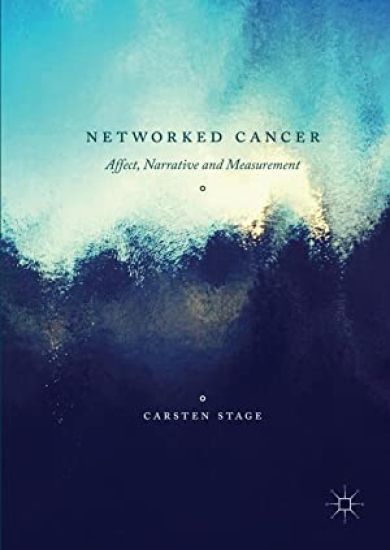
This book investigates how individual cancer narratives change in an age of networked social media. Through a range of case studies, it shows that a new type of entrepreneurial cancer narrative is currently evolving. This narrative is characterised by using illness to build projects and produce various forms of economic and social value, to stimulate affectively involved and large-scale public participation and to communicate across various social media platforms. Networked cancer: Affect, Narrative and Measurement offers a theoretical framework for understanding this entrepreneurial cancer narrative through an introduction focusing on the key concepts of illness narrative, social media and affect. The chapters examine the importance of connective mobilization, virality, experimental selfies, dark affects and new commemorative practices for understanding entrepreneurial cancer narratives. This study will be of great interest to scholars of media and cultural studies, as well as those interested in narrative medicine, health communication and affect and participation.
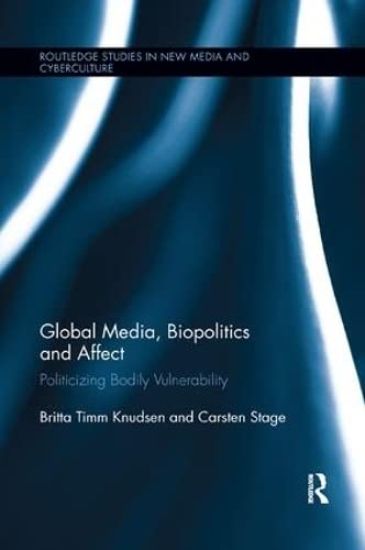
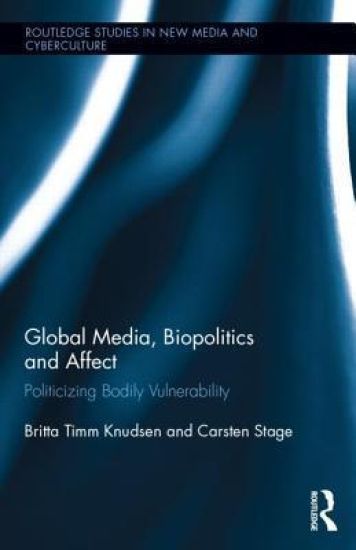
Global Media, Biopolitics and Affect shows how mediations of bodily vulnerability have become a strong political force in contemporary societies. In discussions and struggles concerning war involvement, healthcare issues, charity, democracy movements, contested national pasts, and climate change, performances of bodily vulnerability is increasingly used by citizens to raise awareness, create sympathy, encourage political action, and to circulate information in global media networks. The book thus argues that bodily vulnerability can serve as a catalyst for affectively charging and disseminating particular political events or issues by means of media. To investigate how, when and why that happens, and to evaluate the long-term social impacts of mediating bodily vulnerability, the book offers a theoretical framework for understanding the role of bodily vulnerability in contemporary digital media culture. Likewise, it presents a range of close empirical case studies in the areas of illness blogging, global protests after the killing of Neda Agda Soltan in Iran, charity communication, green media activism, online war commemoration and digital witnessing related to conflicts in Sarajevo and Ukraine.
This book investigates how individual cancer narratives change in an age of networked social media. Through a range of case studies, it shows that a new type of entrepreneurial cancer narrative is currently evolving. This narrative is characterised by using illness to build projects and produce various forms of economic and social value, to stimulate affectively involved and large-scale public participation and to communicate across various social media platforms. Networked cancer: Affect, Narrative and Measurement offers a theoretical framework for understanding this entrepreneurial cancer narrative through an introduction focusing on the key concepts of illness narrative, social media and affect. The chapters examine the importance of connective mobilization, virality, experimental selfies, dark affects and new commemorative practices for understanding entrepreneurial cancer narratives. This study will be of great interest to scholars of media and cultural studies, as well as those interested in narrative medicine, health communication and affect and participation.
Global Media, Biopolitics and Affect shows how mediations of bodily vulnerability have become a strong political force in contemporary societies. In discussions and struggles concerning war involvement, healthcare issues, charity, democracy movements, contested national pasts, and climate change, performances of bodily vulnerability is increasingly used by citizens to raise awareness, create sympathy, encourage political action, and to circulate information in global media networks. The book thus argues that bodily vulnerability can serve as a catalyst for affectively charging and disseminating particular political events or issues by means of media. To investigate how, when and why that happens, and to evaluate the long-term social impacts of mediating bodily vulnerability, the book offers a theoretical framework for understanding the role of bodily vulnerability in contemporary digital media culture. Likewise, it presents a range of close empirical case studies in the areas of illness blogging, global protests after the killing of Neda Agda Soltan in Iran, charity communication, green media activism, online war commemoration and digital witnessing related to conflicts in Sarajevo and Ukraine.