Kirjojen hintavertailu. Mukana 12 595 353 kirjaa ja 12 kauppaa.
Kirjailija
Carsten Thau
Kirjat ja teokset yhdessä paikassa: 10 kirjaa, julkaisuja vuosilta 2002-2024, suosituimpien joukossa Kunst og Filosofi i det 20. Århundrede. Vertaile teosten hintoja ja tarkista saatavuus suomalaisista kirjakaupoista.
Dan Zahavi; Kasper Nefer Olsen; Carsten Juhl; Peer F. Bundgård; Ana Bundgård; Bjørn Holgernes; Carsten Thau; Per Aage Brandt; Otto J. Pedersen; Marianne Stidsen; Steffen Nordahl Lund; Anne Elisabeth Sejten; Carsten Madsen; Nicolai A. I. Sonne; Britta Timm Knudsen; Claus Bratt Østergaard; Niels Lyngsø og Niels Brøgger
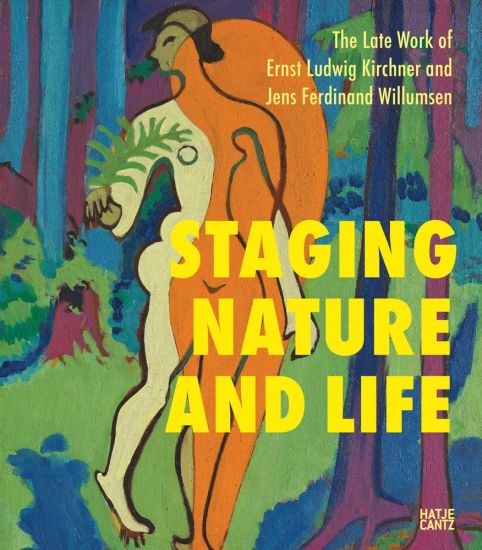
An exceptional talent, master of Expressionist art, co-founder of Die Brücke group. Where Ernst Ludwig Kirchner’s work is concerned, superlatives are basic. It is all the more surprising, therefore, that there has been little critical appraisal of one of the most important chapters in the painter’s life and oeuvre. Besides his Expressionist acme, his imposing later-phase work deserves special attention and recognition. In exile in Davos, Kirchner again managed to produce an outstanding cycle of pictures, before committing suicide at the age of fifty-eight. Though continuing to use his inimitable style, he nevertheless invented something entirely new. Nature appears as an intoxicating space in intense colours, where the dignity of the human figure is negotiated in a dynamic aesthetic. The scholarly publication gives readers the complete picture in the context of another Expressionist living in a self-imposed exile during those years: Danish painter J. F. Willumsen (1863–1958). The juxtaposition of Kirchner and Willumsen poses a visually persuasive and entirely new perspective on an intense, colourful and vital vision of painting from the 1910s–1930s.
Mateo Kries; Jochen Eisenbrand; Henrike Büscher; Fulvio Ferrari; Otakar Mácel; Jane Pavitt; Ingeborg de Roode; Arthur Rüegg; Deyan Sudjic; Wolf Tegethoff; Carsten Thau; et al
In 2019, the Vitra Design Museum will publish the Atlas of Furniture Design, the definitive, encyclopedic overview of the history of modern furniture design. Featuring over 1700 objects by more than 500 designers and 121 manufacturers, it includes approximately 2800 images ranging from detailed object photographs to historical images documenting interiors, patents, brochures, and related works of art and architecture. The basis for the Atlas of Furniture Design is the collection held by the Vitra Design Museum, one of the largest of its kind with more than 7000 works. The book presents selected pieces by the most important designers of the last 230 years and documents key periods in design history, including early nineteenth-century industrial furniture in bentwood and metal, Art Nouveau and Secessionist pieces and works by protagonists of classical modernism and postwar design, as well as postmodern and contemporary pieces. The Atlas of Furniture Design employed a team of more than 70 experts and features over 550 detailed texts about key objects. In-depth essays provide sociocultural and design-historical context to four historical epochs of furniture design and the pieces highlighted here, enriched by a detailed annex containing designer biographies, glossaries, and elaborate information graphics. The Atlas of Furniture Design is an indispensable resource for collectors, scholars and experts, as well as a beautifully designed object that speaks to design enthusiasts.
For more than a decade, Cisternerne has received great recognition in Denmark and abroad for its series of ambitious exhibitions by major international contemporary artists such as Chiharu Shiota, Kimsooja, Tomás Saraceno, SUPERFLEX and Hiroshi Sambuichi. This book tells the story of a completely unique space and the possibilities it creates for art. Since the conversion of the former water reservoir in Søndermarken on Frederiksberg into an under ground art gallery, a different artist has been invited every year to create a site-specific art project based on Cisternerne’s underground architecture, climate and history. What emerges is a very special, all- embracing and sensual world that simply cannot be experienced anywhere else. With contributions by Maria Gadegaard, director of The Frederiksberg Museums; Astrid la Cour, former director of The Frederiksberg Museums and now director of SMK - National Gallery of Denmark; Carsten Thau, emeritus professor and historian of architecture and ideas; and Minik Rosing, professor of geology.
I over et årti har Cisternerne modtaget stor anerkendelse i Danmark og udlandet for rækken af ambitiøse udstillinger af store internationale samtidskunstnere som Chiharu Shiota, Kimsooja, Tomás Saraceno, Superflex og Hiroshi Sambuichi. Denne bog fortæller historien om det helt unikke rum og de muligheder, det skaber for kunsten. Det tidligere vandreservoir i Søndermarken på Frederiksberg er blevet omdannet til en underjordisk kunsthal. Hvert år inviteres en kunstner til at lave et stedsspecifikt kunstprojekt med afsæt i Cisternernes underjordiske arkitektur, klima og historie, og der opstår en helt særlig altomfavnende og sanselig verden, som ikke kan opleves nogen andre steder. Bogen indeholder bidrag af Maria Gadegaard, direktør for Frederiksbergmuseerne, Astrid la Cour, tidligere direktør for Frederiksbergmuseerne og nu direktør for SMK - Statens Museum for Kunst, Carsten Thau, professor emeritus og arkitektur- og idehistoriker samt Minik Rosing, professor i geologi.
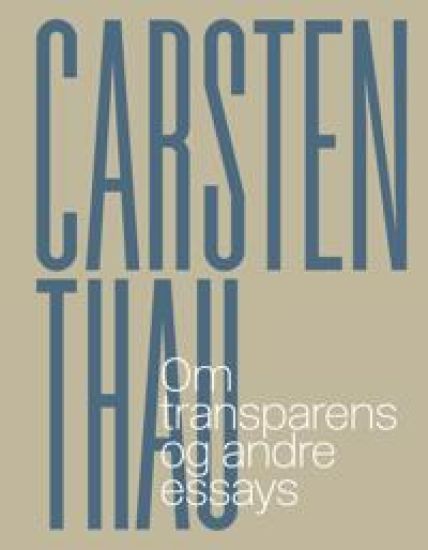
Arkitektur- og idehistorikeren Carsten Thau efterlod sig ved sin tidlige død i 2021 et work-in-progress-essay med titlen ”Om transparens”. Det udgives i denne bog sammen med et par håndfulde andre essays, der giver et stærkt billede af hvordan Thau krydser arkitektur med idehistorie, bysociologi med æstetik, personalia med kulturhistorie. En enestående og inspirerende indsats, der kaster lys i mange retninger. Carsten Thau (1947-2021). Studier i Aarhus, Frankfurt og Cambridge. Cand. phil. i idéhistorie 1973; lektor ved Arkitektskolen i Aarhus 1976-94; fra 1994 professor i arkitekturens teori og historie ved Kunstakademiets Arkitektskole i København; medlem af Akademirådet; tildelt Statens Kunstfonds livsvarige hædersydelse.
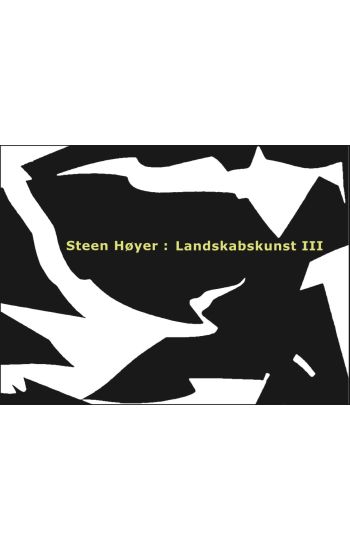
Billedkunstner og landskabsarkitekt Steen Høyer var professor ved Kunstakademiets Arkitektskole fra 1994 til 2016. Bogen Landskabskunst III opsamler en række projekter og tanker fra 2011-2017 og afslutter dermed Steen Høyers værk. Steen Høyer døde i 2019. Carsten Thau og Morten Stræde har hver skrevet et essay og Lene Tranberg har interviewet Steen Høyer.
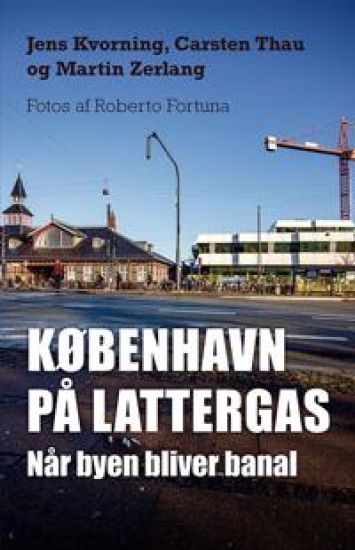
København på lattergas handler om den banalisering, der griber om sig i København. Om developere, der ser byen som én stor forretning. Om politikere,der tænker som developere. Om arkitekter, der tænker som alle de andre. Om turister, der tramper byen flad. Om københavnere, der træder vande i nutid. Eller træder på de lattergaspatroner, der ligger spredt over byens gulv – og som vidner om, at man stadig søger noget mere. Men lattergas tilbyder kun en rus, der varer 20 sekunder. Bogen er et argument for, at vi sætter barren højere.Bogen består af nogle bredere overvejelser, en stribe skarpe signalementer plus en række interviews med bl.a. Suzanne Brøgger, Søren Ulrik Thomsen, Jokum Rohde, Per Arnoldi, LeneTranberg og Dorte Mandrup.
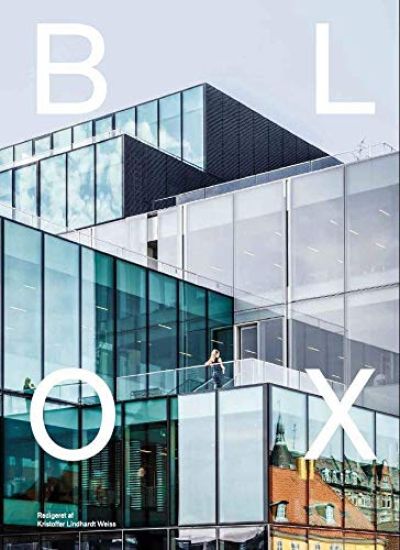
In 2018, BLOX was opened on the waterfront in Copenhagen. Designed by the Dutch architecture studio OMA and funded by Realdania philanthropic association, BLOX is more than just a building. It is a mix of homes, offices, exhibition spaces, cafés and public areas with a vibrant urban life elements that, when taken together, form a new destination at Bryghusgrunden, one of Copenhagen s perhaps most challenging construction sites. BLOX also provides a framework for projects such as the Danish Architecture Centre s changing architectural exhibitions on Danish and international architecture, and for BLOXHUB an interdisciplinary, international innovation environment for sustainable urban development. Through interviews and essays, this book tells the story of the building s inception and foundational concept. It takes an extensive look at the many decisions and issues that arise in a project where ambitions of architecture, urban space and the life of the building always were extremely high from the birth of the concept in 2004 to its uses today. It is at the same time also a history of the development of Copenhagen s waterfront into one of the city s key recreational spaces. The book contains extensive photographic material, architectural drawings, process sketches and architectural models that illustrate BLOX as the architects conceived it when they designed this spectacular construction.
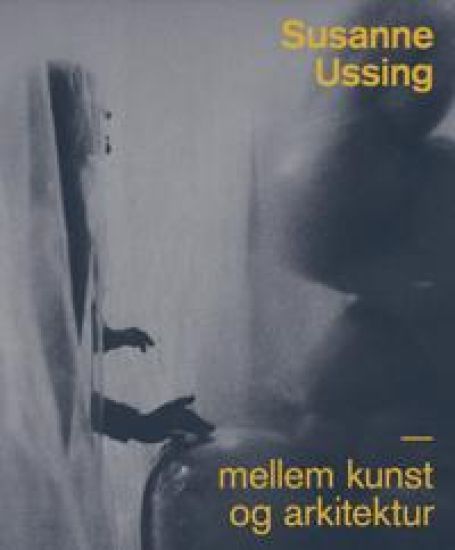
Susanne Ussing bevægede sig på tværs af kunstarterne som keramiker, arkitekt og billedkunstner. Hun stod bl.a. bag en række opsigtsvækkende og provokerende udstillingsvinduer for Nørgaard paa Strøget samt en række innovative sanse- og børneudstillinger. Hun var en af 1970’ernes feministiske stemmer, og kunstkritiker Mikael Wivel har betegnet hende som ”en af tidens mest originale begavelser”.Hun forholdt sig kritisk til sin samtid og udfordrede bl.a. det konventionelle boligbyggeri med byggeeksperimenter i Thylejren i 1970. Bogen rummer syv artikler af eksperter indenfor kunst, arkitektur og litteratur og kommer hele vejen rundt om Ussings værker fra 1960’erne og frem til hendes død i 1998. Desuden bidrager forfatteren Peter Laugesen, der kendte Susanne Ussing personligt, med et nyskrevet digt. Bogen kaster nyt lys på en markant skikkelse i dansk kunsthistorie og henvender sig til alle, der interesserer sig for billedkunst og arkitektur – og alt det midt imellem.