Kirjojen hintavertailu. Mukana 12 595 353 kirjaa ja 12 kauppaa.
Kirjailija
Cassia Spohn
Kirjat ja teokset yhdessä paikassa: 7 kirjaa, julkaisuja vuosilta 1992-2025, suosituimpien joukossa Courts: A Text/Reader. Vertaile teosten hintoja ja tarkista saatavuus suomalaisista kirjakaupoista.
Comprehensive and engaging, Criminal Courts: A Contemporary Perspective, supports student understanding by exploring all aspects of courts and related areas which are crucial to the criminal justice system.
"The book is a focused, well-written, and adequately resourced introductory text on the court system." --Anita Kalunta-Crumpton, Texas Southern University Courts: A Text/Reader, Third Edition, helps students understand the U.S. court system in context, with each brief authored section of the text enhanced by edited research articles that illustrate the questions and controversies in the judicial system today. The articles reflect both classic studies of the criminal court system and state-of-the-art research, and they often have a policy perspective that demonstrates the potential impact research can have on the court system. Designed to enhance understanding, the book includes a helpful "How to Read a Research Article" section before the first reading, as well as article introductions and discussion questions that capture students' interest and help them develop critical thinking skills. New to the Third Edition Ninety percent of the journal articles have been updated and introduce students to important topics, such as the effects of trial judges' sex and race, perceptions of plea bargaining, wrongful convictions, and the sentencing of drug offenders. New "Current Controversy" debates in each chapter highlight contentious issues in the courts, such as public defender caseloads, the impact of social media on criminal trials, and the need for more drug courts. A new "Current Cases" boxed feature elaborates on recent key court decisions and the impact they have had on issues such as defining "effective" counsel, racial bias in sentencing and jury deliberations, and the importance of judicial impartiality. Coverage of critical topics has been expanded throughout to introduce students to important issues, such as specialized courts, bail and pretrial release, the death penalty, and restorative justice. Statistics, graphs, and tables have all been updated to demonstrate the most recent trends in the court system.
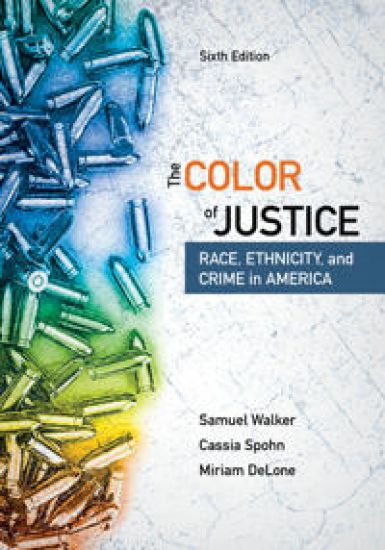
What role does race play in the justice system? In THE COLOR OF JUSTICE: RACE, ETHNICITY, AND CRIME IN AMERICA, Sixth Edition, you'll read a data-driven and balanced account of criminal behavior patterns, victimization, immigration and crime, drug use, police practices, court processing and sentencing, executions under the death penalty, and the prison system. You'll examine all the angles, from gender to economic status to race and age as you uncover the truth about the criminal justice system. Get informed on this important issue with this enlightening text.
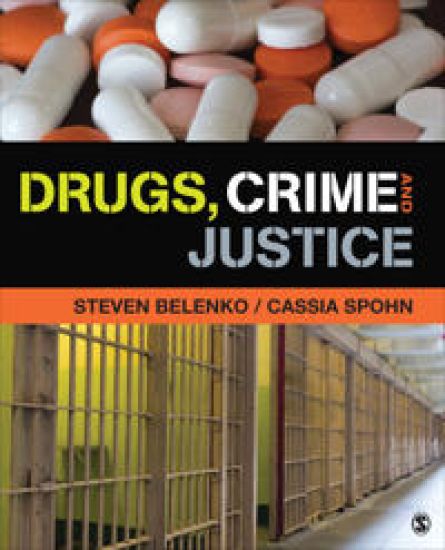
Drugs, Crime, and Justice is an engaging, yet comprehensive, analysis of the interrelationships among drug use/abuse, crime, and justice. The first four chapters introduce readers to the interrelationships between drugs and crime, while the second later chapters provide readers with an overview of historical and contemporary policies, as well as a comprehensive review of research on policing drug markets, arresting drug offenders, and prosecution and sentencing of drug offenders in state and federal courts. The authors also examine and assess the impact of the war on drugs and conclude with a discussion of recent policy changes such as drug courts and reform/repeal of mandatory minimum sentences and an examination of new and emerging drug policies in the 21st Century.
This book evolved from our interest in rape as feminists and as sodal sdentists. As feminists, we were concemed about the treatment of rape victims and the attrition in rape cases under traditional rape law, and we welcomed legal reforms designed to improve the situation. As sodal sdentists, we wondered about the efficacy of legal changes aimed at an inherently resistant court system. We also were curious about the lack of studies examining the impact of these changes; we were particularly surprised to find that no one had attempted to ana lyze the impact of the reforms in more than one jurisdiction. Con vinced that untangling the effects of the reforms from the effects of contextual factors required a multijurisdictional study, we deeided to undertake the project. We quickly discovered that evaluating rape law reform in several jurisdictions would be no easy task. We had deeided that such an evaluation would require monthly data on the outcome of rape cases before and after the reforms were implemented, as weIl as qualitative data on the attitudes of criminal justice officials toward the reforms. Because states do not generate monthly data on case outcomes, we would have to collect the data ourse1ves from court records main tained by individual jurisdictions. To obtain an adequate number of cases for the time-series analysis, we would have to select our sites from large urban jurisdictions scattered throughout the United States.
How are sentences for federal, state, and local crimes determined? Is this process fairly and justly applied to all concerned? How have reforms affected the process over the last 25 years? Offering a comprehensive overview of the sentencing process in the United States, How Do Judges Decide? The Search for Fairness and Justice in Punishment explores these questions and more. Author Cassia Spohn first discusses the overall concept of punishment and then analyzes individual aspects of it, including the sentencing process, the responsibility of the judge, and disparity and discrimination in sentencing. This Second Edition offers new information on the impact of sentencing reforms, including recent research and case law, updated statistics in tables and figures, and new boxed highlights. Key Features Helps students understand patterns in the wide discretion and latitude given to judges when determining penalties within the framework of the U.S. judicial system Engages the reader with "Focus on an Issue" sections, which analyze key issues such as gender and sentencing (Ch.4) and the impact of race on sentencing for drug offenses (Ch.5) Examines sentencing reforms and their impact, providing students with up-to-date information on how punishment is meted out in U.S. courts. Contains boxed excerpts in each chapter from books and articles, with a variety of case studies on topics such as the O.J. Simpson murder trial, judicial surveys, and comparison of sentences in different jurisdictions by gender Offers new material on specialty courts and the prosecutor's role in sentencing Concludes each chapter with discussion questions How Do Judges Decide? is an ideal text for upper-division undergraduate and graduate courses on the judicial system, criminal law, and law and society.
This book evolved from our interest in rape as feminists and as sodal sdentists. As feminists, we were concemed about the treatment of rape victims and the attrition in rape cases under traditional rape law, and we welcomed legal reforms designed to improve the situation. As sodal sdentists, we wondered about the efficacy of legal changes aimed at an inherently resistant court system. We also were curious about the lack of studies examining the impact of these changes; we were particularly surprised to find that no one had attempted to ana lyze the impact of the reforms in more than one jurisdiction. Con vinced that untangling the effects of the reforms from the effects of contextual factors required a multijurisdictional study, we deeided to undertake the project. We quickly discovered that evaluating rape law reform in several jurisdictions would be no easy task. We had deeided that such an evaluation would require monthly data on the outcome of rape cases before and after the reforms were implemented, as weIl as qualitative data on the attitudes of criminal justice officials toward the reforms. Because states do not generate monthly data on case outcomes, we would have to collect the data ourse1ves from court records main tained by individual jurisdictions. To obtain an adequate number of cases for the time-series analysis, we would have to select our sites from large urban jurisdictions scattered throughout the United States.