Kirjojen hintavertailu. Mukana 12 595 353 kirjaa ja 12 kauppaa.
Kirjailija
Catarina Kinnvall
Kirjat ja teokset yhdessä paikassa: 4 kirjaa, julkaisuja vuosilta 2006-2021, suosituimpien joukossa Internationella relationer. Vertaile teosten hintoja ja tarkista saatavuus suomalaisista kirjakaupoista.
Jakob Gustavsson; Jonas Tallberg; Karin Aggestam; Jan Joel Andersson; Rikard Bengtsson; Ulf Bjereld; Annika Björkdahl; Karin Bäckstrand; Lisa Dellmuth; Marie Demker; Kjell Engelbrekt; Magnus Ericson; Johan Eriksson; Martin Hall; Eva Hansson; Karl Magnus Johansson; Thomas Jonter; Sara Kalm; Catarina Kinnvall; Annica Young Kronsell; Charles Parker; Alexa Robertson; Eric Stern; Fredrik Söderbaum; Anders Uhlin
I denna heltäckande grundbok ges en introduktion till studiet av internationella relationer. Boken redogör för de dominerande teoretiska perspektiven inom internationella relationer, för de processer som formar den internationella fördelningen av makt och resurser, samt för de mest framträdande politikområdena i världspolitiken idag. Genom sitt breda anslag behandlar boken frågor som: Varför uppstår krig? Vad har globaliseringen för politiska effekter? Vem har makt i internationell politik? Hur kan utvecklingsländerna hävas ur fattigdom? Vilka motiv driver transnationella terroristnätverk? När har normer och internationella institutioner betydelse? Under vilka omständigheter får nationella identiteter genomslag i världspolitiken?I boken medverkar många av de främsta forskarna inom internationell politik i Sverige. Alla är experter inom sina respektive områden, och är väl integrerade i den internationella forskningsmiljön. På ett pedagogiskt sätt introducerar de centrala perspektiv och begrepp och knyter samtidigt an till aktuella exempel och illustrationer. Flera exempel hämtas från en svensk kontext och boken belyser därmed på ett unikt sätt Sveriges relationer med omvärlden. I denna fjärde upplaga har samtliga kapitel uppdaterats. Boken vänder sig i första hand till introduktionskurser i internationell politik eller internationella relationer vid universitet och högskolor.
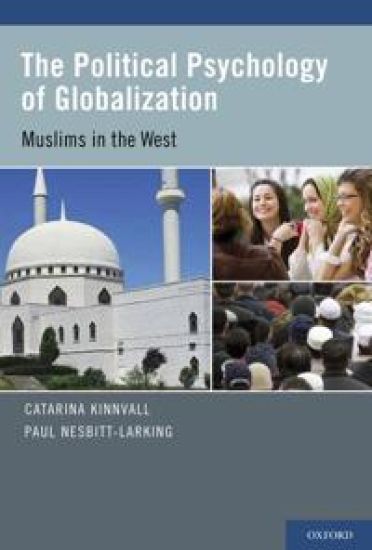
In an increasingly globalized world, there are new economic, strategic, cultural, and political forces at work. The Political Psychology of Globalization: Muslims in the West explores how these shifts and shocks have influenced the way in which Muslim minorities in western countries form their identities as political actors. Catarina Kinnvall and Paul Nesbitt-Larking uncover three identity strategies adopted by Muslims in the West: retreatism, essentialism, and engagement. Six western countries - Canada, Denmark, France, the Netherlands, Sweden, and the United Kingdom - serve as places for exploration of the emergence of these Muslim political identities. These countries are discussed in light of their colonial histories, patterns of immigration, and citizenship regimes. Although retreatism, essentialism, and engagement occur in Muslim citizens of each of the six western nations discussed in this book, the countries that are best able to balance individual and community rights are most successful in promoting the politics of engagement. In contrast, regimes that focus on anti-terrorist legislation and discourses, and support majority political cultures that are exclusionary, also promote retreatism and essentialist identity strategies in both minority and majority communities. The authors discuss the importance of a climate of engagement that is based on recognition, dialogue, deep multiculturalism, a new global and "cosmopolitical" consciousness, and a sense of political identity that transcends national boundaries and regimes.
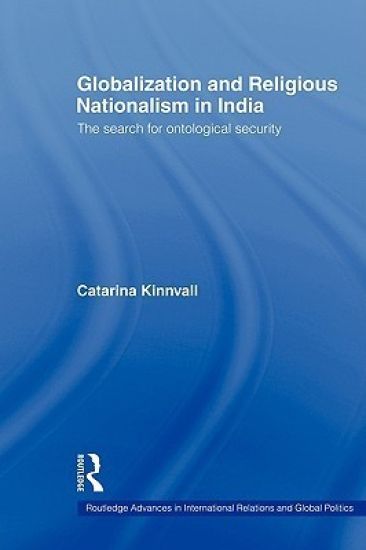
Exploring the effects of globalization in India and the problem of identity formation, this book contributes to the theoretical and empirical debate on identity, globalization, religious nationalism and (in)security. The author puts forward a new approach based on political psychology, to interpret identity construction, which is seen as an individualized process where interactions of the global and the local are intimately implicated. Thereby, this book presents a psychological analysis of how increased insecurity affects individuals’ and groups’ attachments to religious nationalism in an era of globalization. Developing an interesting angle on a recognized issue of concern in the politics of South Asia, and much more broadly in the context of the contemporary world and developing global politics, this is a valuable addition to normative critical social theory and the debate on identity and culture in political science and international relations, appealing to an inter-disciplinary audience.