Kirjojen hintavertailu. Mukana 12 595 353 kirjaa ja 12 kauppaa.

Kirjailija

Catherine Marsh

Kirjat ja teokset yhdessä paikassa: 15 kirjaa, julkaisuja vuosilta 1992-2025, suosituimpien joukossa Exploring Data. Vertaile teosten hintoja ja tarkista saatavuus suomalaisista kirjakaupoista.

15 kirjaa

Kirjojen julkaisuhaarukka 1992-2025.

Exploring Data

Exploring Data

Catherine Marsh; Jane Elliott

Polity Press
2008
nidottu
The updated edition of this classic text introduces a range of techniques for exploring quantitative data. Beginning with an emphasis on descriptive statistics and graphical approaches, it moves on in later chapters to simple strategies for examining the associations between variables using inferential statistics such as chi squared. The book has been substantially revised to include the most recent approaches to data analysis, and includes step-by-step instructions on using SPSS. All these techniques are illustrated with intriguing real examples, drawn from important social research over the past three decades, designed to illuminate significant sociological and political debates. The book shows how students can use quantitative data to answer various questions: Is it true that the rich are getting richer and the poor are getting poorer? Are crime rates really going down, and how can we tell? How much alcohol do men and women really drink in an average week? Which country in Europe has the highest average working hours? Readers are encouraged to explore data for themselves, and are carefully guided through the opportunities and pitfalls of using statistical packages, as well as the numerous data sources readily available online. Suitable for those with no previous experience of quantitative data analysis, the second edition of Exploring Data will be invaluable to students across the social sciences. Download answers to exercises in book.
Exploring Data

Exploring Data

Catherine Marsh; Jane Elliott

Polity Press
2008
sidottu
The updated edition of this classic text introduces a range of techniques for exploring quantitative data. Beginning with an emphasis on descriptive statistics and graphical approaches, it moves on in later chapters to simple strategies for examining the associations between variables using inferential statistics such as chi squared. The book has been substantially revised to include the most recent approaches to data analysis, and includes step-by-step instructions on using SPSS. All these techniques are illustrated with intriguing real examples, drawn from important social research over the past three decades, designed to illuminate significant sociological and political debates. The book shows how students can use quantitative data to answer various questions: Is it true that the rich are getting richer and the poor are getting poorer? Are crime rates really going down, and how can we tell? How much alcohol do men and women really drink in an average week? Which country in Europe has the highest average working hours? Readers are encouraged to explore data for themselves, and are carefully guided through the opportunities and pitfalls of using statistical packages, as well as the numerous data sources readily available online. Suitable for those with no previous experience of quantitative data analysis, the second edition of Exploring Data will be invaluable to students across the social sciences. Download answers to exercises in book.
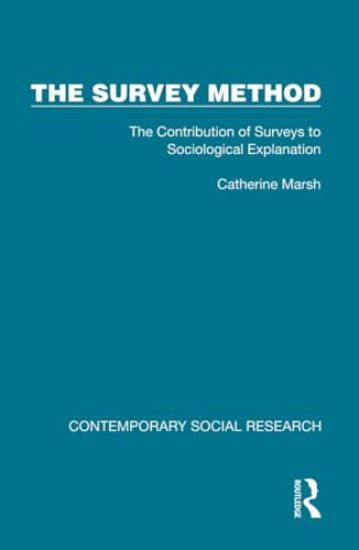
The Survey Method

The Survey Method

Catherine Marsh

TAYLOR FRANCIS LTD
2025
sidottu
In the early 1980s, the survey was the most widely used method of social research, but it had been the object of much damaging criticism. Critics maintained that there were philosophical flaws inherent in survey practice which made it unacceptable as valid method; sociology students were taught that surveys are ‘positivist’ and that alternatives should be sought wherever possible. In The Survey Method, originally published in 1982, Catherine Marsh examines such claims and shows that much of this criticism was ill-founded.The book shows that surveys do not have to be mere superficial glimpses of the surface features of processes, fact-gathering exercises or opinion polls. Properly designed, executed and analysed, they can actually provide the kind of evidence that social theorists, concerned with uncovering dynamic aspects of social life, will want to use. Catherine Marsh challenges the contention that different research procedures automatically have to commit those who use them either to a particular theory of knowledge, a view of human nature or even a political stance.The Survey Method is neither a pure defence of surveys nor a textbook on how to do them. It does, after all, criticise the kinds of surveys that are often done, and it is particularly hostile to some new and manipulative developments in the often anti-democratic use made of survey results and opinion polls. Catherine Marsh’s aim is to contribute to the methodological debate on survey research. Although the book will find most of its readers among academic sociologists, it also contains a wealth of detail on the history of surveys and an extensive annotated bibliography of the major survey literature. It will accordingly prove essential reading for practising social researchers while re-establishing the credentials of survey research amongst the broader social science community.
The Life of the Rev. William Marsh, Part 4
This work has been selected by scholars as being culturally important, and is part of the knowledge base of civilization as we know it. This work was reproduced from the original artifact, and remains as true to the original work as possible. Therefore, you will see the original copyright references, library stamps (as most of these works have been housed in our most important libraries around the world), and other notations in the work.This work is in the public domain in the United States of America, and possibly other nations. Within the United States, you may freely copy and distribute this work, as no entity (individual or corporate) has a copyright on the body of the work.As a reproduction of a historical artifact, this work may contain missing or blurred pages, poor pictures, errant marks, etc. Scholars believe, and we concur, that this work is important enough to be preserved, reproduced, and made generally available to the public. We appreciate your support of the preservation process, and thank you for being an important part of keeping this knowledge alive and relevant.