Kirjojen hintavertailu. Mukana 12 337 248 kirjaa ja 12 kauppaa.

Kirjailija

Catherine Zimmer

Kirjat ja teokset yhdessä paikassa: 4 kirjaa, julkaisuja vuosilta 2008-2015, suosituimpien joukossa Surveillance Cinema. Vertaile teosten hintoja ja tarkista saatavuus suomalaisista kirjakaupoista.

4 kirjaa

Kirjojen julkaisuhaarukka 2008-2015.

Surveillance Cinema

Surveillance Cinema

Catherine Zimmer

New York University Press
2015
pokkari
In Paris, a static video camera keeps watch on a bourgeois home. In Portland, a webcam documents the torture and murder of kidnap victims. And in clandestine intelligence offices around the world, satellite technologies relentlessly pursue the targets of global conspiracies. Such plots represent only a fraction of the surveillance narratives that have become commonplace in recent cinema. Catherine Zimmer examines how technology and ideology have come together in cinematic form to play a functional role in the politics of surveillance. Drawing on the growing field of surveillance studies and the politics of contemporary monitoring practices, she demonstrates that screen narrative has served to organize political, racial, affective, and even material formations around and through surveillance. She considers how popular culture forms are intertwined with the current political landscape in which the imagery of anxiety, suspicion, war, and torture has become part of daily life. From Enemy of the State and The Bourne Series to Saw, Caché and Zero Dark Thirty, Surveillance Cinema explores in detail the narrative tropes and stylistic practices that characterize contemporary films and television series about surveillance.
Surveillance Cinema

Surveillance Cinema

Catherine Zimmer

New York University Press
2015
sidottu
In Paris, a static video camera keeps watch on a bourgeois home. In Portland, a webcam documents the torture and murder of kidnap victims. And in clandestine intelligence offices around the world, satellite technologies relentlessly pursue the targets of global conspiracies. Such plots represent only a fraction of the surveillance narratives that have become commonplace in recent cinema. Catherine Zimmer examines how technology and ideology have come together in cinematic form to play a functional role in the politics of surveillance. Drawing on the growing field of surveillance studies and the politics of contemporary monitoring practices, she demonstrates that screen narrative has served to organize political, racial, affective, and even material formations around and through surveillance. She considers how popular culture forms are intertwined with the current political landscape in which the imagery of anxiety, suspicion, war, and torture has become part of daily life. From Enemy of the State and The Bourne Series to Saw, Caché and Zero Dark Thirty, Surveillance Cinema explores in detail the narrative tropes and stylistic practices that characterize contemporary films and television series about surveillance.

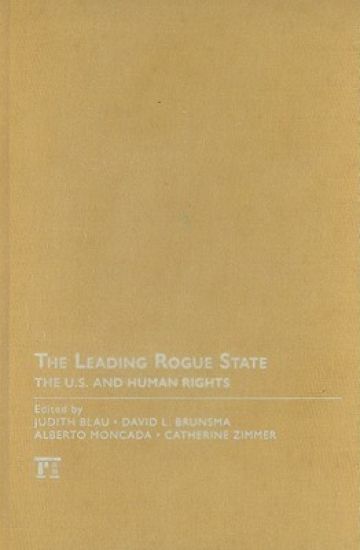
Leading Rogue State

Leading Rogue State

Judith R. Blau; David L. Brunsma; Alberto Moncada; Catherine Zimmer

Paradigm
2009
nidottu
Most Americans would be surprised to learn that their government has declined to join most other nations in UN treaties addressing inadequate housing, poverty, children's rights, health care, racial discrimination, and migrant workers. Yet this book documents how the U.S. has, for decades, declined to ratify widely accepted treaties on these and many other basic human rights. Providing the first comprehensive topical survey, the contributors build a case and specific agendas for the nation to change course and join the world community as a protector of human rights.
Leading Rogue State

Leading Rogue State

Judith R. Blau; David L. Brunsma; Alberto Moncada; Catherine Zimmer

Paradigm
2008
sidottu
Most Americans would be surprised to learn that their government has declined to join most other nations in UN treaties addressing inadequate housing, poverty, children's rights, health care, racial discrimination, and migrant workers. Yet this book documents how the U.S. has, for decades, declined to ratify widely accepted treaties on these and many other basic human rights. Providing the first comprehensive topical survey, the contributors build a case and specific agendas for the nation to change course and join the world community as a protector of human rights.