Kirjojen hintavertailu. Mukana 12 390 323 kirjaa ja 12 kauppaa.
Kirjailija
Cees van der Eijk
Kirjat ja teokset yhdessä paikassa: 7 kirjaa, julkaisuja vuosilta 1996-2019, suosituimpien joukossa Electoral Shocks. Vertaile teosten hintoja ja tarkista saatavuus suomalaisista kirjakaupoista.
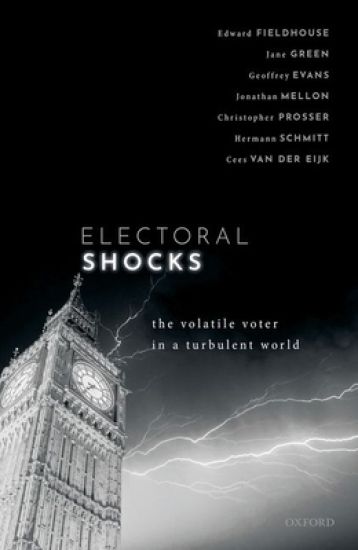
This is an open access title available under the terms of a CC BY-NC-ND 4.0 International licence. It is free to read at Oxford Scholarship Online and offered as a free PDF download from OUP and selected open access locations. Electoral Shocks: The Volatile Voter in a Turbulent World offers a novel perspective on British elections, focusing on the role of electoral shocks in the context of increasing electoral volatility. It demonstrates and explains the long-term trend in volatility, how shocks have contributed to the level of electoral volatility, and also which parties have benefited from the ensuing volatility. It follows in the tradition of British Election Study books, providing a comprehensive account of specific election outcomes- the General Elections of 2015 and 2017-and a more general and novel approach to understanding electoral change. The authors examine five electoral shocks that affected the elections of 2015 and 2017: the rise in immigration after 2004, particularly from Eastern Europe; the Global Financial Crisis prior to 2010; the coalition government of the Conservatives and the Liberal Democrats between 2010 and 2015; the Scottish Independence Referendum in 2014; and the European Union Referendum in 2016. The focus on electoral shocks offers an overarching explanation for the volatility in British elections, alongside the long-term trends that have led to this point. It offers a way to understand the rise and fall of the UK Independence Party (UKIP), Labour's disappointing 2015 performance and its later unexpected gains, the collapse in support for the Liberal Democrats, the dramatic gains of the Scottish National Party (SNP) in 2015, and the continuing period of tumultuous politics that has followed the EU referendum and the General Election of 2017. It provides a new way of understanding electoral choice in Britain, and also beyond, and a better understanding of the outcomes of recent elections.
This is a book about elections to the European Parliament, their failure to legitimate and control the exercise of power in the European Union, and the consequences of this failure for domestic politics in EU member states. It also sheds new light on why voters behave the way they do. The authors examine the 1989 Europe-wide elections with the aid of large-scale surveys fielded in all twelve member countries of the (then) European Community--placing European citizens within their institutional, political, economic, and social contexts. In particular, because three countries held national elections concurrently with the 1989 European elections, the study controls for the presence or absence of a national election context--permitting the authors to investigate electoral behavior in general, not just at European elections. Looking at such behavior while taking account of the strategic contexts within which elections are held has yielded new insights about turnout and party choice, while clarifying the crisis of legitimacy that faces the European Union. The more recent Europe-wide elections of 1994 are used to validate the findings. This book will be of interest to political scientists interested in elections, the European Union, comparative politics, and political development.
This is an open access title available under the terms of a CC BY-NC-ND 4.0 International licence. It is free to read at Oxford Scholarship Online and offered as a free PDF download from OUP and selected open access locations. Electoral Shocks: The Volatile Voter in a Turbulent World offers a novel perspective on British elections, focusing on the role of electoral shocks in the context of increasing electoral volatility. It demonstrates and explains the long-term trend in volatility, how shocks have contributed to the level of electoral volatility, and also which parties have benefited from the ensuing volatility. It follows in the tradition of British Election Study books, providing a comprehensive account of specific election outcomes- the General Elections of 2015 and 2017-and a more general and novel approach to understanding electoral change. The authors examine five electoral shocks that affected the elections of 2015 and 2017: the rise in immigration after 2004, particularly from Eastern Europe; the Global Financial Crisis prior to 2010; the coalition government of the Conservatives and the Liberal Democrats between 2010 and 2015; the Scottish Independence Referendum in 2014; and the European Union Referendum in 2016. The focus on electoral shocks offers an overarching explanation for the volatility in British elections, alongside the long-term trends that have led to this point. It offers a way to understand the rise and fall of the UK Independence Party (UKIP), Labour's disappointing 2015 performance and its later unexpected gains, the collapse in support for the Liberal Democrats, the dramatic gains of the Scottish National Party (SNP) in 2015, and the continuing period of tumultuous politics that has followed the EU referendum and the General Election of 2017. It provides a new way of understanding electoral choice in Britain, and also beyond, and a better understanding of the outcomes of recent elections.
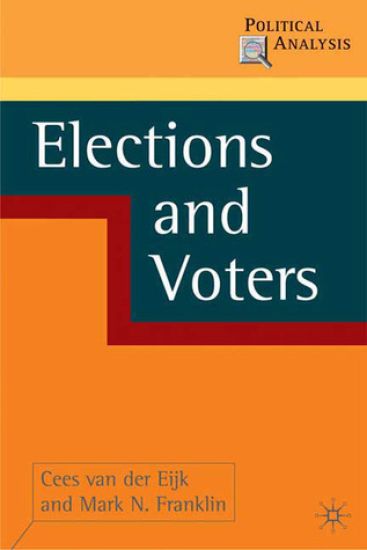
This major new text by two leading authorities in the field provides a state-of-the-art assessment of what we know about voting behaviour and the character, consequences and significance of elections in democratic states. It shows how patterns of electoral behaviour have evolved over time and vary in different countries.
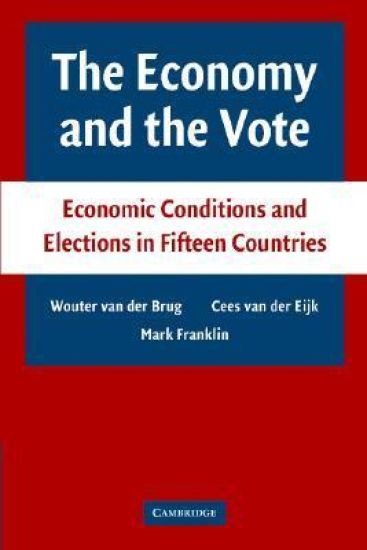
Economic conditions are said to affect election outcomes, but past research has produced unstable and contradictory findings. This book argues that these problems are caused by the failure to take account of electoral competition between parties. A research strategy to correct this problem is designed and applied to investigate effects of economic conditions on (individual) voter choices and (aggregate) election outcomes over 42 elections in 15 countries. It shows that economic conditions exert small effects on individual party preferences, which can have large consequences for election outcomes. In countries where responsibility for economic policy is clear, voters vote retrospectively and reward or punish incumbent parties - although in coalition systems smaller government parties often gain at the expense of the largest party when economic conditions deteriorate. Where clarity of responsibility for economic policy is less clear, voters vote more prospectively on the basis of expected party policies.