Kirjojen hintavertailu. Mukana 12 390 323 kirjaa ja 12 kauppaa.
Kirjailija
Célestin Monga
Kirjat ja teokset yhdessä paikassa: 4 kirjaa, julkaisuja vuosilta 2013-2019, suosituimpien joukossa Beating the Odds. Vertaile teosten hintoja ja tarkista saatavuus suomalaisista kirjakaupoista.
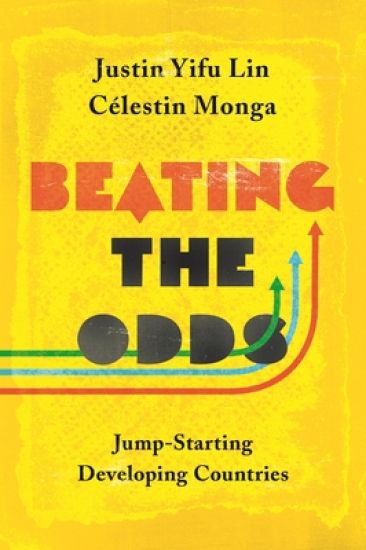
How poor countries can ignite economic growth without waiting for global action or the creation of ideal local conditionsCountries that ignite a process of rapid economic growth almost always do so while lacking what experts say are the essential preconditions for development, such as good infrastructure and institutions. In Beating the Odds, two of the world's leading development economists begin with this paradox to explain what is wrong with mainstream development thinking—and to offer a practical blueprint for moving poor countries out of the low-income trap regardless of their circumstances.
How poor countries can ignite economic growth without waiting for global action or the creation of ideal local conditions Contrary to conventional wisdom, countries that ignite a process of rapid economic growth almost always do so while lacking what experts say are the essential preconditions for development, such as good infrastructure and institutions. In Beating the Odds, two of the world's leading development economists begin with this paradox to explain what is wrong with mainstream development thinking--and to offer a practical blueprint for moving poor countries out of the low-income trap regardless of their circumstances. Justin Yifu Lin, the former chief economist of the World Bank, and Celestin Monga, the chief economist of the African Development Bank, propose a development strategy that encourages poor countries to leap directly into the global economy by building industrial parks and export-processing zones linked to global markets. Countries can leverage these zones to attract light manufacturing from more advanced economies, as East Asian countries did in the 1960s and China did in the 1980s. By attracting foreign investment and firms, poor countries can improve their trade logistics, increase the knowledge and skills of local entrepreneurs, gain the confidence of international buyers, and gradually make local firms competitive. This strategy is already being used with great success in Vietnam, Cambodia, Bangladesh, Mauritius, Ethiopia, Rwanda, and other countries. And the strategy need not be limited to traditional manufacturing but can also include agriculture, the service sector, and other activities. Beating the Odds shows how poor countries can ignite growth without waiting for global action or the creation of ideal local conditions.
There are two common ways of writing about Africa, says Célestin Monga. One way blames Africa’s ills on the continent’s history of exploitation and oppression. The other way blames Africans themselves for failing to rise above poisonous national prejudices and resentments. But patronizing caricatures that reduce Africans to either victims or slackers do not get us very far in understanding the complexities and paradoxes of Africa today.A searching, often searing, meditation on ways of living in modern Africa, Nihilism and Negritude dispels the stereotypes that cloud how outsiders view the continent—and how Africans sometimes view themselves. In the role of a traveler-philosopher, Monga seeks to register “the picturesque absurdity of daily life” in his native Cameroon and across the continent. Whether navigating the chaotic choreography of street traffic or discoursing on the philosophy of café menus, he illuminates the patterns of reasoning behind everyday behaviors and offers new interpretations of what some observers have misunderstood as Africans’ resigned acceptance of suffering and violence.Monga does not wish to revive Negritude, the once-influential movement that sought to identify and celebrate allegedly unique African values. Rather, he seeks to show how daily life and thought—witnessed in dance and music, sensual pleasure and bodily experience, faith and mourning—reflect a form of nihilism developed to cope with chaos, poverty, and oppression. This is not the nihilism of despair, Monga insists, but the determination to find meaning and even joy in a life that would otherwise seem absurd.
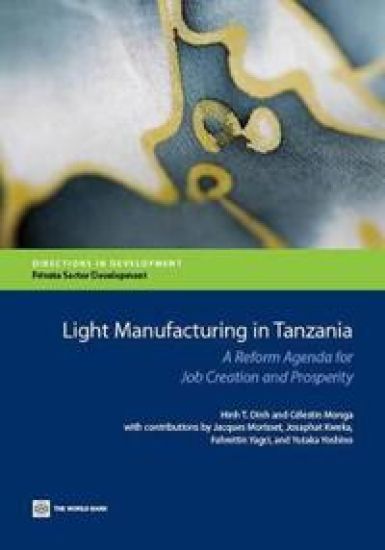
Light Manufacturing in Tanzania argues that for Tanzania to remain one of the fastest growing economies in Sub-Saharan Africa, it has to make progress in the structural transformation that can lift workers from low-productivity agriculture and the informal sector to higher productivity activities. Manufacturing, which has been the main vehicle throughout the world to achieve this transformation, has remained stunted in Tanzania. Using new evidence, the book shows that feasible, low-cost, sharply focused policy initiatives aimed at enhancing private investment could launch Tanzania on a path to competitive light manufacturing. These initiatives would complement progress on broader investment reforms by increasing the share of industry in regional output and raising the market share of domestically produced goods in rapidly growing local markets for light manufactures. And, as local producers increase their scale, improve quality, and gain experience with technology, management, and marketing, they can take advantage of emerging export opportunities. In Tanzania, as in East Asia, policies that encourage foreign direct investment can speed industrial development and the expansion of exports. The impact of isolated successes can be multiplied. The strategies proposed here can launch a process that would create millions of productive jobs.Light Manufacturing in Tanzania has several innovative features. First, it provides in-depth cost comparisons between Tanzania and four other countries in Asia and Africa at the sector and product levels. Second, the book uses a wide array of quantitative and qualitative techniques to identify key constraints to enterprises and to evaluate differences in the performance of firms across countries. Third, it uses a focused approach to identify country- and industry-specific constraints. Fourth, it highlights the interconnectedness of constraints and solutions. For example, solving the manufacturing input problem requires actions in agriculture, education, and infrastructure. Detailed cross-country analysis was carried out in four subsectors in Tanzania: textiles and apparel, leather products, wood products, and agroprocessing. Based on this analysis, the book suggests directing government policies toward removing constraints in a few of the most promising light manufacturing sectors using practical and innovative solutions inspired by the fast-growing Asian economies the starting point of which 20 years ago was not so different from Tanzania's today. This book will be valuable to African policy makers, professional economists, and anyone interested in economic development, industrialization, and the structural transformation of developing countries.