Kirjojen hintavertailu. Mukana 12 595 353 kirjaa ja 12 kauppaa.

Kirjailija

César Brioso

Kirjat ja teokset yhdessä paikassa: 3 kirjaa, julkaisuja vuosilta 2015-2025, suosituimpien joukossa Last Seasons in Havana. Vertaile teosten hintoja ja tarkista saatavuus suomalaisista kirjakaupoista.

3 kirjaa

Kirjojen julkaisuhaarukka 2015-2025.

Havana Hardball

Havana Hardball

César Brioso

University Press of Florida
2025
pokkari
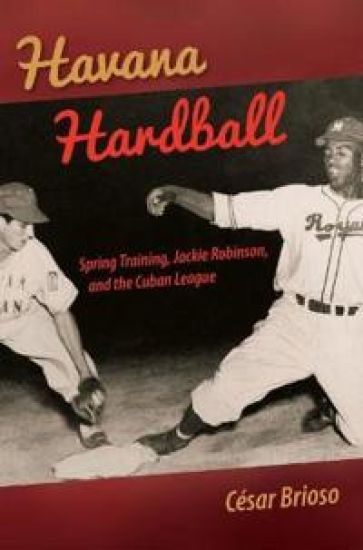
Relive the tumultuous preseason before Robinson broke the color barrier In February 1947, the most memorable season in the history of the Cuban League finished with a dramatic series win by Almendares against its rival, Habana. As the celebration spread through the streets of Havana and across Cuba, the Brooklyn Dodgers were beginning spring training on the island. One of the Dodgers’ minor league players was Jackie Robinson. He was on the verge of making his major-league debut in the United States, an event that would fundamentally change sports—and America. To avoid harassment from the white crowds in Florida during this critical preseason, the Dodgers relocated their spring training to Cuba, where black and white teammates had played side by side since 1900. It was also during this time that Major League Baseball was trying its hardest to bring the “outlaw” Cuban League under the control of organized baseball. As the Cubans fought to stay independent, Robinson worked to earn a roster spot on the Dodgers in the face of discrimination from his future teammates. Havana Hardball captures the excitement of the Cuban League’s greatest pennant race and the anticipation of the looming challenge to MLB’s color barrier. Illuminating one of the sport’s most pivotal seasons, veteran journalist César Brioso brings together a rich mix of worlds as the heyday of Latino baseball converged with one of the most socially meaningful events in U.S. history.
Last Seasons in Havana

Last Seasons in Havana

César Brioso

University of Nebraska Press
2019
sidottu
2020 SABR Baseball Research AwardLast Seasons in Havana explores the intersection between Cuba and America’s pastime from the late 1950s to the early 1960s, when Fidel Castro overthrew Cuban dictator Fulgencio Batista. César Brioso takes the reader through the triumph of the revolution in 1959 and its impact on professional baseball in the seasons immediately following Castro’s rise to power. Baseball in pre-Castro Cuba was enjoying a golden age. The Cuban League, which had been founded in 1878, just two years after the formation of the National League, was thriving under the auspices of organized baseball. Throughout the first half of the twentieth century, players from the Major Leagues, Minor Leagues, and Negro Leagues had come to Cuba to play in the country’s wholly integrated winter baseball league. Cuban teams had come to dominate the annual Caribbean Series tournament, and Havana had joined the highest levels of Minor League Baseball, fielding the Havana Sugar Kings of the Class AAA International League. Confidence was high that Havana might one day have a Major League team of its own. But professional baseball became one of the many victims of Castro’s Communist revolution. American players stopped participating in the Cuban League, and Cuban teams moved to an amateur, state-sponsored model. Focusing on the final three seasons of the Cuban League (1958–61) and the final two seasons of the Havana Sugar Kings (1959–60), Last Seasons in Havana explores how Castro’s rise to power forever altered Cuba and the course of a sport that had become ingrained in the island’s culture over the course of almost a century.
Havana Hardball

Havana Hardball

César Brioso

University Press of Florida
2015
sidottu
In February 1947, the most memorable season in the history of the Cuban League finished with a dramatic series win by underdog Almendares against their rival, Habana. As the celebration spread through the streets of Havana and across Cuba, the Brooklyn Dodgers arrived on the island to begin spring training. One of the minor league players who made the trip was Jackie Robinson.He was on the verge of making his major-league debut in the United States, an event that would fundamentally change sports - and America. To avoid harassment from the white crowds during this critical preseason, the Dodgers relocated their spring training to Cuba, where black and white teammates had played side by side since 1900.It was also during this time that Major League Baseball was trying its hardest to bring the ""outlaw"" Cuban League under the control of organized baseball. As the Cubans fought to stay independent, Robinson worked to earn a roster spot on the Dodgers in the face of discrimination from his own teammates.Havana Hardball captures the excitement of the Cuban League's greatest pennant race and the anticipation of the looming challenge to MLB's color barrier. Illuminating one of the sport's most pivotal seasons, veteran journalist César Brioso brings together a rich mix of worlds as the heyday of Latino baseball converged with one of the most socially meaningful events in U.S. history.