Kirjojen hintavertailu. Mukana 12 558 382 kirjaa ja 12 kauppaa.

Kirjailija

César J. Ayala

Kirjat ja teokset yhdessä paikassa: 2 kirjaa, julkaisuja vuosilta 2020-2025, suosituimpien joukossa Agrarian Puerto Rico. Vertaile teosten hintoja ja tarkista saatavuus suomalaisista kirjakaupoista.

2 kirjaa

Kirjojen julkaisuhaarukka 2020-2025.

Agrarian Puerto Rico

Agrarian Puerto Rico

César J. Ayala; Laird W. Bergad

Cambridge University Press
2025
nidottu
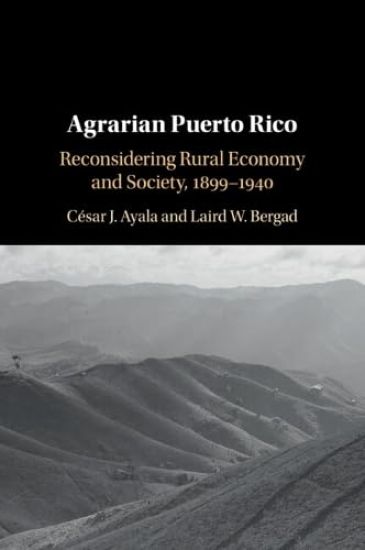
Fundamental tenets of colonial historiography are challenged by showing that US capital investment into this colony did not lead to the disappearance of the small farmer. Contrary to well-established narratives, quantitative data show that the increasing integration of rural producers within the US market led to differential outcomes, depending on pre-existing land tenure structures, capital requirements to initiate production, and demographics. These new data suggest that the colonial economy was not polarized into landless Puerto Rican rural workers on one side and corporate US capitalists on the other. The persistence of Puerto Rican small farmers in some regions and the expansion of local property ownership and production disprove this socioeconomic model. Other aspects of extant Puerto Rican historiography are confronted in order to make room for thorough analyses and new conclusions on the economy of colonial Puerto Rico during the early twentieth century.
Agrarian Puerto Rico

Agrarian Puerto Rico

César J. Ayala; Laird W. Bergad

Cambridge University Press
2020
sidottu
Fundamental tenets of colonial historiography are challenged by showing that US capital investment into this colony did not lead to the disappearance of the small farmer. Contrary to well-established narratives, quantitative data show that the increasing integration of rural producers within the US market led to differential outcomes, depending on pre-existing land tenure structures, capital requirements to initiate production, and demographics. These new data suggest that the colonial economy was not polarized into landless Puerto Rican rural workers on one side and corporate US capitalists on the other. The persistence of Puerto Rican small farmers in some regions and the expansion of local property ownership and production disprove this socioeconomic model. Other aspects of extant Puerto Rican historiography are confronted in order to make room for thorough analyses and new conclusions on the economy of colonial Puerto Rico during the early twentieth century.