Kirjojen hintavertailu. Mukana 12 250 024 kirjaa ja 12 kauppaa.

Kirjailija

Chad Alan Goldberg

Kirjat ja teokset yhdessä paikassa: 4 kirjaa, julkaisuja vuosilta 2007-2017, suosituimpien joukossa Citizens and Paupers. Vertaile teosten hintoja ja tarkista saatavuus suomalaisista kirjakaupoista.

4 kirjaa

Kirjojen julkaisuhaarukka 2007-2017.

Modernity and the Jews in Western Social Thought

Modernity and the Jews in Western Social Thought

Chad Alan Goldberg

University of Chicago Press
2017
nidottu
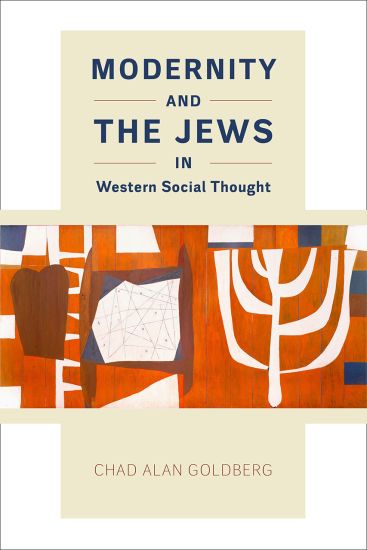
In the late nineteenth and early twentieth centuries, prominent social thinkers in France, Germany, and the United States sought to understand the modern world taking shape around them. Although they worked in different national traditions and emphasized different features of modern society, they repeatedly invoked Jews as a touchstone for defining modernity and national identity in a context of rapid social change. In Modernity and the Jews in Western Social Thought, Chad Alan Goldberg brings us a major new study of Western social thought through the lens of Jews and Judaism. In France, where antisemites decried the French Revolution as the "Jewish Revolution," Emile Durkheim challenged depictions of Jews as agents of revolutionary subversion or counterrevolutionary reaction. When German thinkers such as Karl Marx, Georg Simmel, Werner Sombart, and Max Weber debated the relationship of the Jews to modern industrial capitalism, they reproduced, in secularized form, cultural assumptions derived from Christian theology. In the United States, William Thomas, Robert Park, and their students conceived the modern city and its new modes of social organization in part by reference to the Jewish immigrants concentrating there. In all three countries, social thinkers invoked real or purported differences between Jews and gentiles to elucidate key dualisms of modern social thought. The Jews thus became an intermediary through which social thinkers discerned in a roundabout fashion the nature, problems, and trajectory of their own wider societies. Goldberg rounds out his fascinating study by proposing a novel explanation for why Jews were such an important cultural reference point. He suggests a rethinking of previous scholarship on Orientalism, Occidentalism, and European perceptions of America, arguing that history extends into the present, with the Jews and now the Jewish state continuing to serve as an intermediary for self-reflection in the twenty-first century.
Modernity and the Jews in Western Social Thought

Modernity and the Jews in Western Social Thought

Chad Alan Goldberg

University of Chicago Press
2017
sidottu
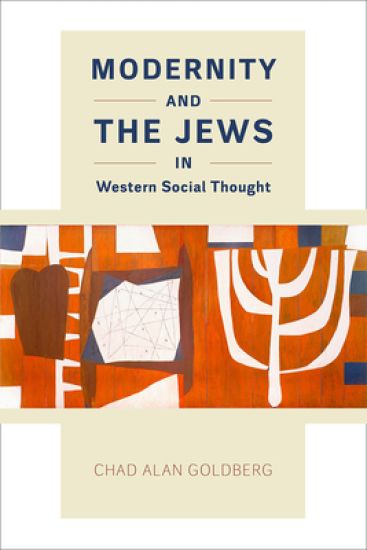
In the late nineteenth and early twentieth centuries, prominent social thinkers in France, Germany, and the United States sought to understand the modern world taking shape around them. Although they worked in different national traditions and emphasized different features of modern society, they repeatedly invoked Jews as a touchstone for defining modernity and national identity in a context of rapid social change. In Modernity and the Jews in Western Social Thought, Chad Alan Goldberg brings us a major new study of Western social thought through the lens of Jews and Judaism. In France, where antisemites decried the French Revolution as the "Jewish Revolution," Emile Durkheim challenged depictions of Jews as agents of revolutionary subversion or counterrevolutionary reaction. When German thinkers such as Karl Marx, Georg Simmel, Werner Sombart, and Max Weber debated the relationship of the Jews to modern industrial capitalism, they reproduced, in secularized form, cultural assumptions derived from Christian theology. In the United States, William Thomas, Robert Park, and their students conceived the modern city and its new modes of social organization in part by reference to the Jewish immigrants concentrating there. In all three countries, social thinkers invoked real or purported differences between Jews and gentiles to elucidate key dualisms of modern social thought. The Jews thus became an intermediary through which social thinkers discerned in a roundabout fashion the nature, problems, and trajectory of their own wider societies. Goldberg rounds out his fascinating study by proposing a novel explanation for why Jews were such an important cultural reference point. He suggests a rethinking of previous scholarship on Orientalism, Occidentalism, and European perceptions of America, arguing that history extends into the present, with the Jews and now the Jewish state continuing to serve as an intermediary for self-reflection in the twenty-first century.
Citizens and Paupers

Citizens and Paupers

Chad Alan Goldberg

University of Chicago Press
2007
nidottu
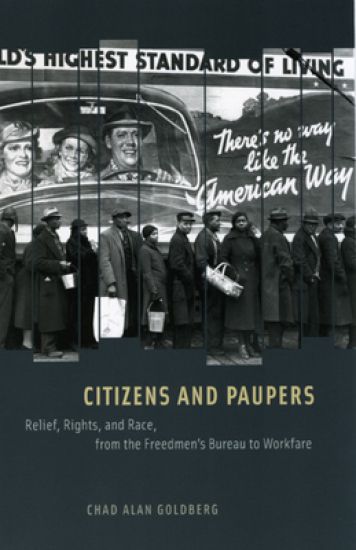
There was a time when America's poor faced a stark choice between access to social welfare and full civil rights - a predicament that forced them to forfeit their citizenship in exchange for economic relief. Over time, however, our welfare system improved dramatically. But as Chad Alan Goldberg here demonstrates, its legacy of disenfranchisement persisted. Indeed, from Reconstruction onward, welfare policies have remained a flashpoint for recurring struggles over the boundaries of citizenship. "Citizens and Paupers" explores this contentious history by analyzing and comparing three major programs: the Freedmen's Bureau, the Works Progress Administration, and the present-day system of workfare that arose in the 1990s. Each of these overhauls of the welfare state created new groups of clients, new policies for aiding them, and new disputes over citizenship - conflicts that were entangled in racial politics and of urgent concern for social activists. This combustible mix of racial tension and social reform continues to influence how we think about welfare, and Citizens and Paupers is an invaluable analysis of the roots of the debate.
Citizens and Paupers

Citizens and Paupers

Chad Alan Goldberg

University of Chicago Press
2007
sidottu
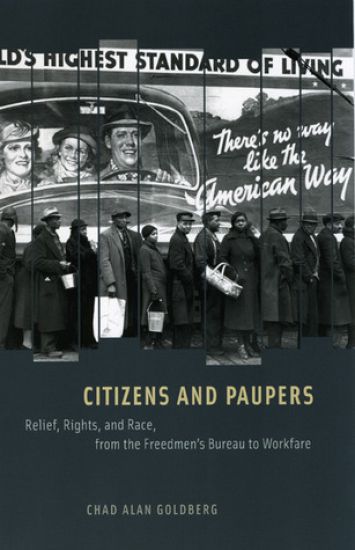
There was a time when America's poor faced a stark choice between access to social welfare and full civil rights - a predicament that forced them to forfeit their citizenship in exchange for economic relief. Over time, however, our welfare system improved dramatically. But as Chad Alan Goldberg here demonstrates, its legacy of disenfranchisement persisted. Indeed, from Reconstruction onward, welfare policies have remained a flashpoint for recurring struggles over the boundaries of citizenship. "Citizens and Paupers" explores this contentious history by analyzing and comparing three major programs: the Freedmen's Bureau, the Works Progress Administration, and the present-day system of workfare that arose in the 1990s. Each of these overhauls of the welfare state created new groups of clients, new policies for aiding them, and new disputes over citizenship - conflicts that were entangled in racial politics and of urgent concern for social activists. This combustible mix of racial tension and social reform continues to influence how we think about welfare, and Citizens and Paupers is an invaluable analysis of the roots of the debate.