Kirjojen hintavertailu. Mukana 12 595 353 kirjaa ja 12 kauppaa.

Kirjailija

Chad C. Serena

Kirjat ja teokset yhdessä paikassa: 7 kirjaa, julkaisuja vuosilta 2011-2017, suosituimpien joukossa Tactical Cyber. Vertaile teosten hintoja ja tarkista saatavuus suomalaisista kirjakaupoista.

Mukana myös kirjoitusasut: Chad C Serena

7 kirjaa

Kirjojen julkaisuhaarukka 2011-2017.

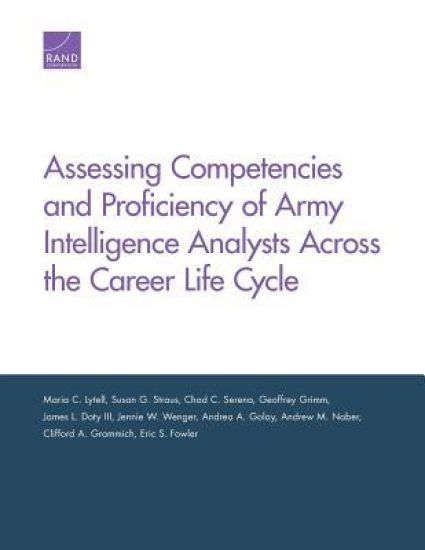
Assessing Competencies and Proficiency of Army Intelligence Analysts Across the Career Life Cycle
U.S. Army military intelligence analysts work in increasingly complex and dynamic operational environments requiring intangible competencies, such as critical thinking and adaptability. This report describes the development and implementation of a process to assess key analytic competencies and proficiency of the U.S. Army's analysts in the 35F military occupational specialty and the design of a protocol for ongoing evaluation.
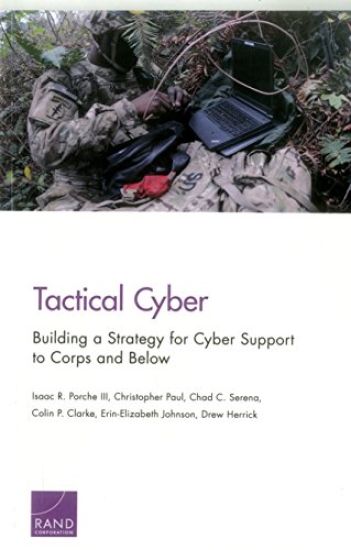
Tactical Cyber

Tactical Cyber

Isaac R. Porche; Christopher Paul; Chad C. Serena; Colin P. Clarke; Erin-Elizabeth Johnson; Drew Herrick

RAND
2017
pokkari
RAND Arroyo Center was asked by U.S. Army Cyber Command's G35 office to develop and document an Army strategy for providing cyber support to corps and below. This report proposes a strategy for tactical Army cyber operations, enumerating overarching goals, objectives, and associated activities. Instructive case studies are provided that support implementation of the strategy.
Mexico is Not Colombia

Mexico is Not Colombia

Christopher Paul; Colin P. Clarke; Chad C. Serena

RAND
2014
pokkari
Despite the scope of the threat they pose to Mexico s security, violent drug-trafficking organizations are not well understood, and optimal strategies to combat them have not been identified. While there is no perfectly analogous case to Mexico s current security situation, historical case studies may offer lessons for policymakers as they cope with challenges related to violence and corruption in that country."
Mexico is Not Colombia

Mexico is Not Colombia

Christopher Paul; Colin P. Clarke; Chad C. Serena

RAND
2014
pokkari
Despite the scope of the threat they pose to Mexico s security, violent drug-trafficking organizations are not well understood, and optimal strategies to combat them have not been identified. While there is no perfectly analogous case from history, Mexico stands to benefit from historical lessons and efforts that were correlated with improvement in countries facing similar challenges related to violence and corruption."
It Takes More Than a Network

It Takes More Than a Network

Chad C. Serena

Stanford University Press
2014
pokkari
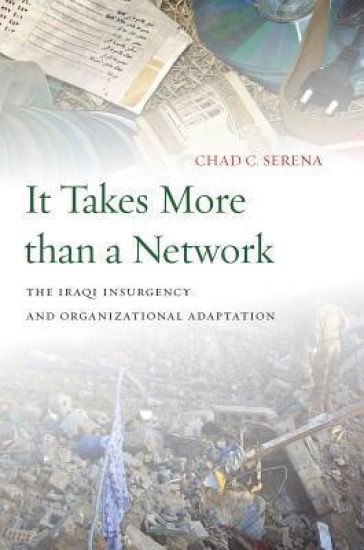
It Takes More than a Network presents a structured investigation of the Iraqi insurgency's capacity for and conduct of organizational adaptation. In particular, it answers the question of why the Iraqi insurgency was seemingly so successful between 2003 and late 2006 and yet nearly totally collapsed by 2008. The book's main argument is that the Iraqi insurgency failed to achieve longer-term organizational goals because many of its organizational strengths were also its organizational weaknesses: these characteristics abetted and then corrupted the Iraqi insurgency's ability to adapt. The book further compares the organizational adaptation of the Iraqi insurgency with the organizational adaptation of the Afghan insurgency. This is done to refine the findings of the Iraq case and to present a more robust analysis of the adaptive cycles of two large and diverse covert networked insurgencies. The book finds that the Afghan insurgency, although still ongoing, has adapted more successfully than the Iraqi insurgency because it has been better able to leverage the strengths and counter the weaknesses of its chosen organizational form.
It Takes More Than a Network

It Takes More Than a Network

Chad C. Serena

Stanford University Press
2014
sidottu
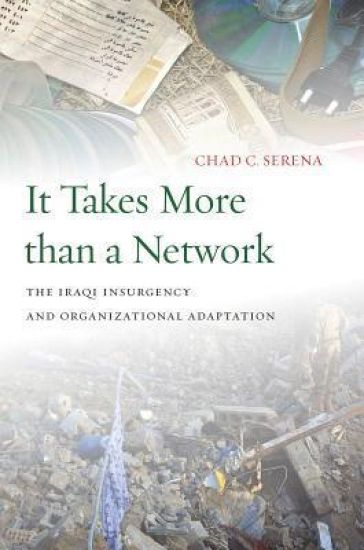
It Takes More than a Network presents a structured investigation of the Iraqi insurgency's capacity for and conduct of organizational adaptation. In particular, it answers the question of why the Iraqi insurgency was seemingly so successful between 2003 and late 2006 and yet nearly totally collapsed by 2008. The book's main argument is that the Iraqi insurgency failed to achieve longer-term organizational goals because many of its organizational strengths were also its organizational weaknesses: these characteristics abetted and then corrupted the Iraqi insurgency's ability to adapt. The book further compares the organizational adaptation of the Iraqi insurgency with the organizational adaptation of the Afghan insurgency. This is done to refine the findings of the Iraq case and to present a more robust analysis of the adaptive cycles of two large and diverse covert networked insurgencies. The book finds that the Afghan insurgency, although still ongoing, has adapted more successfully than the Iraqi insurgency because it has been better able to leverage the strengths and counter the weaknesses of its chosen organizational form.
A Revolution in Military Adaptation

A Revolution in Military Adaptation

Chad C. Serena

Georgetown University Press
2011
pokkari
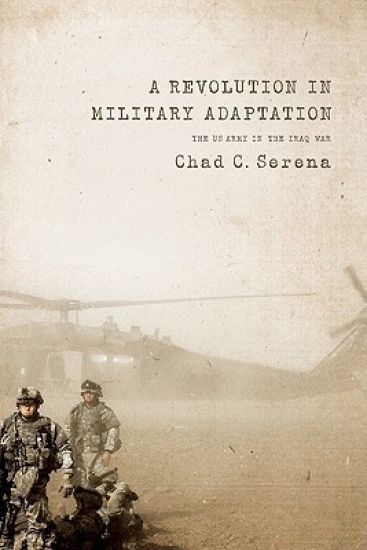
During the early years of the Iraq War, the US Army was unable to translate initial combat success into strategic and political victory. Iraq plunged into a complex insurgency, and defeating this insurgency required beating highly adaptive foes. A competition between the hierarchical and vertically integrated army and networked and horizontally integrated insurgents ensued. The latter could quickly adapt and conduct networked operations in a decentralized fashion; the former was predisposed to fighting via prescriptive plans under a centralized command and control. To achieve success, the US Army went through a monumental process of organizational adaptation-a process driven by soldiers and leaders that spread throughout the institution and led to revolutionary changes in how the army supported and conducted its operations in Iraq. How the army adapted and the implications of this adaptation are the subject of this indispensable study. Intended for policymakers, defense and military professionals, military historians, and academics, this book offers a solid critique of the army's current capacity to adapt to likely future adversary strategies and provides policy recommendations for retaining lessons learned in Iraq.