Kirjojen hintavertailu. Mukana 12 581 609 kirjaa ja 12 kauppaa.

Kirjailija

Chandran Kukathas

Kirjat ja teokset yhdessä paikassa: 10 kirjaa, julkaisuja vuosilta 1989-2025, suosituimpien joukossa Hayek and Modern Liberalism. Vertaile teosten hintoja ja tarkista saatavuus suomalaisista kirjakaupoista.

10 kirjaa

Kirjojen julkaisuhaarukka 1989-2025.

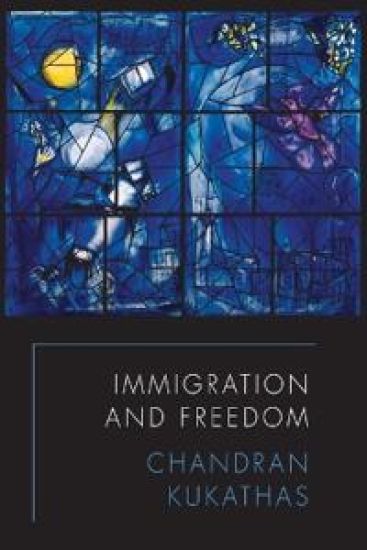
Immigration and Freedom

Immigration and Freedom

Chandran Kukathas

PRINCETON UNIVERSITY PRESS
2025
pokkari
A compelling account of the threat immigration control poses to the citizens of free societies Immigration is often seen as a danger to western liberal democracies because it threatens to undermine their fundamental values, most notably freedom and national self-determination. In this book, however, Chandran Kukathas argues that the greater threat comes not from immigration but from immigration control.Kukathas shows that immigration control is not merely about preventing outsiders from moving across borders. It is about controlling what outsiders do once in a society: whether they work, reside, study, set up businesses, or share their lives with others. But controlling outsiders—immigrants or would-be immigrants—requires regulating, monitoring, and sanctioning insiders, those citizens and residents who might otherwise hire, trade with, house, teach, or generally associate with outsiders. The more vigorously immigration control is pursued, the more seriously freedom is diminished. The search for control threatens freedom directly and weakens the values upon which it relies, notably equality and the rule of law. Kukathas demonstrates that the imagined gains from efforts to control immigration are illusory, for they do not promote economic prosperity or social solidarity. Nor does immigration control bring self-determination, since the apparatus of control is an international institutional regime that increases the power of states and their agencies at the expense of citizens. That power includes the authority to determine who is and is not an insider: to define identity itself.Looking at past and current practices across the world, Immigration and Freedom presents a critique of immigration control as an institutional reality, as well as an account of what freedom means—and why it matters.
Dialogues on Immigration and the Open Society

Dialogues on Immigration and the Open Society

Chandran Kukathas

TAYLOR FRANCIS LTD
2025
nidottu
After some friendly pestering from six of his students curious about his thinking about immigration, a philosophy professor invites them to present their own ideas to him over a series of meetings throughout the term. This book is about their conversations.These dialogues introduce the reader to the most important ethical and political questions about immigration. They begin by considering the claim that significant levels of immigration pose a threat to the very civilization of the West, where the immigration issue is a particularly vexed one. The chapters that follow consider the economics of immigration, whether or not the state is justified in its efforts—or even obliged—to control immigration, and whether everyone has a right to move or if only refugees can make so strong a claim. The final chapter considers the implications of a philosophy of immigration on the ideal of an open society. Throughout the book, there is a strong emphasis on addressing the conceptual questions that are vital for making any headway in understanding practical issues. What is a refugee? What are rights? What is an open society? Indeed, what is immigration?Key Features:Written as a friendly engagement between six thoughtful but skeptical students who hold a variety of views, and a philosophy professor, who insists he’s just trying to work out the answers with their help rather than convince them of one right answer;Engages with the immigration debates in philosophy, economics and politics, without presupposing any specialist knowledge;Includes discussion of the historical and institutional aspects of immigration, so the conversation is never simply about abstract or hypothetical cases;Concludes with a substantive theory about how to think about immigration and the free society to prompt further reflection.
Dialogues on Immigration and the Open Society

Dialogues on Immigration and the Open Society

Chandran Kukathas

TAYLOR FRANCIS LTD
2025
sidottu
After some friendly pestering from six of his students curious about his thinking about immigration, a philosophy professor invites them to present their own ideas to him over a series of meetings throughout the term. This book is about their conversations.These dialogues introduce the reader to the most important ethical and political questions about immigration. They begin by considering the claim that significant levels of immigration pose a threat to the very civilization of the West, where the immigration issue is a particularly vexed one. The chapters that follow consider the economics of immigration, whether or not the state is justified in its efforts—or even obliged—to control immigration, and whether everyone has a right to move or if only refugees can make so strong a claim. The final chapter considers the implications of a philosophy of immigration on the ideal of an open society. Throughout the book, there is a strong emphasis on addressing the conceptual questions that are vital for making any headway in understanding practical issues. What is a refugee? What are rights? What is an open society? Indeed, what is immigration?Key Features:Written as a friendly engagement between six thoughtful but skeptical students who hold a variety of views, and a philosophy professor, who insists he’s just trying to work out the answers with their help rather than convince them of one right answer;Engages with the immigration debates in philosophy, economics and politics, without presupposing any specialist knowledge;Includes discussion of the historical and institutional aspects of immigration, so the conversation is never simply about abstract or hypothetical cases;Concludes with a substantive theory about how to think about immigration and the free society to prompt further reflection.
Immigration and Freedom

Immigration and Freedom

Chandran Kukathas

PRINCETON UNIVERSITY PRESS
2021
sidottu
A compelling account of the threat immigration control poses to the citizens of free societies Immigration is often seen as a danger to western liberal democracies because it threatens to undermine their fundamental values, most notably freedom and national self-determination. In this book, however, Chandran Kukathas argues that the greater threat comes not from immigration but from immigration control.Kukathas shows that immigration control is not merely about preventing outsiders from moving across borders. It is about controlling what outsiders do once in a society: whether they work, reside, study, set up businesses, or share their lives with others. But controlling outsiders—immigrants or would-be immigrants—requires regulating, monitoring, and sanctioning insiders, those citizens and residents who might otherwise hire, trade with, house, teach, or generally associate with outsiders. The more vigorously immigration control is pursued, the more seriously freedom is diminished. The search for control threatens freedom directly and weakens the values upon which it relies, notably equality and the rule of law. Kukathas demonstrates that the imagined gains from efforts to control immigration are illusory, for they do not promote economic prosperity or social solidarity. Nor does immigration control bring self-determination, since the apparatus of control is an international institutional regime that increases the power of states and their agencies at the expense of citizens. That power includes the authority to determine who is and is not an insider: to define identity itself.Looking at past and current practices across the world, Immigration and Freedom presents a critique of immigration control as an institutional reality, as well as an account of what freedom means—and why it matters.
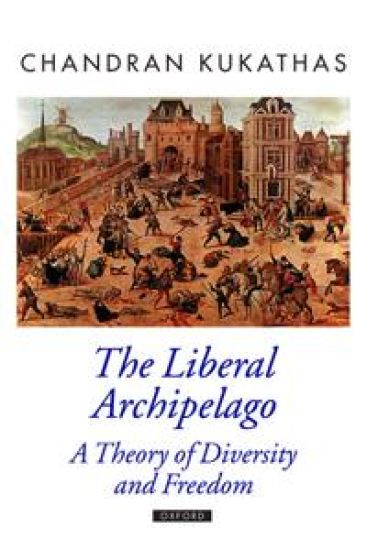
The Liberal Archipelago

The Liberal Archipelago

Chandran Kukathas

Oxford University Press
2007
nidottu
In his major new work Chandran Kukathas offers, for the first time, a book-length treatment of this controversial and influential theory of minority rights. The work is a defence of a form of liberalism and multiculturalism. The general question it tries to answer is: what is the principled basis of a free society marked by cultural diversity and group loyalties? More particularly, it explains whether such a society requires political institutions which recognize minorities; how far it should tolerate such minorities when their ways differ from those of the mainstream community; to what extent political institutions should address injustices suffered by minorities at the hands of the wider society, and also at the hands of the powerful within their own communities; what role, if any, the state should play in the shaping of a society's (national) identity; and what fundamental values should guide our reflections on these matters. Its main contention is that a free society is an open society whose fundamental principle is the principle of freedom of association. A society is free to the extent that it is prepared to tolerate in its midst associations which differ or dissent from its standards or practices. An implication of these principles is that political society is also no more than one among other associations; its basis is the willingness of its members to continue to associate under the terms which define it. While it is an 'association of associations', it is not the only such association; it does not subsume all other associations. The principles of a free society describe not a hierarchy of superior and subordinate authorities but an archipelago of competing and overlapping jurisdictions. The idea of a liberal archipelago is defended as one which supplies us with a better metaphor of the free society than do older notions such as the body politic, or the ship of state. This work presents a challenge, and an alternative, to other contemporary liberal theories of multiculturalism.
The Liberal Archipelago

The Liberal Archipelago

Chandran Kukathas

Oxford University Press
2003
sidottu
In his major new work Chandran Kukathas offers, for the first time, a book-length treatment of this controversial and influential theory of minority rights. The work is a defence of a form of liberalism and multiculturalism. The general question it tries to answer is: what is the principled basis of a free society marked by cultural diversity and group loyalties? More particularly, it explains whether such a society requires political institutions which recognize minorities; how far it should tolerate such minorities when their ways differ from those of the mainstream community; to what extent political institutions should address injustices suffered by minorities at the hands of the wider society, and also at the hands of the powerful within their own communities; what role, if any, the state should play in the shaping of a society's (national) identity; and what fundamental values should guide our reflections on these matters. Its main contention is that a free society is an open society whose fundamental principle is the principle of freedom of association. A society is free to the extent that it is prepared to tolerate in its midst associations which differ or dissent from its standards or practices. An implication of these principles is that political society is also no more than one among other associations; its basis is the willingness of its members to continue to associate under the terms which define it. While it is an 'association of associations', it is not the only such association; it does not subsume all other associations. The principles of a free society describe not a hierarchy of superior and subordinate authorities but an archipelago of competing and overlapping jurisdictions. The idea of a liberal archipelago is defended as one which supplies us with a better metaphor of the free society than do older notions such as the body politic, or the ship of state. This work presents a challenge, and an alternative, to other contemporary liberal theories of multiculturalism.
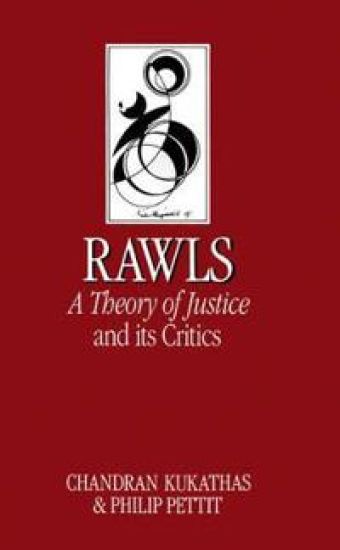
Rawls 'A Theory of Justice' and Its Critics

Rawls 'A Theory of Justice' and Its Critics

Chandran Kukathas; Philip Pettit

Polity Press
1990
nidottu
John Rawls's A Theory of Justice has been enormously influential in philosophy, political theory, welfare economics and jurisprudence. This book is a systematic study of Rawls's work. It provides a clear and concise account of Rawls's ideas, situates them within contemporary debates and submits them to critical scrutiny. The authors discuss the background against which A Theory of Justice was written, the contractarian character of Rawls's theory, his claims about justice and his arguments for them. Finally the authors look at Rawls's emerging self-interpretation and self-critique, identifying the different phases of his later development. Clear and accessible to non-specialists, this book will also be of great value to students in philosophy, sociology and economics.
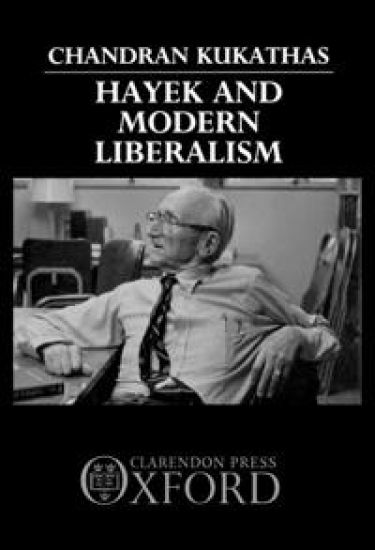
Hayek and Modern Liberalism

Hayek and Modern Liberalism

Chandran Kukathas

Clarendon Press
1989
sidottu
In the history of modern liberal political thought the work of F. A. Hayek stands out as one of the most significant contributions to liberal theory since J. S. Mill. This book critically examines the nature and coherence of Hayek's defence of liberal principles, and tries both to identify its weaknesses and to show why it makes such an important contribution to contemporary political theory. Chandran Kukathas argues that Hayek's defence of liberalism is unsuccessful because it rests on presuppositions which are philosophically incompatible. The unresolved dilemma of Hayek's political philosophy is how to mount a systematic defence of liberalism if one emphasizes the limited capacity of reason. However, he believes that Hayek's social philosophy offers us a significant theory of the nature of social processes, and is therefore an important account of how this must constrain our choice of political principles. For this reason, Hayek's work is worthy of attention both by supporters and critics of liberalism.