Kirjojen hintavertailu. Mukana 12 390 323 kirjaa ja 12 kauppaa.

Kirjailija

Chantal Zabus

Kirjat ja teokset yhdessä paikassa: 6 kirjaa, julkaisuja vuosilta 2007-2027, suosituimpien joukossa Literatures without Identity. Vertaile teosten hintoja ja tarkista saatavuus suomalaisista kirjakaupoista.

6 kirjaa

Kirjojen julkaisuhaarukka 2007-2027.

Literatures without Identity

Literatures without Identity

Chantal Zabus

BLOOMSBURY PUBLISHING PLC
2027
sidottu
Chantal Zabus develops the notion of 'post-identity' and documents the gradual dissolution of the traditional pillars of identity formation through readings of postcolonial, Indigenous and diasporic literature. Literatures without Identity argues that the four bastions of identity formation have been ousted by enhanced ‘relationalities’ in postcolonial, Indigenous and diasporic literature at the beginning of the 21st century. In this new world of culture, writers have denounced the fixed and impermeable: The mother tongue and the monolingual paradigm in favor of the post-monolingual. The notion of ‘race’ extended to speciesism has been transplanted by post-racial and interspecies identities. The binding ‘religion’ of an individual has become the transnational. And the male/female binary has given way to preferred gendered identities. Encompassing a wide range of global literature from North America and Africa to Australasia, Chantal Zabus demonstrates how contemporary writers have opted for interconnected histories and mobilities, extended selves, interspecies ‘kinnings’ and the porosity of state borders through refugeeism and other divergent crossings. Literatures without Identity provokes imaginative leaps and conversations across cultures around the shifts in identity formation in the late 20th and early 21st centuries while grounding itself in analog cultural productions as well as digital, anthropological and philosophical texts. It anticipates the advent of the ‘late’ Anthropocene and a future beyond racial classification, human exceptionalism and mass destruction.

Literatures without Identity

Literatures without Identity

Chantal Zabus

BLOOMSBURY PUBLISHING PLC
2027
nidottu
Chantal Zabus develops the notion of 'post-identity' and documents the gradual dissolution of the traditional pillars of identity formation through readings of postcolonial, Indigenous and diasporic literature. Literatures without Identity argues that the four bastions of identity formation have been ousted by enhanced ‘relationalities’ in postcolonial, Indigenous and diasporic literature at the beginning of the 21st century. In this new world of culture, writers have denounced the fixed and impermeable: The mother tongue and the monolingual paradigm in favor of the post-monolingual. The notion of ‘race’ extended to speciesism has been transplanted by post-racial and interspecies identities. The binding ‘religion’ of an individual has become the transnational. And the male/female binary has given way to preferred gendered identities. Encompassing a wide range of global literature from North America and Africa to Australasia, Chantal Zabus demonstrates how contemporary writers have opted for interconnected histories and mobilities, extended selves, interspecies ‘kinnings’ and the porosity of state borders through refugeeism and other divergent crossings. Literatures without Identity provokes imaginative leaps and conversations across cultures around the shifts in identity formation in the late 20th and early 21st centuries while grounding itself in analog cultural productions as well as digital, anthropological and philosophical texts. It anticipates the advent of the ‘late’ Anthropocene and a future beyond racial classification, human exceptionalism and mass destruction.
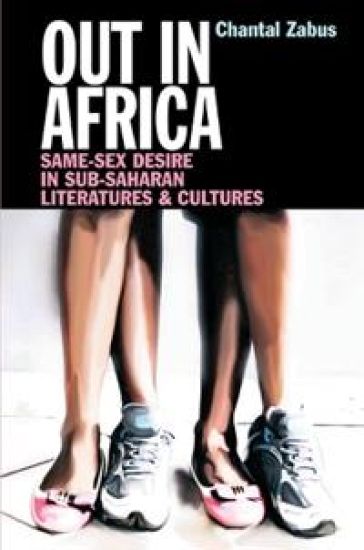
Out in Africa

Out in Africa

Chantal Zabus

James Currey
2013
sidottu
Homophobia is still rife and it remains dangerous and even life-threatening to be out in Africa, but Chantal Zabus here traces the range of representations of same-sex desire in Africa through historic and contemporary sources. Homosexuality was and still is thought to be quintessentially 'un-African'. Yet in this book Chantal Zabus examines the anthropological, cultural and literary representations of male and female same-sex desire in a pan-African context from the nineteenth century to the present. Reaching back to early colonial contacts between Europe and Africa, and covering a broad geographical spectrum, along a north-south axis from Mali to South Africa and an east-west axis from Senegal to Kenya, here is a comparative approach encompassing two colonial languages (English and French) and some African languages. Out in Africa charts developments in Sub-Saharan African texts and contextsthrough the work of 7 colonial writers and some 25 postcolonial writers. These texts grow in complexity from roughly the 1860s, through the 1990s with the advent of queer theory, up to 2010. The author identifies those texts thatpresent, in a subterraneous way at first and then with increased confidence, homosexuality-as-an-identity rather than an occasional or ritualized practice, as was the case in the early ethnographic imagination. The work sketchesout an evolutionary pattern in representing male and female same-sex desire in the novel and other texts, as well as in the cultural and political contexts that oppose such desires.
Between Rites and Rights

Between Rites and Rights

Chantal Zabus

Stanford University Press
2007
sidottu
In the past five decades and over three generations, African women writers have introduced a new autobiographical discourse around their experience of excision that brings nuance to the Female Genital Mutilation debate. Spanning pharaonic times through classical antiquity to the onset of the twenty-first century, this unprecedented study shows how this experiential body of literature—encompassing English, Arabic, and French—goes far beyond such traditional topics as universalism and cultural relativism, by locating the female body as a site of liminality between European and African factions, subject and agent; consent and dissent; custom and human rights. Women across the African "excision belt" have broken away from the male discourses of anthropology and psychoanalysis and have fled from "the cult of culture" and from religious and patriarchal surveillance. These women have relocated their struggle to the West, where they seek empowerment and wrestle with the law. While showing the limits of autobiography, Between Rites and Rights boldly interweaves Freudian hysteria, the surgical age, the world of high fashion, male circumcision's "fearful symmetry," and Western body modification.
The African Palimpsest

The African Palimpsest

Chantal Zabus

Editions Rodopi B.V.
2007
nidottu
Uniting a sense of the political dimensions of language appropriation with a serious, yet accessible linguistic terminology, The African Palimpsest examines the strategies of ‘indigenization’ whereby West African writers have made their literary English or French distinctively ‘African’. Through the apt metaphor of the palimpsest – a surface that has been written on, written over, partially erased and written over again – the book examines such well-known West African writers as Achebe, Armah, Ekwensi, Kourouma, Okara, Saro–Wiwa, Soyinka and Tutuola as well as lesser-known writers from francophone and anglophone Africa. Providing a great variety of case-studies in Nigerian Pidgin, Akan, Igbo, Maninka, Yoruba, Wolof and other African languages, the book also clarifies the vital interface between Europhone African writing and the new outlets for African artistic expression in (auto-)translation, broadcast television, radio and film.