Kirjojen hintavertailu. Mukana 12 595 353 kirjaa ja 12 kauppaa.

Kirjailija

Charlene Villaseñor Black

Kirjat ja teokset yhdessä paikassa: 4 kirjaa, julkaisuja vuodelta 2022, suosituimpien joukossa Transforming Saints. Vertaile teosten hintoja ja tarkista saatavuus suomalaisista kirjakaupoista.

4 kirjaa

Visualizing Genocide

Visualizing Genocide

Charlene Villaseñor Black

University of Arizona Press
2022
sidottu
Visualizing Genocide examines how creative arts and memory institutions selectively commemorate or often outright ignore stark histories of colonialism. The essays confront outdated narratives and institutional methods by investigating contemporary artistic and scholarly interventions documenting settler colonialisms including land theft, incarceration, intergenerational trauma, and genocide. Interdisciplinary approaches, including oral histories, exhibition practices, artistic critiques, archival investigations, and public arts, are among the many decolonizing methods incorporated in contemporary curatorial practices. Rather than dwelling simply in celebratory appraisals of Indigenous survival, this unprecedented volume tracks how massacres, disease, removals, abrogated treaties, religious intolerance, theft of land, and relocation are conceived by contemporary academics and artists. Contributors address indigeneity in the United States, Norway, Canada, Australia, and the Caribbean in scholarly essays, poems, and artist narratives. Missions, cemeteries, archives, exhibitions, photography, printmaking, painting, installations, performance, music, and museums are documented by fourteen authors from a variety of disciplines and illustrated with forty-three original artworks. The authors offer honest critique, but in so doing they give hopeful and concrete strategies for the future. This powerful collection of voices employs Indigenous epistemologies and decolonial strategies, providing essential perspectives on art and visual culture. T. Christopher Aplin Emily Arthur Marwin Begaye Charlene VillaseÑor Black Yve Chavez Iris Colburn Ellen Fernandez-SaccoStephen Gilchrist John Hitchcock Michelle J. Lanteri JÉrÉmie McGowanNancy Marie Mithlo Anne May OlliEmily Voelker Richard Ray Whitman
Visualizing Genocide

Visualizing Genocide

Charlene Villaseñor Black

University of Arizona Press
2022
nidottu
Visualizing Genocide examines how creative arts and memory institutions selectively commemorate or often outright ignore stark histories of colonialism. The essays confront outdated narratives and institutional methods by investigating contemporary artistic and scholarly interventions documenting settler colonialisms including land theft, incarceration, intergenerational trauma, and genocide. Interdisciplinary approaches, including oral histories, exhibition practices, artistic critiques, archival investigations, and public arts, are among the many decolonizing methods incorporated in contemporary curatorial practices. Rather than dwelling simply in celebratory appraisals of Indigenous survival, this unprecedented volume tracks how massacres, disease, removals, abrogated treaties, religious intolerance, theft of land, and relocation are conceived by contemporary academics and artists. Contributors address indigeneity in the United States, Norway, Canada, Australia, and the Caribbean in scholarly essays, poems, and artist narratives. Missions, cemeteries, archives, exhibitions, photography, printmaking, painting, installations, performance, music, and museums are documented by fourteen authors from a variety of disciplines and illustrated with forty-three original artworks. The authors offer honest critique, but in so doing they give hopeful and concrete strategies for the future. This powerful collection of voices employs Indigenous epistemologies and decolonial strategies, providing essential perspectives on art and visual culture. T. Christopher Aplin Emily Arthur Marwin Begaye Charlene VillaseÑor Black Yve Chavez Iris Colburn Ellen Fernandez-SaccoStephen Gilchrist John Hitchcock Michelle J. Lanteri JÉrÉmie McGowanNancy Marie Mithlo Anne May OlliEmily Voelker Richard Ray Whitman
Transforming Saints

Transforming Saints

Charlene Villaseñor Black

VANDERBILT UNIVERSITY PRESS
2022
nidottu
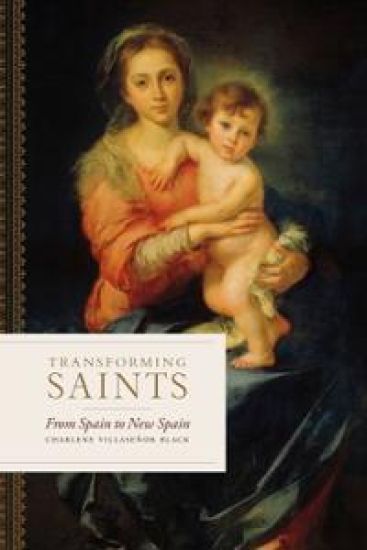
Transforming Saints explores the transformation and function of the images of holy females within wider religious, social, and political contexts of Old Spain and New Spain from the Spanish conquest to Mexican independence. The chapters here examine the rise of the cults of the lactating Madonna, St. Anne, St. Librada, St. Mary Magdalene, and the Suffering Virgin. Concerned with holy figures presented as feminine archetypes, images that came under Inquisition scrutiny, as well as cults suspected of concealing indigenous influences, Charlene VillaseÑor Black argues that these images would come to reflect the empowerment and agency of women in viceregal Mexico. Her close analysis of the imagery additionally demonstrates artists' innovative responses to Inquisition censorship and the new artistic demands occasioned by conversion. The concerns that motivated the twenty-first century protests against Chicana artists Yolanda LÓpez in 2001 and Alma LÓpez in 2003 have a long history in the Hispanic world—anxieties about the humanization of sacred female bodies and fears of indigenous influences infiltrating Catholicism. In this context Black also examines a number of important artists in depth, including El Greco, Murillo, Jusepe de Ribera, and Pedro de Mena in Spain and Naples and Baltasar de Echave IbÍa, Juan Correa, CristÓbal de Villalpando, and Miguel Cabrera.
Transforming Saints

Transforming Saints

Charlene Villaseñor Black

VANDERBILT UNIVERSITY PRESS
2022
sidottu
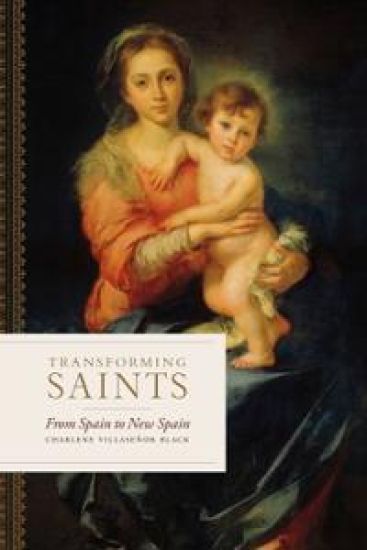
Transforming Saints explores the transformation and function of the images of holy females within wider religious, social, and political contexts of Old Spain and New Spain from the Spanish conquest to Mexican independence. The chapters here examine the rise of the cults of the lactating Madonna, St. Anne, St. Librada, St. Mary Magdalene, and the Suffering Virgin. Concerned with holy figures presented as feminine archetypes, images that came under Inquisition scrutiny, as well as cults suspected of concealing indigenous influences, Charlene VillaseÑor Black argues that these images would come to reflect the empowerment and agency of women in viceregal Mexico. Her close analysis of the imagery additionally demonstrates artists' innovative responses to Inquisition censorship and the new artistic demands occasioned by conversion. The concerns that motivated the twenty-first century protests against Chicana artists Yolanda LÓpez in 2001 and Alma LÓpez in 2003 have a long history in the Hispanic world—anxieties about the humanization of sacred female bodies and fears of indigenous influences infiltrating Catholicism. In this context Black also examines a number of important artists in depth, including El Greco, Murillo, Jusepe de Ribera, and Pedro de Mena in Spain and Naples and Baltasar de Echave IbÍa, Juan Correa, CristÓbal de Villalpando, and Miguel Cabrera.