Kirjojen hintavertailu. Mukana 12 436 966 kirjaa ja 12 kauppaa.

Kirjailija

Charles a. Lewis

Kirjat ja teokset yhdessä paikassa: 7 kirjaa, julkaisuja vuosilta 1996-2018, suosituimpien joukossa Pearls of Power: Implicit Keys to Leadership. Vertaile teosten hintoja ja tarkista saatavuus suomalaisista kirjakaupoista.

Mukana myös kirjoitusasut: Charles A Lewis

7 kirjaa

Kirjojen julkaisuhaarukka 1996-2018.

Pearls of Power: Implicit Keys to Leadership

Pearls of Power: Implicit Keys to Leadership

Charles a. Lewis

Createspace Independent Publishing Platform
2018
nidottu
Pearls of Power reviews the social science that explains our implicit, instinctual appraisal of people, and how these subliminal automatic appraisals influences choices in elections and in the workplace in the selection of leaders. This book focuses on a limited but critical aspect of leadership - how to get the role. Citing hundreds of studies from the social sciences, Dr. Lewis explains how subtle characteristics in the candidate's appearance affect voter behavior sufficiently to move election results by several percentage points; enough to swing most competitive elections. These same characteristics influence how we are perceived in the workplace and greatly impact hiring and promotion into leadership roles. Pearls of Power then outlines the steps a candidate can take to improve the way they are perceived by others, and how to make subtle changes in their appearance that increase the perception of competence, capacity and strength. Since most voters never meet the candidate, photos have a crucial influence on elections. Pearls of Power describes how to different camera lenses, lighting, and camera angle can change how we are perceived, and how different persons can highlight or minimize aspects of their appearance to best present themselves. Although any political or job candidate may benefit from the advice provided in Pearls of Power, it is written with women in mind. There are chapters on the use of cosmetics, jewelry, accessories, and on hair and clothing styles that best present the candidate. The book provides guidance on how the candidate can best present themselves when interviewed on radio or television, and gives advice on what not to wear on live camera. Pearls of Power councils the reader on how they can develop a persona with executive presence so that others perceive them as leaders, in order to give the reader a greater voice and more powerful role, both in public service and in their careers.
Unraveling Cancer

Unraveling Cancer

Charles A Lewis

Createspace Independent Publishing Platform
2016
pokkari
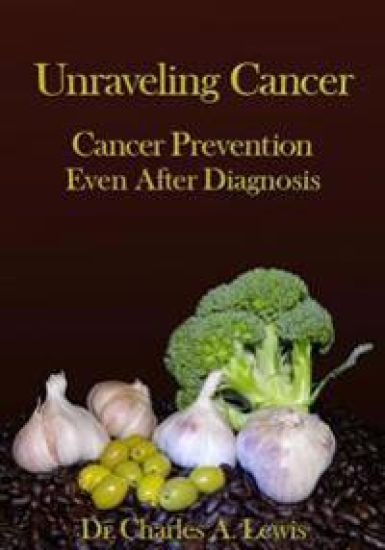
Unraveling Cancer describes the forces that cause cancer development and outlines a framework for understanding how, in health, the body is able to eliminate cells that have cancer-causing mutations. This book describes how lifestyle habits can interfere with these protective mechanisms, and explains how we can most effectively modify our habits and greatly lower the risk of developing cancer. The same forces that cause cancer also promote its growth and transition into an aggressive, metastatic disease. Making lifestyle and dietary changes even after a cancer diagnosis can reduce cancer growth, enhance treatment, and help prevent recurrence.Unraveling Cancer focuses on modifiable risk factors that can promote or help prevent cancer, even for persons with a high genetic risk of disease, such as women with BRCA mutations. These modifiable risk factors include foods and their preparation methods which impact cancer risk. This book describes better ways of preparing foods that provide for better health and lower cancer risk. The book explains which types of exercise are effective and those that do not lower cancer risk. It provides strategies to lower cancer risk, even if one is unable to exercise. Some cancer risk factors have their greatest impact during growth, and Unraveling Cancer explains how we can protect our children and grandchildren now from developing cancer as adults.Unraveling Cancer instructs not only how to prevent cancer, but to slow its advancement and make chemo and other treatments more effective. The book describes how to prepare for chemo to make it more effective in killing cancer cells, less toxic, and have fewer and less intense side effects. The book provides hope for cancer patients and their loved ones by giving them ways to enhance treatment and empowering them to participate in improving their health.
Enteroimmunology

Enteroimmunology

Charles A Lewis

Createspace Independent Publishing Platform
2014
pokkari
Enteroimmunology is an emerging field of medicine that studies the enteric immune system and microbial biome of the digestive system and their interaction with diet, digestion, the enteric and central nervous systems and endocrine functions. It explores and elucidates how these systems affect each other, impacting health and disease. Enteroimmune disease is not limited to diseases such as irritable bowel syndrome and inflammatory bowel diseases but also cause systemic and neurological diseases. Neurological diseases discussed include autism, migraine, chronic fatigue syndrome, multiple sclerosis, bipolar and rage disorders.The gastrointestinal mucosa is predominantly lined with enterocytes that form a continuous barrier throughout the digestive path. These cells absorb nutrients while excluding the trillions of bacteria and other microbes that inhabit the gut. Just below the enterocytes, the mucosa contains over half of the body's immune cells. These cells effect immune activity that protect the body from infection. However, they can also promote chronic inflammation, not just in the intestines, but in any organ system of the body.This book, updated in 2018, details the physiologic functions of the digestive and immune cells; their reactions to proteins, antigens and nutrients in the diet; the role of bacterial toxins and immune mediators; and the hormones that mediate appetite, GI motility and digestion. It explores the mechanisms occurring in immune dysfunction; when the immune response, rather than protect health, promotes chronic inflammation, responsible for depression, obesity, diabetes, acne, Alzheimer's disease, cancer, migraines, fibromyalgia, IBS, osteoporosis, schizophrenia, and many other chronic inflammatory diseases. Understanding the immune system of the gut, provides insight to how these mechanisms impact both the enteric and central nervous systems.Dr. Lewis elucidates the physiology and pathophysiology of the intestinal and immune cells with clarity and humor that makes reading this book a pleasure.Enteroimmunology describes how various types of food sensitivities, including IgG antergies, which are analogous to IgE allergies, cause a wide array of chronic disease. This book explains mast cell activation syndrome, leaky gut syndrome, small bowel overgrowth, dysbiosis, metabolic syndrome and describes how to achieve long-term effective resolution of these conditions through diet. The book provides examples of a variety of conditions and the pathological processes that underlie them and then acts a guide to the tertiary treatment for the condition. There are chapters on obesity and metabolic syndrome, mood and thought disorders, fibromyalgia, autoimmune diseases, interstitial cystitis, sexual dysfunction, acne and other diseases. A chapter is dedicated to traumatic brain injury and its secondary prevention. Another chapter focuses on cancer prevention and explains the dietary factors responsible for the majority of human cancers, and provides practical, evidenced-based advice for cancer prevention. There is a chapter explaining how the mitochondria and aging, detailing of how individuals can maintain vibrant, healthy, mitochondria. There are chapters on the role of sleep disorders in enteroimmune disease, explaining the role osteoimmunity in osteoporosis and on prevention of hearing loss.Enteroimmunology is a guide to the prevention and the reversal of chronic disease by first understanding, and then using diet and nutrition to reverse the underlying causation of these diseases. Enteroimmunology explains the emerging understanding of the ecology of the gut and its relationship with diet, food and nutrition. This highly acclaimed book, now in its 3rd edition, has been extensively updated and expanded. It provides citations to National Library of Medicine PMID numbers that link to over a thousand free, full-length scientific journal articles that support and expand the materials it explains.
A Taste of Paradise

A Taste of Paradise

Charles A Lewis; Susana J Lewis

Psy Press
2012
pokkari
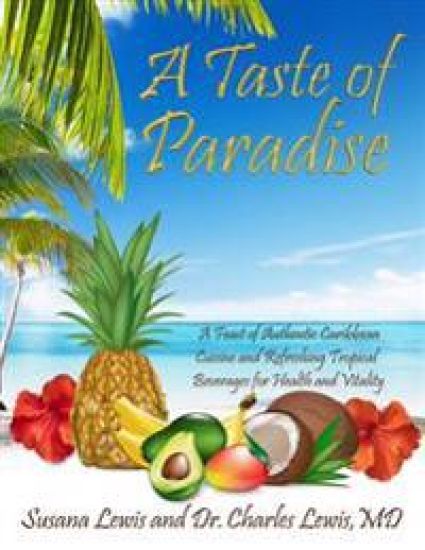
A Taste of Paradise is a guide to the preparation of delicious, easy to prepare foods with rich and authentic Caribbean flavors. These traditional foods form a natural, healthful diet with meals that are highly flavored and satisfying, and served with fresh cut fruit. The book provides well over 200 traditional recipes for great tasting foods, many prepared with coconut cream. This book is more than a collection of traditional Caribbean dishes. Not only does it explain how to prepare dishes, it teaches the selection and storage of tropical fruit, how to prepare plantains and cassava for cooking and how to obtain the most health benefit from foods. For example, it gives secrets on how to cook beans that are smooth and creamy and which avoid the formation of excess intestinal gas.This book was co-authored by a medical doctor board certified in preventive medicine. A section is dedicated to healthy weight loss (never calorie counting) while enjoying food. Along with the recipes are notes explaining why mangoes can cause allergic reactions in individuals susceptible to poison oak and how to avoid the reaction while enjoying the fruit, why some smoothies get bitter and how to prevent it, which tropical foods are likely to trigger migraines, which foods can be toxic if not correctly prepared. It provides instructions for safe preparation of ceviche, meats and seafoods. The section on meats explains how to prepare juicy, tender meat and how avoid creation of carcinogens during cooking. In the section on vegetables, it shows how to prepare vegetables to maximize anti-carcinogenic compounds. Most of the recipes are gluten free, and to extend this benefit, instructions are given for preparation of gluten free pastas. Many recipes use coconut rather than milk, and thus are lactose free; there are milk free recipes for flan, cake and smoothies made using coconut cream. There is even a traditional a recipe for molasses "brownies" made without milk, eggs or chocolate.The Spanish speaking Caribbean islands (Cuba, Dominican Republic, and Puerto Rico) share, climate, language, geography, and not surprisingly many elements of traditional cuisine. Many traditional dishes from the islands originated with the native residents, the Ta no people, these include corn breads, roasted turkey and root beer. Other recipes are traced back to Moorish casserole, fufu and elephant ear soup from Africa, bread and war paint used by the Arawak Indians, and spicy hot coco drink from the Aztecs. Early in their history, these islands were the crossroads for the development of the Americas, and this is reflected in the diversity of their tropical cuisine.This book gives traditional recipes, including holiday fare and provides shortcuts and modern adaptations so that the authentic flavors can be enjoyed using ingredients found in most American and Canadian cities. The authors also include recipes for the "fast foods" sold by street vendors on the islands. The book is nicely illustrated.
Green Nature/Human Nature

Green Nature/Human Nature

Charles A. Lewis

University of Illinois Press
1996
nidottu
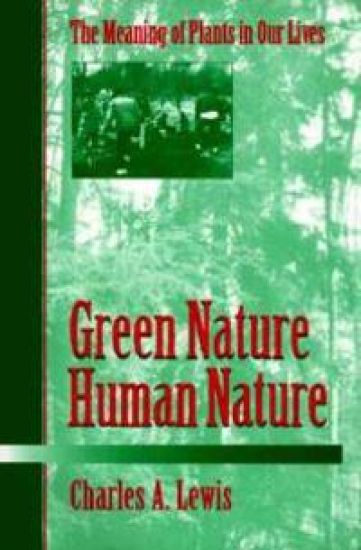
"Our ties to the green world are often subtle and unexpected. It is not merely that hemoglobin and chlorophyll bear a striking similarity in structure, or that plants provide the pleasure of food and flowers."--from the Preface Why do gardeners delight in the germination and growth of a seed? Why are our spirits lifted by flowers, our feelings of tension allayed by a walk in a forest or park? What other positive influences can green nature bring to humanity? In Green Nature/Human Nature Charles A. Lewis describes the psychological, sociological, and physiological responses of people to vegetation in cities and forests, as well as in horticultural therapy programs in hospitals, geriatric institutions, physical rehabilitation centers, drug rehabilitation programs, and correctional institutions. He presents an evolutionary basis for the human attraction to plants. People-plant interactions are presented from two perspectives: participatory, in which the individual is involved in planting and maintaining the vegetation, and observational, in which the individual bears no responsibility for establishing or maintaining the vegetation. In what amounts to a straightforward catalog of well-documented and tangible benefits, Lewis brings the latest and best research into plant/human interaction to bear on questions of how green nature is intertwined with the human psyche and how that interaction can lead to enhanced well-being and an appreciation of the human dimension in environmental concerns. Lewis's work will be essential reading for anyone interested in plants and how they affect people.A volume in the series The Environment and the Human Condition