Kirjojen hintavertailu. Mukana 12 390 323 kirjaa ja 12 kauppaa.

Kirjailija

Charles Amjad-Ali

Kirjat ja teokset yhdessä paikassa: 6 kirjaa, julkaisuja vuosilta 2017-2023, suosituimpien joukossa What Do You Think About?. Vertaile teosten hintoja ja tarkista saatavuus suomalaisista kirjakaupoista.

6 kirjaa

Kirjojen julkaisuhaarukka 2017-2023.

Nature's Sorrows and Nature's Joys

Nature's Sorrows and Nature's Joys

S T Kimbrough; Charles Amjad-Ali

Resource Publications (CA)
2023
pokkari
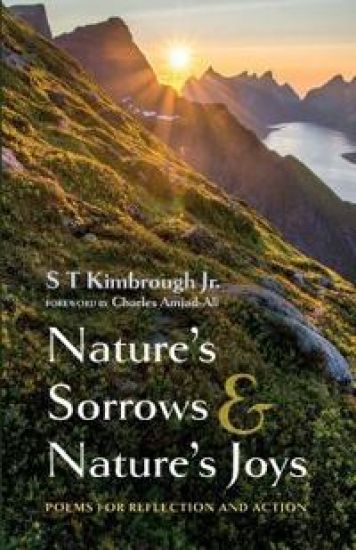
What if many desirable things in nature were no longer there?--clean air, freshly grown vegetables, wildflowers, a waterfall, a green forest, spring rains, colors of flowers, a willow tree, fresh trout from a stream, autumn leaves, sunrise, sunset, mineral-rich farmland, etc. What if in a few years global warming and its devasting effects so damaged the earth, its atmosphere, and its resources, that many of these things were no longer possible? These poems address openly both the sorrows we face with forces that destroy nature and the things we celebrate in nature that provide much of humankind's joy and sustenance. Some may ask appropriately, "What difference can a poet's words make in correcting the paths of nature's destruction down which humankind is traveling?" Certainly, words alone cannot save nature. Perhaps poetry can help to shape a new understanding of human failure, as well as to shape new visions of hope for the nature we know and are ever discovering.
Nature's Sorrows and Nature's Joys

Nature's Sorrows and Nature's Joys

S T Kimbrough; Charles Amjad-Ali

Resource Publications (CA)
2023
sidottu
What if many desirable things in nature were no longer there?--clean air, freshly grown vegetables, wildflowers, a waterfall, a green forest, spring rains, colors of flowers, a willow tree, fresh trout from a stream, autumn leaves, sunrise, sunset, mineral-rich farmland, etc. What if in a few years global warming and its devasting effects so damaged the earth, its atmosphere, and its resources, that many of these things were no longer possible? These poems address openly both the sorrows we face with forces that destroy nature and the things we celebrate in nature that provide much of humankind's joy and sustenance. Some may ask appropriately, "What difference can a poet's words make in correcting the paths of nature's destruction down which humankind is traveling?" Certainly, words alone cannot save nature. Perhaps poetry can help to shape a new understanding of human failure, as well as to shape new visions of hope for the nature we know and are ever discovering.
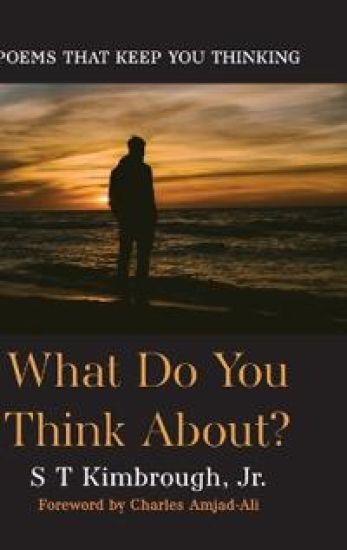
What Do You Think About?

What Do You Think About?

S T Kimbrough; Charles Amjad-Ali

Resource Publications (CA)
2022
sidottu
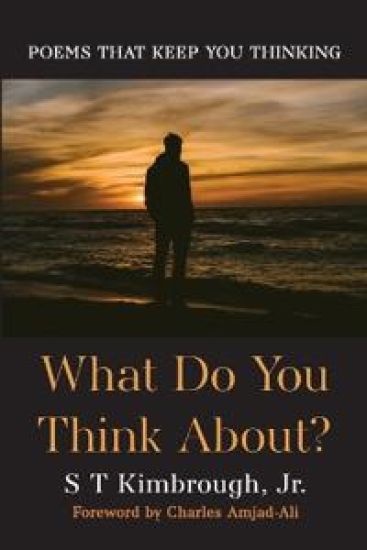
The poems in this volume seek to stimulate us to think about the things that we tend to push aside, questions and issues that it is easier to avoid. They also encourage us to think about those things, events, places, etc. that are sources of joy, achievement, and sorrow. Generally, they do not address the philosophy of thought but rather the results of our thinking and how we evaluate the value of our thoughts. At times, many things surface that tend to move our thinking in different directions. Each of the six sections of poems is prefaced with a question: What do you think about yourself? What do you think about time? What do you think of what you think? What do you think really matters? What do you think makes you smile? What do you think of love?
What Do You Think About?

What Do You Think About?

S T Kimbrough; Charles Amjad-Ali

Resource Publications (CA)
2022
pokkari
The poems in this volume seek to stimulate us to think about the things that we tend to push aside, questions and issues that it is easier to avoid. They also encourage us to think about those things, events, places, etc. that are sources of joy, achievement, and sorrow. Generally, they do not address the philosophy of thought but rather the results of our thinking and how we evaluate the value of our thoughts. At times, many things surface that tend to move our thinking in different directions. Each of the six sections of poems is prefaced with a question: What do you think about yourself? What do you think about time? What do you think of what you think? What do you think really matters? What do you think makes you smile? What do you think of love?