Kirjojen hintavertailu. Mukana 12 657 676 kirjaa ja 12 kauppaa.
Kirjailija
Charles E. Carraher Jr.
Kirjat ja teokset yhdessä paikassa: 7 kirjaa, julkaisuja vuosilta 2002-2017, suosituimpien joukossa Carraher's Polymer Chemistry. Vertaile teosten hintoja ja tarkista saatavuus suomalaisista kirjakaupoista.
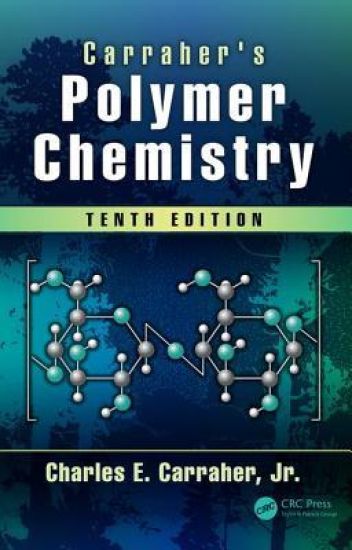
Carraher's Polymer Chemistry, Tenth Edition integrates the core areas of polymer science. Along with updating of each chapter, newly added content reflects the growing applications in Biochemistry, Biomaterials, and Sustainable Industries. Providing a user-friendly approach to the world of polymeric materials, the book allows students to integrate their chemical knowledge and establish a connection between fundamental and applied chemical information. It contains all of the elements of an introductory text with synthesis, property, application, and characterization. Special sections in each chapter contain definitions, learning objectives, questions, case studies and additional reading.
Research on metal-containing polymers began in the early 1960's when several workers found that vinyl ferrocene and other vinylic transition metal u -com plexes would undergo polymerization under the same conditions as conventional organic monomers to form high polymers which incorporated a potentially reactive metal as an integral part of the polymer structures. Some of these materials could act as semi-conducters and pos sessed one or two dimensional conductivity. Thus appli cations in electronics could be visualized immediately. Other workers found that reactions used to make simple metal chelates could be used to prepare polymers if the ligands were designed properly. As interest in homo geneous catalysts developed in the late 60's and early 70's, several investigators began binding homogeneous catalysts onto polymers, where the advantage of homo geneous catalysis - known reaction mechanisms and the advantage of heterogeneous catalysis - simplicity and ease of recovery of catalysts could both be obtained. Indeed the polymer matrix itself often enhanced the selectivity of the catalyst.
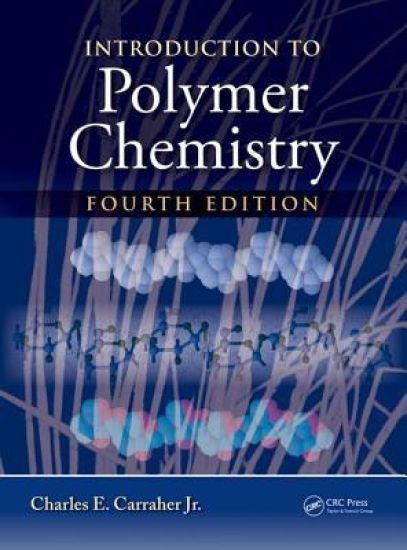
Introduction to Polymer Chemistry provides undergraduate students with a much-needed, well-rounded presentation of the principles and applications of natural, synthetic, inorganic, and organic polymers. With an emphasis on the environment and green chemistry and materials, this fourth edition continues to provide detailed coverage of natural and synthetic giant molecules, inorganic and organic polymers, elastomers, adhesives, coatings, fibers, plastics, blends, caulks, composites, and ceramics. Building on undergraduate work in foundational courses, the text fulfills the American Chemical Society Committee on Professional Training (ACS CPT) in-depth course requirement
Although in nature the vast majority of polymers are condensation polymers, much publicity has been focused on functionalized vinyl polymers. Functional Condensation Polymers fulfills the need to explore these polymers which form an increasingly important and diverse foundation in the search for new materials in the twentyfirst century. Some of the advantages condensation polymers hold over vinyl polymers include offering different kinds of binding sites, their ability to be made biodegradable, and their different reactivities with various reagents under diverse reaction conditions. They also offer better tailoring of end-products, different tendencies (such as fiber formation), and different physical and chemical properties. Some of the main areas emphasized include dendrimers, control release of drugs, nanostructure materials, controlled biomedical recognition, and controllable electrolyte and electrical properties.
For there is hope of a tree, If it be cut down, That it will sprout again And that the tender branch Thereof will not cease. Job XIV (7) Mankind has been blessed with a multitude of resources. In the beginning he utilized almost soley replenishable items such as vegetation and animal protein, for both nourishment and shelter. Gradually, such metals as copper and iron were developed and replaced wood as a material of construction. Cement and glass, although more plentiful than other minerals, also replaced the use of growing sub stances. Coal and oil became the primary sources of heat and power. Closer to the focus of this book, petroleum products began to replace the vegetable oils, tannin, wool, cotton, leather, silk, rubber, etc. in a host of applications. Surely, it was argued, the new materials did the job better and cheaper. What they didn't say is that soon we would run out of oil. In any case, research on growing natural products, now called renewable resources, slowed, and these industries sought only to maintain their status quo. The 20th Century saw an unprecedented emphasis and dependence on nonrenewable resources as energy sources (petroleum, coal, ura nium) and the fabric of technology (drugs, clothing, shelter, tires, computer parts). The predawn of the 21st Century brings a reali zation that a cyclic shift back towards the use of renewable re sources for technological application is in order.
The first concern of scientists who are interested in synthetic polymers has always been, and still is: How are they synthesized? But right after this comes the question: What have I made, and for what is it good? This leads to the important topic of the structure-property relations to which this book is devoted. Polymers are very large and very complicated systems; their character ization has to begin with the chemical composition, configuration, and con formation of the individual molecule. The first chapter is devoted to this broad objective. The immediate physical consequences, discussed in the second chapter, form the basis for the physical nature of polymers: the supermolecular interactions and arrangements of the individual macromolecules. The third chapter deals with the important question: How are these chemical and physical structures experimentally determined? The existing methods for polymer characterization are enumerated and discussed in this chapter. The following chapters go into more detail. For most applications-textiles, films, molded or extruded objects of all kinds-the mechanical and the thermal behaviors of polymers are of pre ponderant importance, followed by optical and electric properties. Chapters 4 through 9 describe how such properties are rooted in and dependent on the chemical structure. More-detailed considerations are given to certain particularly important and critical properties such as the solubility and permeability of polymeric systems. Macromolecules are not always the final goal of the chemist-they may act as intermediates, reactants, or catalysts. This topic is presented in Chapters 10 and 11.
Although in nature the vast majority of polymers are condensation polymers, much publicity has been focused on functionalized vinyl polymers. Functional Condensation Polymers fulfills the need to explore these polymers which form an increasingly important and diverse foundation in the search for new materials in the twentyfirst century. Some of the advantages condensation polymers hold over vinyl polymers include offering different kinds of binding sites, their ability to be made biodegradable, and their different reactivities with various reagents under diverse reaction conditions. They also offer better tailoring of end-products, different tendencies (such as fiber formation), and different physical and chemical properties. Some of the main areas emphasized include dendrimers, control release of drugs, nanostructure materials, controlled biomedical recognition, and controllable electrolyte and electrical properties.