Kirjojen hintavertailu. Mukana 12 595 353 kirjaa ja 12 kauppaa.

Kirjailija

Charles E. Hill

Kirjat ja teokset yhdessä paikassa: 10 kirjaa, julkaisuja vuosilta 2004-2026, suosituimpien joukossa The Danish Sound Dues and the Command of the Baltic. Vertaile teosten hintoja ja tarkista saatavuus suomalaisista kirjakaupoista.

Mukana myös kirjoitusasut: Charles E Hill

10 kirjaa

Kirjojen julkaisuhaarukka 2004-2026.

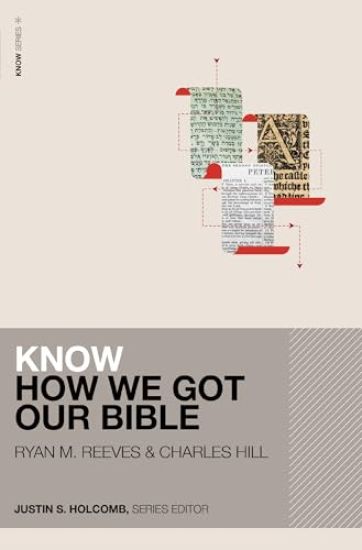
Know How We Got Our Bible (Includes Free Streaming Video)

Know How We Got Our Bible (Includes Free Streaming Video)

Ryan Matthew Reeves; Charles E. Hill

ZONDERVAN
2025
nidottu
The easy accessibility of the Bible in most of the world's major languages can obscure a dramatic and sometimes unexpected story. In Know How We Got Our Bible, scholars Ryan Reeves and Charles Hill trace the history of the Bible from its beginnings to the present day, highlighting key figures and demonstrating overall the reliability of Scripture.Reeves and Hill begin with the writing of the Bible's books (including authorship and dating), move into the formation of the Old and New Testaments (including early transmission and the development of the canon), and conclude with several chapters on Bible translation from the Latin Vulgate to the ongoing work of translation around the world today.This book has everything you need for a full personal or group study experience.Written simply and focused on the overarching story of how the Bible came to us today, Know How We Got Our Bible is an excellent introduction for formal students and lay learners alike. Chapters end with reflection questions and recommended reading for further study.An individual access code to stream all video sessions online. (You don’t need to buy a DVD!)Sessions and video run times:1 - Introduction (23 min)2 - The Old Testament (21 min)3 - The Septuagint and the Apocrypha (19 min)4 - The New Testament (28 min)5 - The Earliest Christians (23 min)6 - The Vulgate (22 min)7 - The Medieval Bible (30 min)8 - The Renegade Bible of John Wycliffe (21 min)9 - The Bible and the Reformation (27 min)10 - The Protestant Bible in English (26 min)11 - The King James Bible (26 min)12 - The Modern Bible Movements (27 min)13 - The Bible Today - and Tomorrow (34 min)Streaming video access code included. Access code subject to expiration after January 14, 2030. Code may be redeemed only by the recipient of this package. Code may not be transferred or sold separately from this package. Internet connection required. Void where prohibited, taxed, or restricted by law. Additional offer details inside.
Who Chose the Books of the New Testament?

Who Chose the Books of the New Testament?

Charles E. Hill

Faithlife Corporation
2022
nidottu
You can trust your Bible. Was the Bible born of a giant conspiracy? Many believe that the Bible was created as an instrument of domination by the Roman emperor Constantine and corrupt bishops seduced by political power. These men were not preserving orthodox Christianity. They were simply the winners--and thus the writers--of history. Is this Christianity's dirty secret? In Who Chose the Books of the New Testament?, Charles E. Hill examines the ancient evidence behind the formation of the New Testament. Hill retraces the origins of the canon and why certain books were privileged and others neglected. He concludes that the New Testament was inherited, not chosen. The early church preserved and proclaimed what they received. Learn how you got your Bible. The Questions for Restless Minds series applies God's word to today's issues. Each short book faces tough questions honestly and clearly, so you can think wisely, act with conviction, and become more like Christ.
The First Chapters

The First Chapters

Charles E. Hill

Oxford University Press
2022
sidottu
The First Chapters uncovers the origins of the first paragraph or chapter divisions in copies of the Christian Scriptures. Its focal point is the magnificent, fourth-century Codex Vaticanus (Vat.gr. 1209; B 03), perhaps the single most significant ancient manuscript of the Bible, and the oldest material witness to what may be the earliest set of numbered chapter divisions of the Bible. The First Chapters tells the history of textual division, starting from when copies of Greek literary works used virtually no spaces, marks, or other graphic techniques to assist the reader. It explores the origins of other numbering systems, like the better-known Eusebian Canons, but its theme is the first set of numbered chapters in Codex Vaticanus, what nineteenth-century textual critic Samuel P. Tregelles labelled the Capitulatio Vaticana. It demonstrates that these numbers were not, as most have claimed, late additions to the codex but belonged integrally to its original production. The First Chapters then breaks new ground by showing that the Capitulatio Vaticana has real precursors in some much earlier manuscripts. It thus casts light on a long, continuous tradition of scribally-placed, visual guides to the reading and interpreting of Scriptural books. Finally, The First Chapters exposes abundant new evidence that this early system for marking the sense-divisions of Scripture has played a much greater role in the history of exegesis than has previously been imaginable.
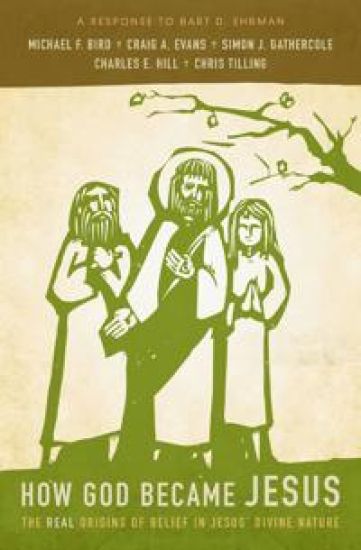
How God Became Jesus

How God Became Jesus

Michael F. Bird; Craig A. Evans; Simon Gathercole; Charles E. Hill; Chris Tilling

Zondervan
2014
nidottu
In his recent book How Jesus Became God: The Exaltation of a Jewish Preacher From Galilee historian Bart Ehrman explores a claim that resides at the heart of the Christian faith— that Jesus of Nazareth was, and is, God. According to Ehrman, though, this is not what the earliest disciples believed, nor what Jesus claimed about himself. The first response book to this latest challenge to Christianity from Ehrman, How God Became Jesus features the work of five internationally recognized biblical scholars. While subjecting his claims to critical scrutiny, they offer a better, historically informed account of why the Galilean preacher from Nazareth came to be hailed as “the Lord Jesus Christ.” Namely, they contend, the exalted place of Jesus in belief and worship is clearly evident in the earliest Christian sources, shortly following his death, and was not simply the invention of the church centuries later.
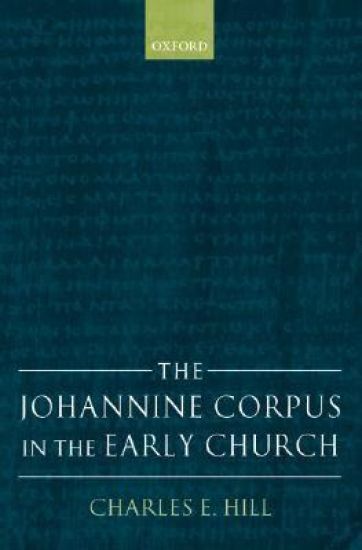
The Johannine Corpus in the Early Church

The Johannine Corpus in the Early Church

Charles E. Hill

Oxford University Press
2006
nidottu
How were the Johannine books of the New Testament received by second-century Christians and accorded scriptural status? Charles E. Hill offers a fresh and detailed examination of this question. He dismantles the long-held theory that the Fourth Gospel was generally avoided or resisted by orthodox Christians, while being treasured by various dissenting groups, throughout most of the second century. Integrating a wide range of literary and non-literary sources, this book demonstrates the failure of several old stereotypes about the Johannine literature. It also collects the full evidence for the second-century Church's conception of these writings as a group: the Johannine books cannot be isolated from each other but must be recognized as a corpus.
From the Lost Teaching of Polycarp

From the Lost Teaching of Polycarp

Charles E. Hill

Mohr Siebeck
2006
sidottu
This book significantly expands our understanding of the life and work of Polycarp of Smyrna. Part One establishes that the anonymous "apostolic presbyterquot;, whose oral teaching is cited intermittently by Irenaeus in Against Heresies 4.27.1 through 4.32.1, is in fact Polycarp. The fragments of teaching preserved by Irenaeus shed valuable light upon his relationship with Polycarp, establishing that Irenaeus' contact with his teacher was neither fleeting nor shallow. They also reveal Polycarp's important role in opposing the early effects of the Marcionite movement and gain a valuable perspective on Polycarp's Old Testament hermeneutic in the face of ecclesiastical controversy. Part Two considers the many links which would tie Polycarp to the work known as Ad Diognetum. Charles E. Hill proposes that the work is not a treatise but the transcript of an oral address. A new proposal is made for the identity of Diognetus, the addressee, based upon archaeological evidence of an aristocratic Smyrnaean family of the second century.
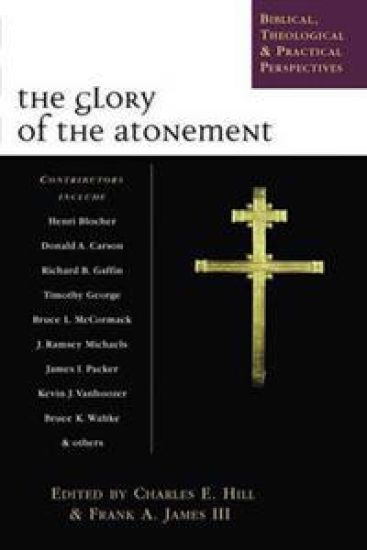
The Glory of the atonement

The Glory of the atonement

Charles E Hill

Apollos
2004
pokkari
The atonement is the crown jewel of Christian doctrine. And it is the responsibility of each generation of theologians to preserve its heritage, explore its facets and allow its radiance to illumine their day. 'The Glory of the Atonement' is an attempt to fulfil this trust at the dawn of a new millennium. In this book evangelical biblical scholars explore the atonement within the contours of Scripture, while historical and systematic theologians weigh the atonement in ancient, medieval and Reformation tradition. The primary focus is on the Reformed tradition, which is traced up to Karl Barth and evangelicalism, capped with a consideration of the atonement and postmodernism. The implications of the atonement are brought home with a look at the atonement in contemporary preaching and Christian living. The result is a full-course feast for ministers of the word, a textbook for students of the Bible and theology, and a valuable resource for any theological library.
The Johannine Corpus in the Early Church

The Johannine Corpus in the Early Church

Charles E. Hill

Oxford University Press
2004
sidottu
How were the Johannine books of the New Testament received by second-century Christians and accorded scriptural status? Charles E. Hill offers a fresh and detailed examination of this question. He dismantles the long-held theory that the Fourth Gospel was generally avoided or resisted by orthodox Christians, while being treasured by various dissenting groups, throughout most of the second century. Integrating a wide range of literary and non-literary sources, this book demonstrates the failure of several old stereotypes about the Johannine literature. It also collects the full evidence for the second-century Church's conception of these writings as a group: the Johannine books cannot be isolated from each other but must be recognized as a corpus.