Kirjojen hintavertailu. Mukana 12 595 353 kirjaa ja 12 kauppaa.

Kirjailija

Charles E. Orser

Kirjat ja teokset yhdessä paikassa: 6 kirjaa, julkaisuja vuosilta 2014-2023, suosituimpien joukossa Archaeological Thinking. Vertaile teosten hintoja ja tarkista saatavuus suomalaisista kirjakaupoista.

Mukana myös kirjoitusasut: Charles E Orser

6 kirjaa

Kirjojen julkaisuhaarukka 2014-2023.

Archaeological Thinking

Archaeological Thinking

Charles E. Orser

BLOOMSBURY PUBLISHING PLC
2023
sidottu
In the second edition of Archaeological Thinking, Charles E. Orser, Jr. provides an updated guide to the critical thinking skills archaeologists use to unravel the stories of history’s buried past.
Archaeological Thinking

Archaeological Thinking

Charles E. Orser

BLOOMSBURY PUBLISHING PLC
2023
nidottu
In the second edition of Archaeological Thinking, Charles E. Orser, Jr. provides an updated guide to the critical thinking skills archaeologists use to unravel the stories of history’s buried past.
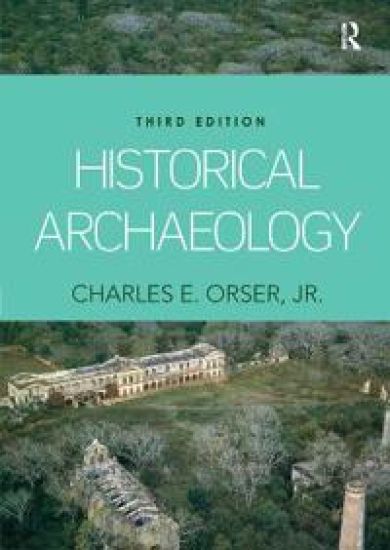
Historical Archaeology

Historical Archaeology

Charles E. Orser

Routledge
2018
sidottu
This book provides a short, readable introduction to historical archaeology, which focuses on modern history in all its fascinating regional, cultural, and ethnic diversity. Accessibly covering key methods and concepts, including fundamental theories and principles, the history of the field, and basic definitions, Historical Archaeology also includes a practical look at career prospects for interested readers. Orser discusses central topics of archaeological research such as time and space, survey and excavation methods, and analytical techniques, encouraging readers to consider the possible meanings of artifacts. Drawing on the author’s extensive experience as an historical archaeologist, the book’s perspective ranges from the local to the global in order to demonstrate the real importance of this subject to our understanding of the world in which we live today. The third edition of this popular textbook has been significantly revised and expanded to reflect recent developments and discoveries in this exciting area of study. Each chapter includes updated case studies which demonstrate the research conducted by professional historical archaeologists. With its engaging approach to the subject, Historical Archaeology continues to be an ideal resource for readers who wish to be introduced to this rapidly expanding global field.
Archaeological Thinking

Archaeological Thinking

Charles E. Orser

Rowman Littlefield
2014
sidottu
How do archaeologists think? How do they use the scattered and often-fragmentary remains from the past—both historical and excavated—to create meaningful, sensible interpretations of human history? In Archaeological Thinking, Charles E. Orser Jr., provides a commonsense guide to applying critical thinking skills to archaeological questions and evidence. Rather than critiquing and debunking specific cases of pseudo-archaeology or concentrating on archaeological theory, Orser considers the basics of scientific thinking, the use of logic and analogy, the meaning and context of facts, and the evaluation of source materials. He explains, concisely and accessibly, how archaeologists use these principles to create pictures of the past and teaches students to develop the skills needed to make equally reasoned interpretations.
Archaeological Thinking

Archaeological Thinking

Charles E. Orser

Rowman Littlefield
2014
nidottu
How do archaeologists think? How do they use the scattered and often-fragmentary remains from the past—both historical and excavated—to create meaningful, sensible interpretations of human history? In Archaeological Thinking, Charles E. Orser Jr., provides a commonsense guide to applying critical thinking skills to archaeological questions and evidence. Rather than critiquing and debunking specific cases of pseudo-archaeology or concentrating on archaeological theory, Orser considers the basics of scientific thinking, the use of logic and analogy, the meaning and context of facts, and the evaluation of source materials. He explains, concisely and accessibly, how archaeologists use these principles to create pictures of the past and teaches students to develop the skills needed to make equally reasoned interpretations.
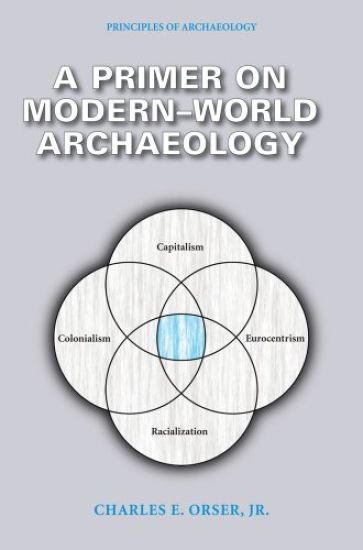
A Primer on Modern-World Archaeology

A Primer on Modern-World Archaeology

Charles E Orser

Eliot Werner Publications Inc
2014
nidottu
Focused on four overarching elements of the post-Columbian world (colonialism, Eurocentrism, racialization and capitalism), A Primer on Modern-World Archaeology is designed to introduce this new kind of historical archaeology to undergraduates, graduate students, and everyone interested in the material expressions of how the present world came to be. Major perspectives are presented in accessible language and study questions are provided at the end of each chapter. Despite its slow development, historical archaeology has been steadily maturing over the past three decades. Archaeologists today are exploring daily life in the post-1500 world at an increasing pace, investigating sites throughout the world—frequently locales where historical archaeology was never before practised—using a variety of complex theories and perspectives. Given the explosion of worldwide research, it is now possible to create a new historical archaeology: a modern-world archaeology that explicitly explores modern life in all its variations, extending from local to global scales of analysis.