Kirjojen hintavertailu. Mukana 12 590 120 kirjaa ja 12 kauppaa.

Kirjailija

Charles E. Orser Jr.

Kirjat ja teokset yhdessä paikassa: 7 kirjaa, julkaisuja vuosilta 1996-2024, suosituimpien joukossa A Historical Archaeology of the Modern World. Vertaile teosten hintoja ja tarkista saatavuus suomalaisista kirjakaupoista.

Mukana myös kirjoitusasut: Charles E. Orser Jr

7 kirjaa

Kirjojen julkaisuhaarukka 1996-2024.

Mutualist Archaeology

Mutualist Archaeology

Charles E. Orser Jr.

TAYLOR FRANCIS LTD
2024
sidottu
Mutualist Archaeology proposes that the theory of mutualism can transform archaeology from what someconsider to be a discipline in crisis.This book argues that the methodological and practical applications of mutualism can transform both the practice of archaeology and the way that interpretations of the past are created. Nineteenth-century theories of capitalism and Darwinism led many to assume that competition, both in the present and the past, was the most natural process in the world. Despite the tenacity of the competitive argument, this book highlights another way of seeing the natural and human world, beneficial association, or mutualism. Chapters set out how mutualist theory can offer differing perspectives on the many historical contexts archaeologists investigate, such as exchange and social complexity, as well as how archaeologists work together. Until now, no archaeologist has explicitly explored the richness that exists within mutualism, and in addition to providing a useful research perspective, mutualist theory also has profound implications for the practice of contemporary archaeology, including the drive to decolonize archaeological practice.Introducing mutualist theory and its significance for archaeological research, this book is for researchers and students of archaeological theory and archaeologists looking for new ways to view the discipline.
Mutualist Archaeology

Mutualist Archaeology

Charles E. Orser Jr.

TAYLOR FRANCIS LTD
2024
nidottu
Mutualist Archaeology proposes that the theory of mutualism can transform archaeology from what someconsider to be a discipline in crisis.This book argues that the methodological and practical applications of mutualism can transform both the practice of archaeology and the way that interpretations of the past are created. Nineteenth-century theories of capitalism and Darwinism led many to assume that competition, both in the present and the past, was the most natural process in the world. Despite the tenacity of the competitive argument, this book highlights another way of seeing the natural and human world, beneficial association, or mutualism. Chapters set out how mutualist theory can offer differing perspectives on the many historical contexts archaeologists investigate, such as exchange and social complexity, as well as how archaeologists work together. Until now, no archaeologist has explicitly explored the richness that exists within mutualism, and in addition to providing a useful research perspective, mutualist theory also has profound implications for the practice of contemporary archaeology, including the drive to decolonize archaeological practice.Introducing mutualist theory and its significance for archaeological research, this book is for researchers and students of archaeological theory and archaeologists looking for new ways to view the discipline.
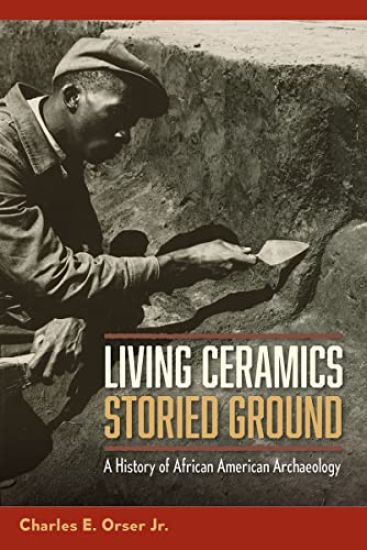
Living Ceramics, Storied Ground

Living Ceramics, Storied Ground

Charles E. Orser Jr.

University Press of Florida
2023
sidottu
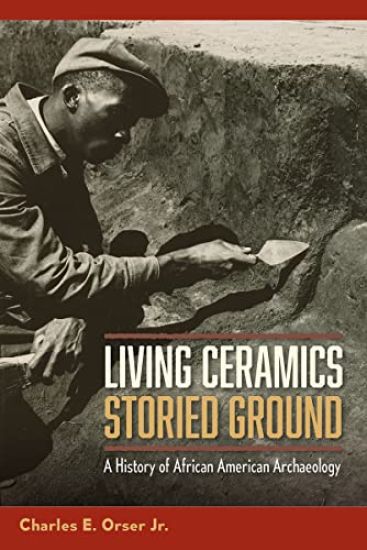
The role of historical archaeology in the study of African diaspora history and culture.Exploring the archaeological study of enslavement and emancipation in the United States, this book discusses significant findings, the attitudes and approaches of past researchers, and the development of the field. Living Ceramics, Storied Ground highlights the ways historical archaeology can contribute to the study of African diaspora history and culture, as much of the daily life of enslaved people was not captured through written records but is evidenced in the materials and objects left behind.Including debates about cultural survivals in the 1920s, efforts to find “Africanisms” at Kingsley plantation in the 1960s, and the realization—as late as the 1970s—that colonoware pottery was created by enslaved people, Charles Orser looks at the influential and often mistaken ideas of prominent anthropologists, archaeologists, and historians. Extending to the present, Orser describes how archaeology better recognizes and appreciates the variety and richness of African American culture during slavery, due in large part to the Black archaeologists, past and present, who have worked to counter racism in the field.While acknowledging the colonial legacy of archaeology, Charles Orser outlines the ways the discipline has benefitted by adopting antiracist principles and partnerships with descendant communities. This book points to the contributions of excavators and researchers whose roles have been overlooked and anticipates exciting future work in African American archaeology. Publication of this work made possible by a Sustaining the Humanities through the American Rescue Plan grant from the National Endowment for the Humanities.
Living Ceramics, Storied Ground

Living Ceramics, Storied Ground

Charles E. Orser Jr.

University Press of Florida
2023
pokkari
The role of historical archaeology in the study of African diaspora history and culture.Exploring the archaeological study of enslavement and emancipation in the United States, this book discusses significant findings, the attitudes and approaches of past researchers, and the development of the field. Living Ceramics, Storied Ground highlights the ways historical archaeology can contribute to the study of African diaspora history and culture, as much of the daily life of enslaved people was not captured through written records but is evidenced in the materials and objects left behind.Including debates about cultural survivals in the 1920s, efforts to find “Africanisms” at Kingsley plantation in the 1960s, and the realization—as late as the 1970s—that colonoware pottery was created by enslaved people, Charles Orser looks at the influential and often mistaken ideas of prominent anthropologists, archaeologists, and historians. Extending to the present, Orser describes how archaeology better recognizes and appreciates the variety and richness of African American culture during slavery, due in large part to the Black archaeologists, past and present, who have worked to counter racism in the field.While acknowledging the colonial legacy of archaeology, Charles Orser outlines the ways the discipline has benefitted by adopting antiracist principles and partnerships with descendant communities. This book points to the contributions of excavators and researchers whose roles have been overlooked and anticipates exciting future work in African American archaeology. Publication of this work made possible by a Sustaining the Humanities through the American Rescue Plan grant from the National Endowment for the Humanities.
A Historical Archaeology of the Modern World

A Historical Archaeology of the Modern World

Charles E. Orser Jr.

Springer-Verlag New York Inc.
2013
nidottu
This unique book offers a theoretical framework for historical archaeology that explicitly relies on network theory. Charles E. Orser, Jr., demonstrates the need to examine the impact of colonialism, Eurocentrism, capitalism, and modernity on all archaeological sites inhabited after 1492 and shows how these large-scale forces create a link among all the sites. Orser investigates the connections between a seventeenth-century runaway slave kingdom in Palmares, Brazil and an early nineteenth-century peasant village in central Ireland. Studying artifacts, landscapes, and social inequalities in these two vastly different cultures, the author explores how the archaeology of fugitive Brazilian slaves and poor Irish farmers illustrates his theoretical concepts. His research underscores how network theory is largely unknown in historical archaeology and how few historical archaeologists apply a global perspective in their studies. A Historical Archaeology of the Modern World features data and illustrations from two previously unknown sites and includes such intriguing findings as the provenance of ancient Brazilian smoking pipes that will be new to historical archaeologists.
The Archaeology of Race and Racialization in Historic America

The Archaeology of Race and Racialization in Historic America

Charles E. Orser Jr

University Press of Florida
2007
nidottu
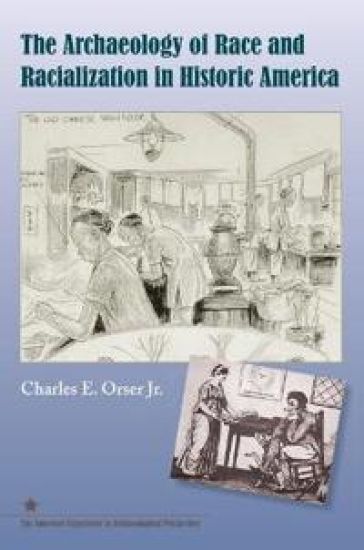
With the advent of this book, the ability of archaeologists to contribute to the study of race no longer can be doubted. By focusing on ""racialization,"" the marginalizing process in which racial categories are imposed on groups of people based on some outward characteristic, Charles Orser shows how historical archaeology can contribute to the study of race through the conscious examination of material culture. He demonstrates this in two case studies, one from the Five Points excavation in New York City focusing on an immigrant Irish population, the second from a Chinese laundry in Stockton, California. Orser argues that race has not always been defined by skin color; through time, its meaning has changed. The process of racialization has marked most groups who came to the United States in the nineteenth and early twentieth centuries; this book demonstrates ways that historical archaeology can contribute to understanding a fundamental element of the American immigrant experience.
A Historical Archaeology of the Modern World

A Historical Archaeology of the Modern World

Charles E. Orser Jr.

Kluwer Academic/Plenum Publishers
1996
sidottu
This unique book offers a theoretical framework for historical archaeology that explicitly relies on network theory. Charles E. Orser, Jr., demonstrates the need to examine the impact of colonialism, Eurocentrism, capitalism, and modernity on all archaeological sites inhabited after 1492 and shows how these large-scale forces create a link among all the sites. Orser investigates the connections between a seventeenth-century runaway slave kingdom in Palmares, Brazil and an early nineteenth-century peasant village in central Ireland. Studying artifacts, landscapes, and social inequalities in these two vastly different cultures, the author explores how the archaeology of fugitive Brazilian slaves and poor Irish farmers illustrates his theoretical concepts. His research underscores how network theory is largely unknown in historical archaeology and how few historical archaeologists apply a global perspective in their studies. A Historical Archaeology of the Modern World features data and illustrations from two previously unknown sites and includes such intriguing findings as the provenance of ancient Brazilian smoking pipes that will be new to historical archaeologists.