Kirjojen hintavertailu. Mukana 12 277 448 kirjaa ja 12 kauppaa.

Kirjailija

Charles E. Rosenberg

Kirjat ja teokset yhdessä paikassa: 6 kirjaa, julkaisuja vuosilta 1987-2008, suosituimpien joukossa The Care of Strangers. Vertaile teosten hintoja ja tarkista saatavuus suomalaisista kirjakaupoista.

6 kirjaa

Kirjojen julkaisuhaarukka 1987-2008.

Our Present Complaint

Our Present Complaint

Charles E. Rosenberg

Johns Hopkins University Press
2008
pokkari
Charles E. Rosenberg, one of the world's most influential historians of medicine, presents a fascinating analysis of the current tensions in American medicine. Situating these tensions within their historical and social contexts, Rosenberg investigates the fundamental characteristics of medicine: how we think about disease, how the medical profession thinks about itself and its moral and intellectual responsibilities, and what prospective patients-all of us-expect from medicine and the medical profession. He explores the nature and definition of disease and how ideas of disease causation reflect social values and cultural negotiations. His analyses of alternative medicine and bioethics consider the historically specific ways in which we define and seek to control what is appropriately medical. At a time when clinical care and biomedical research generate as much angst as they offer cures, this volume provides valuable insight into how the practice of medicine has evolved, where it is going, and how lessons from history can improve its prognosis.
The Trial of the Assassin Guiteau

The Trial of the Assassin Guiteau

Charles E. Rosenberg

University of Chicago Press
1995
nidottu
This study uses the celebrated American trial of Charles Guiteau, who assassinated President James A. Garfield in 1881, to explore attitudes towards insanity and criminal responsibility in the the late-19th century. The author reconstructs the courtroom battle waged by 24 expert witnesses who represented the two major schools of psychiatric thought of the generation immediately preceding Freud. Although the role of genetics in behaviour was widely accepted, these psychiatrists debated whether heredity had predisposed Guiteau to assassinate Garfield. Rosenberg's account allows the reader to consider one of the earliest cases in the controversy over the criminal responsibility of the insane, a debate that has continued through to modern times.
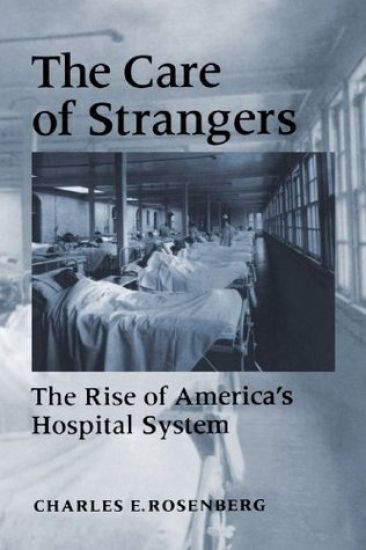
The Care of Strangers

The Care of Strangers

Charles E. Rosenberg

Johns Hopkins University Press
1995
pokkari
This widely acclaimed history traces every facet of the hospital's social and professional transformations. Many of today's obsessions with technology, rigid bureaucracy, and uncontrolled cost can be found in hospitals more than half a century ago. Illustrated.
Explaining Epidemics

Explaining Epidemics

Charles E. Rosenberg

Cambridge University Press
1992
sidottu
Medicine has always had its historians; but until recently it was a history written by and for practitioners. Charles Rosenberg has been one of the key figures in recent decades in opening up the history of medicine beyond parochial concerns and instead viewing medicine in the rich currents of intellectual and social change of the past two centuries. This book brings together for the first time in one place many of Professor Rosenberg's most important essays. The first two sections of essays, focusing on ideas and institutions, are meant at the same time to underline interactions between these realms. The essays treat such topics as therapeutics and its relationship to social change in the nineteenth century; the practice of medicine in New York a century ago; and the rise and fall of the dispensary. The third section of the book focuses on the attempt to use history as a resource for discussion of a medical world that often seems out of control and in a semi-permanent crisis, economic, organizational, and humane. The essays discuss themes that have become visible to the public – deinstitutionalization of the mentally ill and the status of psychiatry; the hospital as a social and economic problem; and the social negotiations surrounding AIDS.
Explaining Epidemics

Explaining Epidemics

Charles E. Rosenberg

Cambridge University Press
1992
pokkari
Medicine has always had its historians; but until recently it was a history written by and for practitioners. Charles Rosenberg has been one of the key figures in recent decades in opening up the history of medicine beyond parochial concerns and instead viewing medicine in the rich currents of intellectual and social change of the past two centuries. This book brings together for the first time in one place many of Professor Rosenberg's most important essays. The first two sections of essays, focusing on ideas and institutions, are meant at the same time to underline interactions between these realms. The essays treat such topics as therapeutics and its relationship to social change in the nineteenth century; the practice of medicine in New York a century ago; and the rise and fall of the dispensary. The third section of the book focuses on the attempt to use history as a resource for discussion of a medical world that often seems out of control and in a semi-permanent crisis, economic, organizational, and humane. The essays discuss themes that have become visible to the public – deinstitutionalization of the mentally ill and the status of psychiatry; the hospital as a social and economic problem; and the social negotiations surrounding AIDS.
The Cholera Years

The Cholera Years

Charles E. Rosenberg

University of Chicago Press
1987
nidottu
Cholera was the classic epidemic disease of the nineteenth century, as the plague had been for the fourteenth. Its defeat was a reflection not only of progress in medical knowledge but of enduring changes in American social thought. Rosenberg has focused his study on New York City, the most highly developed center of this new society. Carefully documented, full of descriptive detail, yet written with an urgent sense of the drama of the epidemic years, this narrative is as absorbing for general audiences as it is for the medical historian. In a new Afterword, Rosenberg discusses changes in historical method and concerns since the original publication of The Cholera Years."A major work of interpretation of medical and social thought . . . this volume is also to be commended for its skillful, absorbing presentation of the background and the effects of this dread disease."—I.B. Cohen, New York Times"The Cholera Years is a masterful analysis of the moral and social interest attached to epidemic disease, providing generally applicable insights into how the connections between social change, changes in knowledge and changes in technical practice may be conceived."—Steven Shapin, Times Literary Supplement"In a way that is all too rarely done, Rosenberg has skillfully interwoven medical, social, and intellectual history to show how medicine and society interacted and changed during the 19th century. The history of medicine here takes its rightful place in the tapestry of human history."—John B. Blake, Science