Kirjojen hintavertailu. Mukana 12 595 353 kirjaa ja 12 kauppaa.

Kirjailija

Charles E. Scott

Kirjat ja teokset yhdessä paikassa: 8 kirjaa, julkaisuja vuosilta 1990-2024, suosituimpien joukossa Telling Silence. Vertaile teosten hintoja ja tarkista saatavuus suomalaisista kirjakaupoista.

8 kirjaa

Kirjojen julkaisuhaarukka 1990-2024.

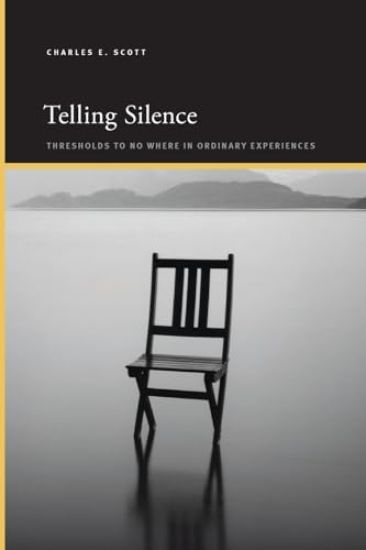
Telling Silence

Telling Silence

Charles E. Scott

STATE UNIVERSITY OF NEW YORK PRESS
2024
pokkari
Aims to let silence disclose itself by cultivating attunements with silences' happening.In Telling Silence, Charles E. Scott speaks of silence, often indirectly, in such ways as to create occasions in which people might become more aware of silence in their experiences of themselves and the world around them. The core question of the book is: how can people be aware of silence without turning it into a thing and losing it? Lack of awareness of silence is lack of awareness of a major dimension of lives, both human and nonhuman. Attunements with silence enable attunements with being alive in the fragility that invests even the strengths of living beings. Telling Silence performs this attunement in descriptive accounts and instances of non-reflective awareness, awareness that does not deliberate or ponder. In twenty-three "fragments," poems, stories, and ways of thinking and speaking are brought together to intensify intimations of silence telling of itself.
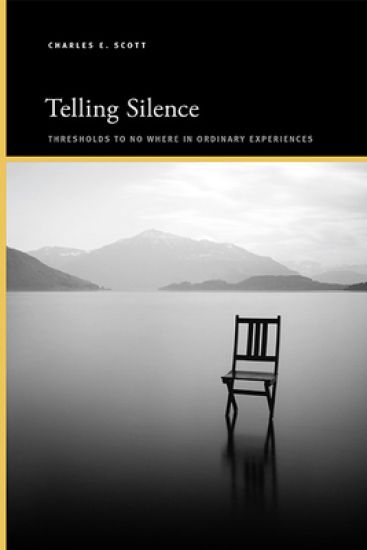
Telling Silence

Telling Silence

Charles E. Scott

STATE UNIVERSITY OF NEW YORK PRESS
2023
sidottu
Aims to let silence disclose itself by cultivating attunements with silences' happening.In Telling Silence, Charles E. Scott speaks of silence, often indirectly, in such ways as to create occasions in which people might become more aware of silence in their experiences of themselves and the world around them. The core question of the book is: how can people be aware of silence without turning it into a thing and losing it? Lack of awareness of silence is lack of awareness of a major dimension of lives, both human and nonhuman. Attunements with silence enable attunements with being alive in the fragility that invests even the strengths of living beings. Telling Silence performs this attunement in descriptive accounts and instances of non-reflective awareness, awareness that does not deliberate or ponder. In twenty-three "fragments," poems, stories, and ways of thinking and speaking are brought together to intensify intimations of silence telling of itself.
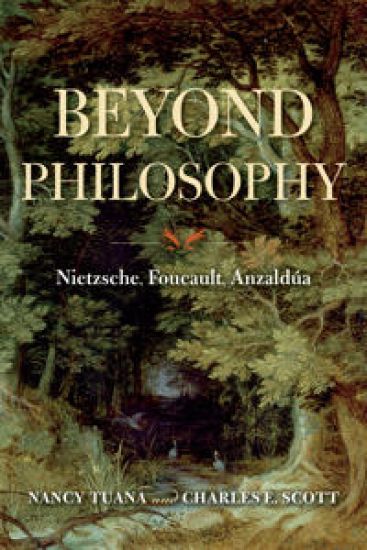
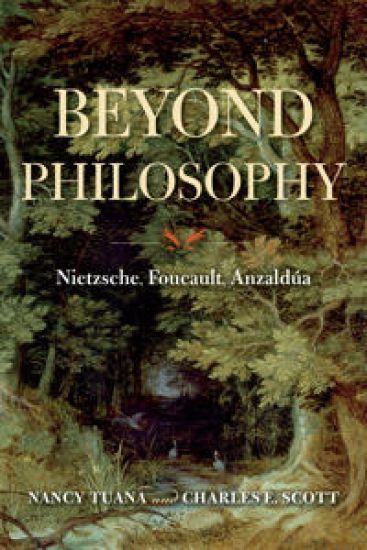
Beyond Philosophy

Beyond Philosophy

Nancy Tuana; Charles E. Scott

Indiana University Press
2020
pokkari
Questions of whether anything exceeds reasonable sense and meaning have persisted throughout the history of philosophy. These questions have even continued in postmodern thought as well as in liberatory philosophies in which many kinds of events and lineages are experienced and seen as beyond philosophy. In this cowritten text, distinguished philosophers Nancy Tuana and Charles Scott pay particular attention to lineages and their dynamism as they develop the idea of things beyond philosophy, beyond norms. This is not a history of philosophy or a critical study of a particular philosopher but a way to engage experience around dimensions of events that are beyond measuring, counting, meaning, and value. These attunements, they assert, are vitally important for the ways people orient themselves in the world and comport themselves in it. Tuana and Scott build on the alternatives to normative ethics that they find in the work of Nietzsche, Foucault, and Anzaldúa. They urge attunement to the world as a way to speak about what is impossible to give voice to, to live in the spaces between speech and the unspeakable, and to conceptualize and articulate the boundaries of rational sensibility.
Beyond Philosophy

Beyond Philosophy

Nancy Tuana; Charles E. Scott

Indiana University Press
2020
sidottu
Questions of whether anything exceeds reasonable sense and meaning have persisted throughout the history of philosophy. These questions have even continued in postmodern thought as well as in liberatory philosophies in which many kinds of events and lineages are experienced and seen as beyond philosophy. In this cowritten text, distinguished philosophers Nancy Tuana and Charles Scott pay particular attention to lineages and their dynamism as they develop the idea of things beyond philosophy, beyond norms. This is not a history of philosophy or a critical study of a particular philosopher but a way to engage experience around dimensions of events that are beyond measuring, counting, meaning, and value. These attunements, they assert, are vitally important for the ways people orient themselves in the world and comport themselves in it. Tuana and Scott build on the alternatives to normative ethics that they find in the work of Nietzsche, Foucault, and Anzaldúa. They urge attunement to the world as a way to speak about what is impossible to give voice to, to live in the spaces between speech and the unspeakable, and to conceptualize and articulate the boundaries of rational sensibility.
Living with Indifference

Living with Indifference

Charles E. Scott

Indiana University Press
2007
pokkari
Living with Indifference is about the dimension of life that is utterly neutral, without care, feeling, or personality. In this provocative work that is anything but indifferent, Charles E. Scott explores the ways people have spoken and thought about indifference. Exploring topics such as time, chance, beauty, imagination, violence, and virtue, Scott shows how affirming indifference can be beneficial, and how destructive consequences can occur when we deny it. Scott's preoccupation with indifference issues a demand for focused attention in connection with personal values, ethics, and beliefs. This elegantly argued book speaks to the positive value of diversity and a world that is open to human passion.
The Lives of Things

The Lives of Things

Charles E. Scott

Indiana University Press
2002
pokkari
"Like Foucault and Levinas before him, though in very different ways, Scott makes an oblique incision into phenomenology . . . [it is] the kind of book to which people dazed by the specters of nihilism will be referred by those in the know." —David Wood ". . . refreshing and original." —Edward S. Casey In The Lives of Things, Charles E. Scott reconsiders our relationships with ordinary, everyday things and our capacity to engage them in their particularity. He takes up the Greek notion of phusis, or physicality, as a way to point out limitations in refined and commonplace views of nature and the body as well as a device to highlight the often overlooked lives of things that people encounter. Scott explores questions of unity, purpose, coherence, universality, and experiences of wonder and astonishment in connection with scientific fact and knowledge. He develops these themes with lightness and wit, ultimately articulating a new interpretation of the appearances of things that are beyond the reach of language and thought.
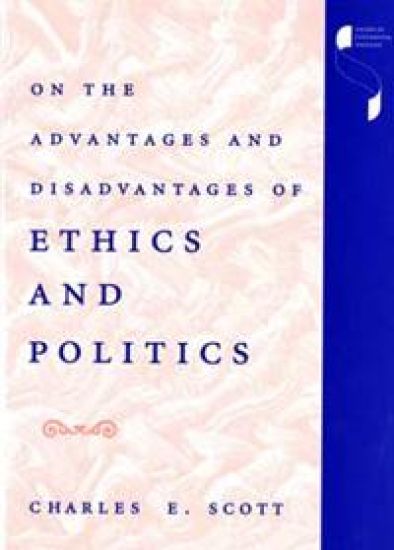
On the Advantages and Disadvantages of Ethics and Politics

On the Advantages and Disadvantages of Ethics and Politics

Charles E. Scott

Indiana University Press
1996
pokkari
". . . remarkable account of the impact of postmodern philosophy on the question of ethics and politics . . . commendable also for its balanced view of Heidegger's relationship to politics and ethics. . . . an excellent account of Heidegger's philosophical understanding of technology . . ." —Choice This book takes as its point of departure the question of ethics: that values and their pursuit in the West often perpetuate their own worst enemies. At issue are the dangers in the structures and movements of images, values, and ways of knowing that are most intimately a part of our lives.
The Question of Ethics

The Question of Ethics

Charles E. Scott

Indiana University Press
1990
pokkari
" . . . stimulating and insightful . . . a thoroughly researched and timely contribution to the secondary literature of ethics . . . " —Library Journal "His important new work establishes Scott . . . as one of the foremost interpreters of the Continental philosophical tradition of the US. . . . Necessary for anyone working in ethics or the Continental tradition." —Choice " . . . a provocative discourse on the consequences of the ethical in the thought of Nietzsche, Foucault, and Heidegger." —The Journal of Religion Charles E. Scott's challenging book advances the broad claim that ethics as a way of judging and thinking has come into question as philosophers have confronted suffering and conflicts that arise from our traditional systems of value.