
Kirjailija
Charles Foster
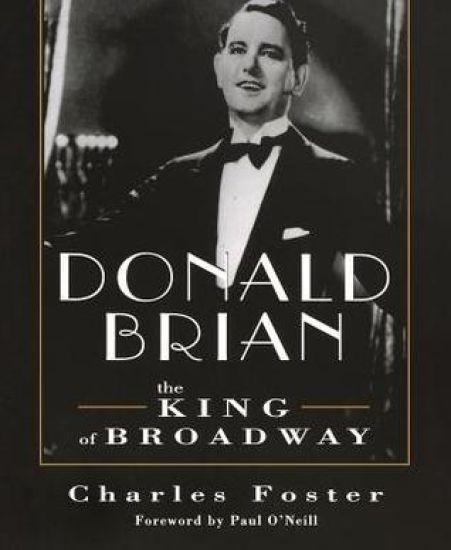
Kirjat ja teokset yhdessä paikassa: 58 kirjaa, julkaisuja vuosilta 2000-2027, suosituimpien joukossa Donald Brian. Vertaile teosten hintoja ja tarkista saatavuus suomalaisista kirjakaupoista.
58 kirjaa
Kirjojen julkaisuhaarukka 2000-2027.

We tend to think that everything important comes from the centre: from big cities, from established orthodoxies in the sciences and the arts, from the Establishment in all its forms. We think this because the centre tells us it is so, but it's a lie. It is only at the edges that we think, innovate and thrive.This book travels to the far frontiers of the planet, and of human culture and consciousness; to the edges of continents, of evolution, of artistic and political movements, and of life itself: from a rocky precipice in the Peloponnese where the first human set foot in Europe to an ancient Egyptian temple where monotheism was invented; from St Francis, kissing lepers’ sores to the giant bird-eating mice of St Kilda.Why do we stare at sunsets? Why do we celebrate birthdays and grieve for those who are gone? Why do all adventures begin when we leave and get lost? Who has the better view of reality – the Government or the dispossessed? And what happens when we live with the knowledge that we’re all teetering on the edge of the dark?

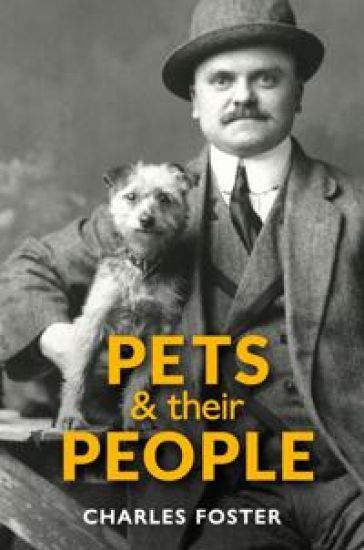
We have been domesticating animals for over ten thousand years. Why do we want tame wolves in our homes, subdued wild cats on our laps and snakes draped like scarves around our necks? This great conversation between the wild and the tame is human history, human psychology, human politics and human sociology. Pets feature in art, poetry and some of our most popular stories. Is it because we ourselves are wild and so we want furry, feathered and scaly wildness in our lives? But on what terms? Have we tamed the wolves, or are wolves wilding us? Pets and their People looks at the strange rapport between humans and their pets – or pets and their humans – at each stage of our lives. It takes bearings from every era of human history, asking how the special bond between owners and their pets has evolved, and what that evolution tells us about our own changing identity. Do we look to animals as moral – or other – role models? Do pets help us to communicate? Do they teach us about birth and death? Can they show us who we really are?
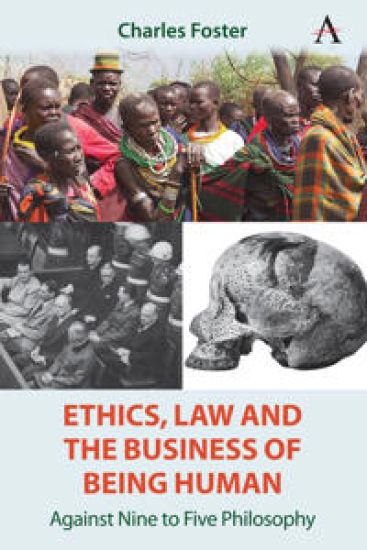
C.S. Lewis was moaning over lunch to Owen Barfield. Lewis referred to philosophy as a 'subject'. 'It wasn't a subject to Plato', said Barfield. 'It was a way'. That is how the ancients saw it: as a search for practical wisdom wisdom that would enable humans to live as they should. That would be a very unfashionable view today. Philosophy, in the modern academy, is typically just a subject: a subject to be taught and talked about from nine to five, and then left behind when the real business of life starts.Lawyers, who seek to regulate the whole of human life, in all its complexity and glory and messiness, cannot leave their philosophical presumptions at the office when they come home. If they are practitioners they are involved in brokering uneasy compromises between individual freedom and societal thriving. One would have hoped that the lawyers and the philosophers would have something to say to one another. Yet often they share no common language or interest. This book is an attempt to get them talking. It is also an indictment of the way that the Academy in the fields both of philosophy and law conducts itself. The Academy is often characterised by presumption, intellectual cowardice, conservatism, envy and downright nastiness. No wonder little that is done there spills over into the real world. The book is a series of essays which, between them, cover many of the most pressing and foundational questions of our day and any day: The state of the Academy, religion and metaphysics, epistemology and the right use of intuitions, universal mind, quantum entanglement and causation, identity, freedom, human value and disability, genetics, animals, aliens, sexual ethics, abortion and other questions of reproductive ethics, the merits and demerits of culture, Brexit, the challenges of technology, research ethics, pandemic ethics, consent to medical treatment, end of life decision-making, environmental ethics, and the business of the law and its relationship to ethics. Behind them all are the most important questions of all: What sort of creatures are we? And how should we live?
Intuitively Rational: How We Think and How We Should
Andrew McGee; Charles Foster
Springer International Publishing AG
2025
nidottu
This book is about the respective roles of intuition and reasoning in ethics. It responds to a number of well-known philosophers and psychologists, and proposes a new perspective – radical in its moderation. It examines in depth the work of the philosopher Joshua Greene and the psychologist Jonathan Haidt. With the so-called empirical turn in ethics, much work has been done to try to isolate the role of reason and intuition in forming our moral judgements, with Haidt and Greene leading the research programmes and attracting much of the professional and public attention, and many others following. The current view – shared by both camps – is that intuition is largely the driver of our moral judgements – a view summed up in Haidt’s slogan ‘intuition first, strategic reasoning second’. Haidt believes we have to live with this and accept it. Greene does not: he contends that our intuitions, while suitable for the environments in which we evolved, are worthless in the modern, global, technological age, and to avoid ethical disaster we must learn to adopt reason as the arbiter of moral truth. This book steers a middle course between these two positions and is therefore of great interest to philosophers and psychologists alike. Intuition and reason, and different conceptions of them, lie behind many significant discussions in recent philosophical ethics and moral psychology. One effect of those discussions has been the insertion of a wedge between the two notions. In this engaging and fascinating book, McGee and Foster make a thought-provoking case for removing that wedge. - Professor Roger Crisp, Professor of Moral Philosophy, University of Oxford I wanted to cheer all the way through this beautifully written book – one that is both incisive and profoundly humane. So much moral philosophy is ensnared in simple rationalism or simple intuitionism: this book argues that intuition and reason are not just at times compatible, in a sort of uneasy compromise, but that each is always essential to the proper functioning of the other. Its takedown of so much utilitarianism is long overdue. It embraces what can be learnt from neuroscience and at the same time appeals to morality in the practice of life, not just in the seminar room. A book that should be on every intelligent reader’s shelves. - Dr Iain McGilchrist, author of The Master and His Emissary and The Matter with Things What is the role of reason and intuition in ethics? This spirited and thought[1]provoking book makes the case that the relationship between reason and intuition has been fundamentally mischaracterized. And beware—there is a degree of pain in store for those of us who’ve relied on (and enjoyed) elaborate philosophical thought experiments, such as the famous trolley problem. They’re next to useless, the authors contend, in providing us with any genuine moral insight. - David Edmonds, author of Would You Kill the Fat Man?


The Story of the Gospel. Or, Our Saviours Life on Earth. Told in Words, Easy to Read and Understand
Charles Foster
Outlook Verlag
2024
nidottu
Intuitively Rational: How We Think and How We Should
Andrew McGee; Charles Foster
Springer International Publishing AG
2024
sidottu
This book is about the respective roles of intuition and reasoning in ethics. It responds to a number of well-known philosophers and psychologists, and proposes a new perspective – radical in its moderation. It examines in depth the work of the philosopher Joshua Greene and the psychologist Jonathan Haidt. With the so-called empirical turn in ethics, much work has been done to try to isolate the role of reason and intuition in forming our moral judgements, with Haidt and Greene leading the research programmes and attracting much of the professional and public attention, and many others following. The current view – shared by both camps – is that intuition is largely the driver of our moral judgements – a view summed up in Haidt’s slogan ‘intuition first, strategic reasoning second’. Haidt believes we have to live with this and accept it. Greene does not: he contends that our intuitions, while suitable for the environments in which we evolved, are worthless in the modern, global, technological age, and to avoid ethical disaster we must learn to adopt reason as the arbiter of moral truth. This book steers a middle course between these two positions and is therefore of great interest to philosophers and psychologists alike. Intuition and reason, and different conceptions of them, lie behind many significant discussions in recent philosophical ethics and moral psychology. One effect of those discussions has been the insertion of a wedge between the two notions. In this engaging and fascinating book, McGee and Foster make a thought-provoking case for removing that wedge. - Professor Roger Crisp, Professor of Moral Philosophy, University of Oxford I wanted to cheer all the way through this beautifully written book – one that is both incisive and profoundly humane. So much moral philosophy is ensnared in simple rationalism or simple intuitionism: this book argues that intuition and reason are not just at times compatible, in a sort of uneasy compromise, but that each is always essential to the proper functioning of the other. Its takedown of so much utilitarianism is long overdue. It embraces what can be learnt from neuroscience and at the same time appeals to morality in the practice of life, not just in the seminar room. A book that should be on every intelligent reader’s shelves. - Dr Iain McGilchrist, author of The Master and His Emissary and The Matter with Things What is the role of reason and intuition in ethics? This spirited and thought[1]provoking book makes the case that the relationship between reason and intuition has been fundamentally mischaracterized. And beware—there is a degree of pain in store for those of us who’ve relied on (and enjoyed) elaborate philosophical thought experiments, such as the famous trolley problem. They’re next to useless, the authors contend, in providing us with any genuine moral insight. - David Edmonds, author of Would You Kill the Fat Man?
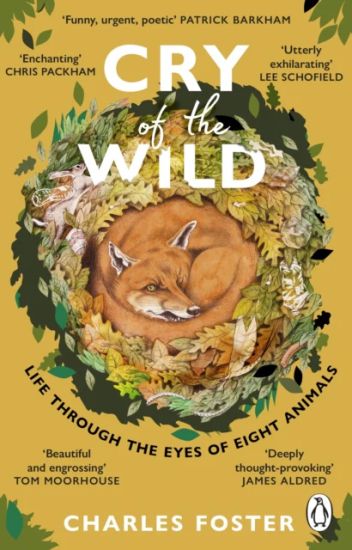
What is it like to live in a world built by humans? These eight genre-blending stories reveal the complexity, beauty and fragility of wild lives.'Evocative and beautifully written, it's a deeply immersive read' Observer'Enchanting and emotional...personifies its characters as they navigate the new wild and its trials.' Chris Packham'Charles Foster is the most original voice in nature writing today - funny, urgent, poetic, philosophical and deeply moving' Patrick Barkham'Utterly exhilarating... This book demands we change our ways' Lee SchofieldWe have long since isolated ourselves from our fellow animals, banishing them into exile and dominating the land they once roamed. But still they endure on the edges of our existence: a fox grown strong on pepperoni pizza from the dustbins of the East End, a rabbit dodging a bullet, a gannet diving through an oil slick.In spellbinding prose, Charles Foster gives us a bird’s eye view, or indeed an orca’s or an otter’s, of the wonders and struggles of the natural world.At once exhilarating and deeply moving, Cry of the Wild reconnects us with our animal side and brings us face to face, or whisker to whisker, with eight creatures (including humans) that we have pushed to the fringes, imploring us to change our ways.'There aren't many writers like Charles around... a deeply thought-provoking book' James Aldred'Reading this book feels like being made suddenly omniscient. In other words, you really have to' Tom Moorhouse'Astonishingly playful, humorous, immensely varied and outrageously intelligent... The most inventive British writer presently at work on the theme of nature' Mark Cocker
Reprint of the original, first published in 1883.
Reprint of the original, first published in 1883.
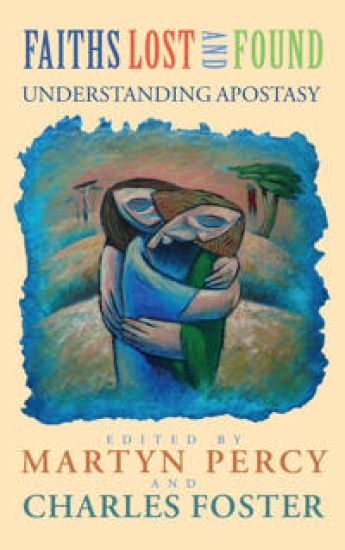
In Faiths Lost and Found ten people tell the story of their personal, often traumatic, experiences of apostasy. Each person left one iteration of Christianity, found themselves ostracised by the community they left, and found a new spiritual home. Editors Martyn Percy and Charles Foster introduce these stories and conclude with personal, theological and spiritual reflections. They examine the social, psychological and theological dynamics of apostasy. What makes someone renounce one faith tradition and embrace another? Why does the subsequent ostracism by the community they have left often seem so harsh? The book ends with suggested questions and other points for reflection in a Study Guide for groups or individuals.
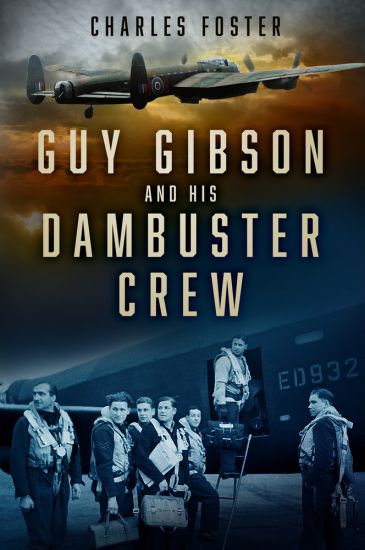
The Dams Raid is the RAF’s most famous bombing operation of the Second World War, and Guy Gibson, who was in command, its most famous bomber pilot. Of the six men who made up his crew on the Dams Raid – two Canadians, an Australian and three Englishmen – only one had previously flown with him, but altogether the men had previously amassed more than 180 operations.Drawing on rare and unpublished sources and family archives, this new study is the first to fully detail their stories. It explores the previous connections between the seven men who would eventually fly on just one operation together and examines how their relationships developed in the months they spent in each other’s company.


'Evocative and beautifully written, it's a deeply immersive read' Observer'Charles Foster is the most original voice in nature writing today - funny, urgent, poetic, philosophical and deeply moving' Patrick Barkham'Utterly exhilarating... This book demands we change our ways' Lee Schofield'There aren't many writers like Charles around... a deeply thought-provoking book' James Aldred'Reading this book feels like being made suddenly omniscient. In other words, you really have to' Tom Moorhouse'Astonishingly playful, humorous, immensely varied and outrageously intelligent... The most inventive British writer presently at work on the theme of nature' Mark CockerWhat is it like to live in a world built by humans? These eight genre-blending stories reveal the complexity, beauty and fragility of wild lives - a brilliantly modern twist on classics like Watership Down and Tarka the Otter.A fox, grown strong on pepperoni pizza from the dustbins of the East End, dances along a railway track towards Essex, the territory of wild foxes and wilder huntsmen.An orca, mourning the loss of her mother in a valley west of Skye, knows that she must now lead the pod as matriarch. She swims again through her childhood, thinking about the old ways, the old roads, laid down thousands of years ago. But the old roads aren't so easy now.At moonrise in a West Country river, an otter floats slowly downstream. The tide, though it pushes him landwards when it exhales, seems to pull him out when it inhales. He turns on his back. He can see the stars clearly for the first time and wonders if he can swim to them.The wild has never stopped waiting. It has only ever been in exile, right under our noses, waiting to confound, outrage and re-enchant.
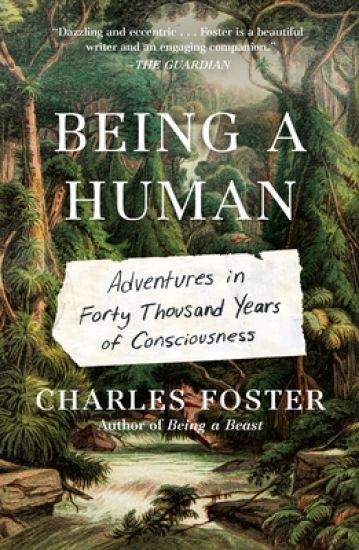
Being a Human: Adventures in Forty Thousand Years of Consciousness
Charles Foster
Metropolitan Books
2022
nidottu
NAMED A BEST BOOK OF THE YEAR BY THE ATLANTIC, KIRKUS REVIEWS, AND NEW STATESMAN A radically immersive exploration of three pivotal moments in the evolution of human consciousness, asking what kinds of creatures humans were, are, and might yet be How did humans come to be who we are? In his marvelous, eccentric, and widely lauded book Being a Beast, legal scholar, veterinary surgeon, and naturalist extraordinaire Charles Foster set out to understand the consciousness of animal species by living as a badger, otter, fox, deer, and swift. Now, he inhabits three crucial periods of human development to understand the consciousness of perhaps the strangest animal of all--the human being. To experience the Upper Paleolithic era--a turning point when humans became behaviorally modern, painting caves and telling stories, Foster learns what it feels like to be a Cro-Magnon hunter-gatherer by living in makeshift shelters without amenities in the rural woods of England. He tests his five impoverished senses to forage for berries and roadkill and he undertakes shamanic journeys to explore the connection of wakeful dreaming to religion. For the Neolithic period, when humans stayed in one place and domesticated plants and animals, forever altering our connection to the natural world, he moves to a reconstructed Neolithic settlement. Finally, to explore the Enlightenment--the age of reason and the end of the soul--Foster inspects Oxford colleges, dissecting rooms, cafes, and art galleries. He finds his world and himself bizarre and disembodied, and he rues the atrophy of our senses, the cause for much of what ails us. Drawing on psychology, neuroscience, natural history, agriculture, medical law and ethics, Being a Human is one man's audacious attempt to feel a connection with 45,000 years of human history. This glorious, fiercely imaginative journey from our origins to a possible future ultimately shows how we might best live on earth--and thrive.