Kirjojen hintavertailu. Mukana 12 595 353 kirjaa ja 12 kauppaa.

Kirjailija

Charles H. Talbert

Kirjat ja teokset yhdessä paikassa: 13 kirjaa, julkaisuja vuosilta 1974-2021, suosituimpien joukossa Paideia: Commentaries on the New Testament Set. Vertaile teosten hintoja ja tarkista saatavuus suomalaisista kirjakaupoista.

Mukana myös kirjoitusasut: Charles H Talbert

13 kirjaa

Kirjojen julkaisuhaarukka 1974-2021.

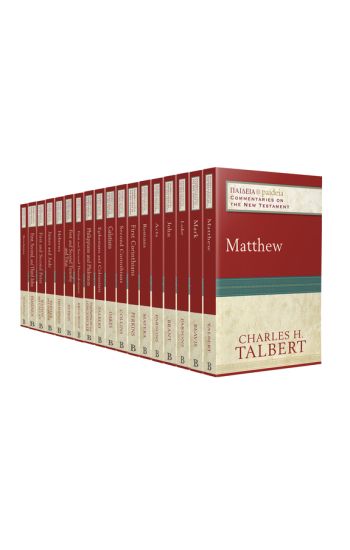
Paideia: Commentaries on the New Testament Set

Paideia: Commentaries on the New Testament Set

Mikeal C. Parsons; Charles H. Talbert; Bruce W. Longenecker

Baker Academic, Div of Baker Publishing Group
2021
nidottu
The Paideia New Testament commentary series offers fresh readings of the biblical texts in light of ancient culture and modern issues. Now all eighteen volumes in the series, covering the entire New Testament, are available for students, pastors, and other readers. Designed to be usable, readable, and concise rather than exhaustive, this series is conversant with contemporary scholarship, draws on ancient backgrounds, and attends to the theological nature of the texts.
Matthew

Matthew

Charles H. Talbert; Mikeal Parsons; Charles Talbert

Baker Academic, Div of Baker Publishing Group
2010
nidottu
In this fresh commentary, the fourth of eighteen volumes in the Paideia series, a leading New Testament scholar examines cultural context and theological meaning in Matthew. Paideia commentaries explore how New Testament texts form Christian readers by • Attending to the ancient narrative and rhetorical strategies the text employs• Showing how the text shapes theological convictions and moral habits• Commenting on the final, canonical form of each New Testament book• Focusing on the cultural, literary, and theological settings of the text• Making judicious use of maps, photos, and sidebars in a reader-friendly format
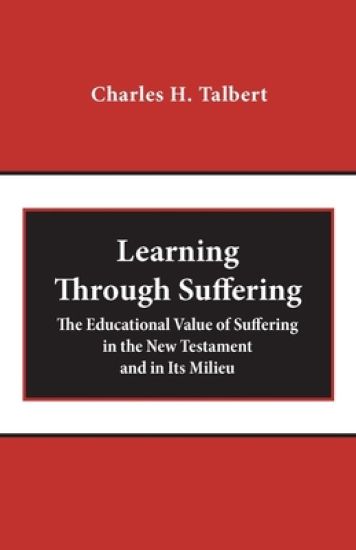
Learning Through Suffering

Learning Through Suffering

Charles H. Talbert

Baylor University Press
2020
sidottu
From the various biblical explanations of suffering, this volume chooses to focus on one: suffering sometimes possesses an educational value. It explores the differing versions of this view in Paul, James, 1 Peter, Hebrews, and Luke-Acts, and sets these Christian perspectives against the backdrop of similar explanations in Jewish and Greco-Roman cultures.
Learning Through Suffering

Learning Through Suffering

Charles H. Talbert

Baylor University Press
2018
nidottu
From the various biblical explanations of suffering, this volume chooses to focus on one: suffering sometimes possesses an educational value. It explores the differing versions of this view in Paul, James, 1 Peter, Hebrews, and Luke-Acts, and sets these Christian perspectives against the backdrop of similar explanations in Jewish and Greco-Roman cultures.
The Development of Christology during the First Hundred Years
Entering the debate about the development of Christology among Jesus' earliest followers, this volume critiques both the traditional evolutionary view that posited an elementary early Jewish Christology that developed in complexity as it was increasingly Hellenized and the more recent attempt to see a full-orbed Christology both as early and as Jewish, not Hellenistic, in its categories. It contends that during the first 100 years Jesus' followers employed four models from their milieu, Jewish and Greco-Roman, both to understand and to communicate their Christologies. These models were appropriated because they were appropriate vehicles for expressing the impact of Jesus on them, past, present, and future.
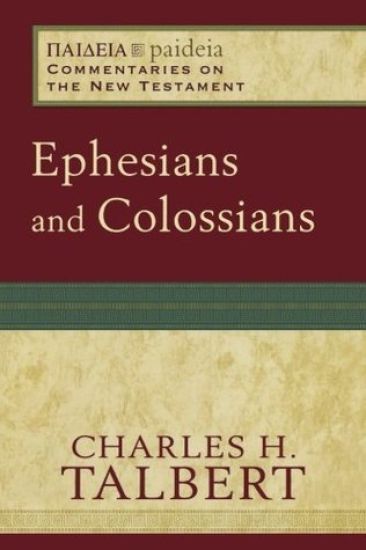
Ephesians and Colossians

Ephesians and Colossians

Charles H. Talbert; Mikeal Parsons; Charles Talbert

Baker Academic, Div of Baker Publishing Group
2007
nidottu
Ephesians and Colossians is the first of eighteen volumes in the new Paideia commentary series. This series approaches each text in its final, canonical form, proceeding by sense units rather than word-by-word or verse-by-verse. Each sense unit is explored in three sections: (1) introductory matters, (2) tracing the train of thought, (3) key hermeneutical and theological questions. The commentaries shed fresh light on the text while avoiding idiosyncratic readings, attend to theological meaning without presuming a specific theological stance in the reader, and show how the text uses narrative and rhetorical strategies from the ancient educational context to form and shape the reader. Professors, graduate and seminary students, and pastors will benefit from this readable commentary, as will theological libraries.
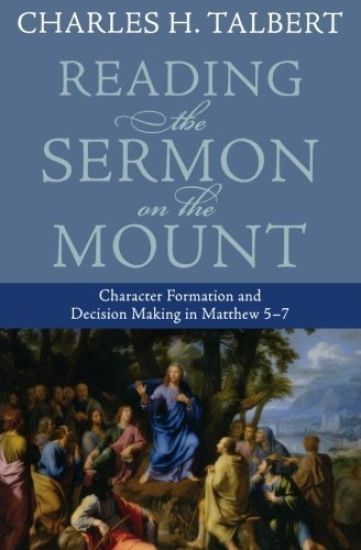
Reading the Sermon on the Mount – Character Formation and Decision Making in Matthew 5–7

Reading the Sermon on the Mount – Character Formation and Decision Making in Matthew 5–7

Charles H. Talbert

Baker Academic, Div of Baker Publishing Group
2006
nidottu
The Sermon on the Mount is one of the most familiar passages in the New Testament. In this concise and clearly-written introduction to and commentary on the Sermon, Charles Talbert pays particular attention to its role in character formation and ethical decision making. After introductory chapters on reading the Sermon on the Mount, the book offers a section-by-section commentary. Talbert points out structural highlights, provides illuminating cross-references to Jewish and Greco-Roman literature, and concludes each section with a consideration of how it contributes to character formation and how it can be used with the rest of Scripture for ethical decision-making. The book is packed with insights that will be of great use to students as well as those who preach and teach the Sermon.
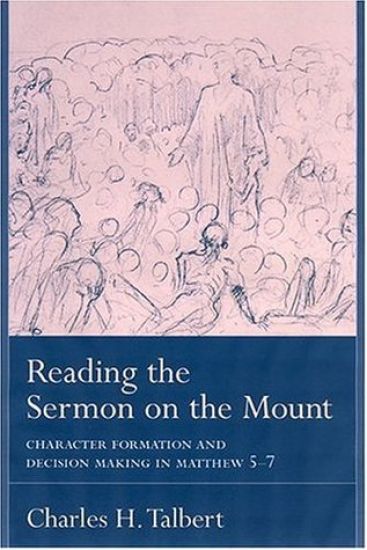
Reading the Sermon on the Mount

Reading the Sermon on the Mount

Charles H. Talbert

University of South Carolina Press
2004
sidottu
In Reading the Sermon on the Mount, Charles H. Talbert explores the religious message put forth in the first large teaching section of the Gospel according to Matthew and finds it to have a relevance often overlooked in academic studies. Seeking to hear and understand the text of Matthew 5-7 as someone living in the Mediterranean about 100 C.E. would have encountered it, Talbert argues for a broader interpretation of the Sermon than scholars typically advance. He suggests that the Sermon cannot be reduced to a discussion of ethics but includes considerations of piety. He contends that it is a text about covenant fidelity to God and to other humans, in which Jesus seeks to affect perceptions, dispositions, and intentions. The text thus functions primarily as a catalyst for character formation rather than as a compendium of obligations. To prepare readers for a thorough examination of the Sermon, Talbert investigates Matthew's relation to Judaism and inquires into the composition of the audience who received Jesus' charge. He also takes into account the order of Jesus' discourse, the distinction between character formation and decision making, and the question of whether or not the Jesus who speaks in the Sermon is a legalist. In his reading of the text, Talbert attends to the six large units of thought in Matthew 5-7, exploring the relationship of each to possible concerns of character formation and decision making. Section by section, he analyzes form and content, comparing Jesus' directives with similar statements in Jewish and Greco-Roman literature. Talbert concludes that only when the text is read in three contexts - the whole of Matthew, the whole of the New Testament, and the entire biblical plot - can the Sermon on the Mount make a contribution to decision making.
The Apocalypse

The Apocalypse

Charles H. Talbert

Westminster/John Knox Press,U.S.
1994
nidottu
In this concise and clearly written commentary, Charles H. Talbert brings to mainline Christians a fresh reading of the book of Revelation, demonstrating that it is not only accessible but relevant for the modern-day Christian. According to Talbert, the primary causes of the marginalized status of the book of Revelation by mainline Christians are threefold--the apparent inaccessibility of its meaning, the seeming impossibility of its pastoral application, and its demonstrated susceptibility to abuse. Talbert ably demonstrates that the book of Revelation was written to help the early Christians avoid assimilation into the larger pagan culture. Talbert also gives full attention to the literature of the Greco-Roman, early Christian, and early Jewish worlds as he examines the more mystical components of the narrative.