Kirjailija
Charles Hartshorne
Kirjat ja teokset yhdessä paikassa: 14 kirjaa, julkaisuja vuosilta 1976-2017, suosituimpien joukossa Creative Experiencing. Vertaile teosten hintoja ja tarkista saatavuus suomalaisista kirjakaupoista.
14 kirjaa
Kirjojen julkaisuhaarukka 1976-2017.
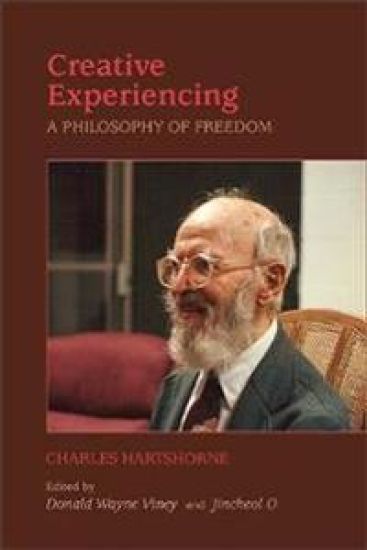
A vigorous and wide-ranging defense of Hartshorne's "neoclassical metaphysics" of creative freedom. Charles Hartshorne, one of the premier metaphysicians of the twentieth century, surmised that Creative Experiencing: A Philosophy of Freedom made his contribution to technical philosophy essentially complete. Found among his papers, this book combines five chapters published here for the first time with revisions and expansions of previously published material. Hartshorne articulates and defends his "neoclassical metaphysics" as an enterprise related to but independent of empirical science, addressing a variety of topics, including the problem of other minds (including nonhuman ones), the competencies of science, the nature of God, the meaning of modal terms, the ontological status of universals, and the metaphysical grounding of political freedom. While Hartshorne is widely known as a process philosopher, Creative Experiencing also shows him in dialogue with the wider currents of both analytic philosophy and phenomenology. The book includes his clearest account of his appropriation of phenomenology, the most succinct presentation of his analysis of time's asymmetry and its relation to causality, and his fullest statement concerning the meaning of future tense statements.
Beyond Humanism: Essays in the New Philosophy of Nature
Charles Hartshorne
Literary Licensing, LLC
2012
sidottu
Beyond Humanism: Essays In The New Philosophy Of Nature is a collection of essays written by Charles Hartshorne, a prominent American philosopher and theologian. The book explores the concept of humanism and its limitations, arguing that a new philosophy of nature is needed to address the complexities of the modern world. Hartshorne proposes a new approach that emphasizes the interdependence of all beings and the importance of ecological awareness. He draws on a range of disciplines, including philosophy, theology, and science, to develop his ideas, and offers a compelling vision of a more harmonious and sustainable future. The essays cover a wide range of topics, from the nature of consciousness and the meaning of existence, to the ethics of environmentalism and the role of religion in modern society. Beyond Humanism is a thought-provoking and insightful work that challenges readers to rethink their assumptions about the relationship between humans and the natural world.This scarce antiquarian book is a facsimile reprint of the old original and may contain some imperfections such as library marks and notations. Because we believe this work is culturally important, we have made it available as part of our commitment for protecting, preserving, and promoting the world's literature in affordable, high quality, modern editions, that are true to their original work.
Beyond Humanism: Essays in the New Philosophy of Nature
Charles Hartshorne
Literary Licensing, LLC
2012
nidottu
The Logic of Perfection and Other Essays in Neoclassical Metaphysics
Charles Hartshorne
Literary Licensing, LLC
2011
nidottu
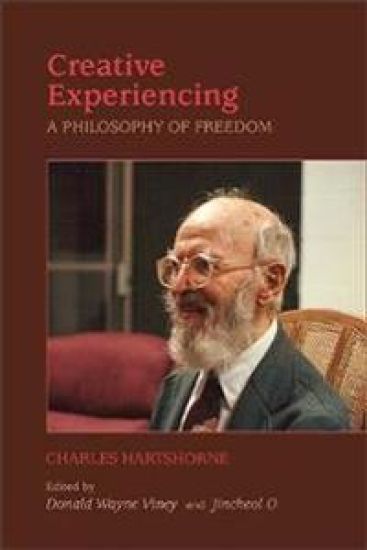
A vigorous and wide-ranging defense of Hartshorne's "neoclassical metaphysics" of creative freedom.Charles Hartshorne, one of the premier metaphysicians of the twentieth century, surmised that Creative Experiencing: A Philosophy of Freedom made his contribution to technical philosophy essentially complete. Found among his papers, this book combines five chapters published here for the first time with revisions and expansions of previously published material. Hartshorne articulates and defends his "neoclassical metaphysics" as an enterprise related to but independent of empirical science, addressing a variety of topics, including the problem of other minds (including nonhuman ones), the competencies of science, the nature of God, the meaning of modal terms, the ontological status of universals, and the metaphysical grounding of political freedom. While Hartshorne is widely known as a process philosopher, Creative Experiencing also shows him in dialogue with the wider currents of both analytic philosophy and phenomenology. The book includes his clearest account of his appropriation of phenomenology, the most succinct presentation of his analysis of time's asymmetry and its relation to causality, and his fullest statement concerning the meaning of future tense statements.
The Logic of Perfection and Other Essays in Neoclassical Metaphysics
Charles Hartshorne
Literary Licensing, LLC
2011
sidottu
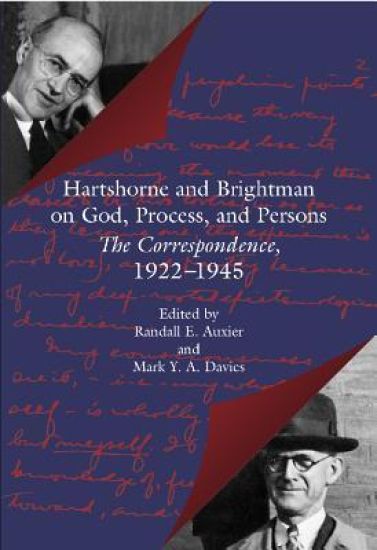
Hartshorne and Brightman on God, Process and Persons
Charles Hartshorne; Edgar Sheffield Brightman
Vanderbilt University Press
2001
sidottu
In 1922 Charles Hartshorne, then an aspiring young philosopher, wrote to Edgar Sheffield Brightman, a preeminent philosopher of religion and one of the earliest members of the Boston School of Personalism. For twenty-three subsequent years, the two carried out an unusually rich and intensive correspondence, and, remarkably, almost every letter was preserved. They are presented here along with additional material that follows the philosophers' lives and interactions after 1945, when Brightman's ill health prevented him from continuing the correspondence. Hartshorne (1897-) has been called ""the world's greatest living metaphysician."" But when the correspondence began, he was just a graduate student, while Brightman (1884-1953) was already an influential philosopher and theologian. Over time, as Hartshorne gained prominence, the letters reveal first a relationship of equals and eventually a reversal of roles as the younger man began to influence his former mentor. Hartshorne's sustained critique of Brightman's epistemological and metaphysical position eventually led to important shifts in Brightman's views. In their introductory essays, editors Randall Auxier and Mark Davies place the correspondence in its intellectual context and address the relationship between personalism and process philosophy/theology in metaphysics, epistemology, ethics, and social philosophy. Theologians and philosophers in a wide range of specialties will welcome this record of an enduring intellectual friendship.
The Logic of Perfection and Other Essays in Neoclassical Metaphysics
Charles Hartshorne
Open Court Publishing Co ,U.S.
2000
pokkari
This work presents Hartshorne's rehabilitation of Anselm's "Ontological Argument", recast in neoclassical form as "the Modal Proof", along with applications of Hartshorne's method to a variety of issues in contemporary metaphysical and religious thinking.
Charles Hartshorne is arguably the most important living metaphysician and one of the most eminent figures of American philosophy in the twentieth century. He is internationally known for his contributions to the philosophy of creativity and for his distinctive brand of process philosophy and theology. For more than seven decades Hartshorne has presented his theses ever more persuasively, comparing and contrasting them in illuminating fashion with those of major historical figures and movements, from Plato to Kant to Popper. Central to his outlook are fresh interpretations of such notions as God, freedom, chance, creativity, the primacy of aesthetic meaning, affective tone, the social character of experience, sympathy as self-creative, relatedness and asymmetry, feeling and feeling of feeling, and generalized causal possibility with a place for probabilities and open possibilities.This collection of Charles Hartshorne's writings -- many never before published -- is an indispensible introduction to his rich and indelible contribution to contemporary philosophy. It covers the extraordinary range of Hartshorne's thought, including his reflections on the history of philosophy, philosophical psychology, philosophy of science, epistemology, ethics, aesthetics, literature, ornithology, and, above all, theology and metaphysics.
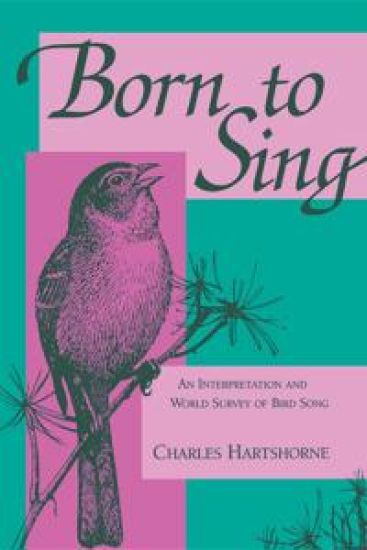
First published in 1973, Born to Sing is a monumental undertaking, one of the most comprehensive, totally entertaining studies of bird vocalizations ever available. It offers a global survey of modes of singing, encompassing more than 5,000 species of singing birds, with special analyses of nearly 200 species with highly developed songs. For the professional ornithologist, informed birdwatchers, biologists, psychologists, philosophers, and musicologists with a strong interest in nature.
Charles Hartshorne has set himself the task of formulating the idea of deity "to preserve perhaps even increase, its religious value, while yet avoiding the contradictions which seem inseparable from the idea of customarily defined." This is a brilliant attempt to redefine problems that have long challenged the Western world in its search for understanding both God and man. “The compact, closely reasoned book employs a skill in logic reminiscent of scholasticism at its best to refute traditional notions, scholastic and otherwise, of divine absoluteness, and to expound a conception of God which is both free of contradiction and religiously adequate. The position taken is described by Professor Hartshorne as surrelativism, or panentheism, and these terms indicate the two major emphases of the volume….He who follows its precise logic with the alertness it demands will have a clarifying and enriching experience.”—S. Paul Schiling, Journal of Bible and Religion“In what respects is God absolute and in what respects relative? Or is it meaningless to say that he is both? In a rigorously analytical study Professor Hartshorne explains why he thinks both statements are necessary….One comes from this book with new confidence in the ability of philosophy to attack religious problems and, through careful analysis, to reveal what as alone conceivable must be true.”—J.S. Bixler, Review of Religion“Hartshorne’s work is a major achievement in religious thought because it strives to clear away errors that have been insuperable obstacles to religious search.”—Henry N. Wieman, The Philosophical Review“This book is not merely theoretical, as might be supposed; it has its practical application to the larger social issues of our time, including the problem of democracy.”—Jay William Hudson, Christian Register