Kirjojen hintavertailu. Mukana 12 390 323 kirjaa ja 12 kauppaa.

Kirjailija

Charles L. Briggs

Kirjat ja teokset yhdessä paikassa: 13 kirjaa, julkaisuja vuosilta 1986-2025, suosituimpien joukossa Unlearning. Vertaile teosten hintoja ja tarkista saatavuus suomalaisista kirjakaupoista.

13 kirjaa

Kirjojen julkaisuhaarukka 1986-2025.

Emerging Perspectives in the Study of Folklore and Performance

Emerging Perspectives in the Study of Folklore and Performance

Charles L. Briggs

INDIANA UNIVERSITY PRESS
2025
pokkari
Just over half a century ago, the rise in what became known as the "performance turn" in folklore studies led to the diffusion of performance as both a lens and a key concept across a wide range of humanistic disciplines. Now, it's time to take stock of the myriad ways in which performance and folklore studies have developed along both parallel and intersecting paths. Emerging Perspectives in the Study of Folklore and Performance reveals the captivating world where folklore and performance studies meet up, revealing both the connections and disparities between the two fields. From the mid-20th century to the present day, luminaries like Richard Bauman, Erving Goffman, Roger Abrahams, Charles Briggs, Richard Schechner, Dell Hymes, José Esteban Muñoz, Peggy Phelan, Barbara Kirshenblatt-Gimblett, Deborah Kapchan, and Diana Taylor have woven a rich tapestry of discourse, seamlessly blending the realms of folklore and performance. Editors Solimar Otero and Anthony Bak Buccitelli present a magnificent collection of chapters that delve into the intricacies of this enduring relationship. These diverse essays explore how folklore and performance intersect in realms as varied as digital culture, social movements, ritual, narrative, race and technology, archival practices, ambient play, post-human intersectionalities, speculative world-making, and embodied knowledge. Emerging Perspectives in the Study of Folklore and Performance is a must-read for scholars, students, and enthusiasts alike, offering fresh insights into the evolving landscape of folklore and performance studies and transforming the ways that we connect to culture, place, and community.
Emerging Perspectives in the Study of Folklore and Performance

Emerging Perspectives in the Study of Folklore and Performance

Charles L. Briggs

INDIANA UNIVERSITY PRESS
2025
sidottu
Just over half a century ago, the rise in what became known as the "performance turn" in folklore studies led to the diffusion of performance as both a lens and a key concept across a wide range of humanistic disciplines. Now, it's time to take stock of the myriad ways in which performance and folklore studies have developed along both parallel and intersecting paths. Emerging Perspectives in the Study of Folklore and Performance reveals the captivating world where folklore and performance studies meet up, revealing both the connections and disparities between the two fields. From the mid-20th century to the present day, luminaries like Richard Bauman, Erving Goffman, Roger Abrahams, Charles Briggs, Richard Schechner, Dell Hymes, José Esteban Muñoz, Peggy Phelan, Barbara Kirshenblatt-Gimblett, Deborah Kapchan, and Diana Taylor have woven a rich tapestry of discourse, seamlessly blending the realms of folklore and performance. Editors Solimar Otero and Anthony Bak Buccitelli present a magnificent collection of chapters that delve into the intricacies of this enduring relationship. These diverse essays explore how folklore and performance intersect in realms as varied as digital culture, social movements, ritual, narrative, race and technology, archival practices, ambient play, post-human intersectionalities, speculative world-making, and embodied knowledge. Emerging Perspectives in the Study of Folklore and Performance is a must-read for scholars, students, and enthusiasts alike, offering fresh insights into the evolving landscape of folklore and performance studies and transforming the ways that we connect to culture, place, and community.

Making Health Public

Making Health Public

Charles L. Briggs; Daniel C. Hallin

TAYLOR FRANCIS LTD
2024
nidottu
This book examines the relationship between media and medicine. Drawing on insights from anthropology, linguistics, and media studies, it considers the fundamental role of news coverage in constructing wider cultural understandings of health and disease. The authors advance the notion of ‘biomediatization’ and demonstrate how health knowledge is co-produced through connections between dispersed sites of knowledge making and through multiple forms of expertise. The chapters offer an innovative combination of media content analysis and ethnographic data on the production and circulation of health news, drawing on work with journalists, clinicians, health officials, medical researchers, marketers, and audiences. New to this edition are new case studies, in particular about the COVID-19 pandemic. The first case study looks at pharmaceutical and biotech news, and how journalists portray the flow of information across the boundaries between science and business. The next two case studies examine pandemic news, beginning with the 2009 H1N1 “swine flu” pandemic and continuing to the COVID-19 pandemic. The final case study examines the treatment of race and racism in health news, looking at the ways it interacts with cultural constructions of health citizenship, and the forces that have produced a shift from deracialization of health news to a much stronger focus on race and racism in contemporary health news. This book is ideal for undergraduate students and scholars across the social sciences, health sciences, cultural studies, and journalism.
Making Health Public

Making Health Public

Charles L. Briggs; Daniel C. Hallin

TAYLOR FRANCIS LTD
2024
sidottu
This book examines the relationship between media and medicine. Drawing on insights from anthropology, linguistics, and media studies, it considers the fundamental role of news coverage in constructing wider cultural understandings of health and disease. The authors advance the notion of ‘biomediatization’ and demonstrate how health knowledge is co-produced through connections between dispersed sites of knowledge making and through multiple forms of expertise. The chapters offer an innovative combination of media content analysis and ethnographic data on the production and circulation of health news, drawing on work with journalists, clinicians, health officials, medical researchers, marketers, and audiences. New to this edition are new case studies, in particular about the COVID-19 pandemic. The first case study looks at pharmaceutical and biotech news, and how journalists portray the flow of information across the boundaries between science and business. The next two case studies examine pandemic news, beginning with the 2009 H1N1 “swine flu” pandemic and continuing to the COVID-19 pandemic. The final case study examines the treatment of race and racism in health news, looking at the ways it interacts with cultural constructions of health citizenship, and the forces that have produced a shift from deracialization of health news to a much stronger focus on race and racism in contemporary health news. This book is ideal for undergraduate students and scholars across the social sciences, health sciences, cultural studies, and journalism.
Incommunicable

Incommunicable

Charles L. Briggs

DUKE UNIVERSITY PRESS
2024
pokkari
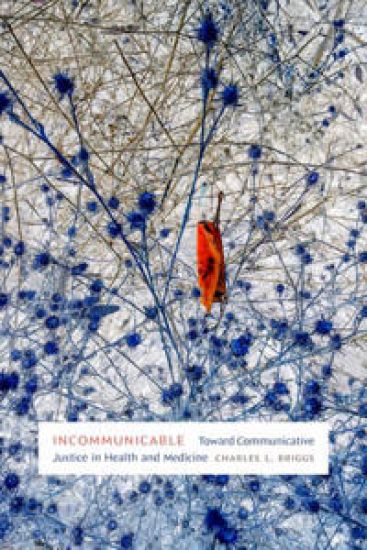
In Incommunicable, Charles L. Briggs examines the long-standing presumptions that medical discourse translates easily across geographic, racial, and class boundaries. Bringing linguistic and medical anthropology into conversation with Black and decolonial theory, he theorizes the failure in health communication as incommunicability, which negatively affects all patients, doctors, and healthcare providers. Briggs draws on W. E. B. Du Bois and the work of three philosopher-physicians-John Locke, Frantz Fanon, and Georges Canguilhem-to show how cultural models of communication and health have historically racialized people of color as being incapable of communicating rationally and understanding biomedical concepts. He outlines incommunicability through a study of COVID-19 discourse, in which health professionals defined the disease based on scientific medical knowledge in ways that reduced varieties of nonprofessional knowledge about COVID-19 to “misinformation” and “conspiracy theories.” This dismissal of nonprofessional knowledge led to a failure of communication that eroded trust in medical expertise. Building on efforts by social movements and coalitions of health professionals and patients to craft more just and equitable futures, Briggs helps imagine health systems and healthcare discourses beyond the oppressive weight of communicability and the stigma of incommunicability.
Incommunicable

Incommunicable

Charles L. Briggs

DUKE UNIVERSITY PRESS
2024
sidottu
In Incommunicable, Charles L. Briggs examines the long-standing presumptions that medical discourse translates easily across geographic, racial, and class boundaries. Bringing linguistic and medical anthropology into conversation with Black and decolonial theory, he theorizes the failure in health communication as incommunicability, which negatively affects all patients, doctors, and healthcare providers. Briggs draws on W. E. B. Du Bois and the work of three philosopher-physicians-John Locke, Frantz Fanon, and Georges Canguilhem-to show how cultural models of communication and health have historically racialized people of color as being incapable of communicating rationally and understanding biomedical concepts. He outlines incommunicability through a study of COVID-19 discourse, in which health professionals defined the disease based on scientific medical knowledge in ways that reduced varieties of nonprofessional knowledge about COVID-19 to “misinformation” and “conspiracy theories.” This dismissal of nonprofessional knowledge led to a failure of communication that eroded trust in medical expertise. Building on efforts by social movements and coalitions of health professionals and patients to craft more just and equitable futures, Briggs helps imagine health systems and healthcare discourses beyond the oppressive weight of communicability and the stigma of incommunicability.
Unlearning

Unlearning

Charles L. Briggs

University Press of Colorado
2021
nidottu
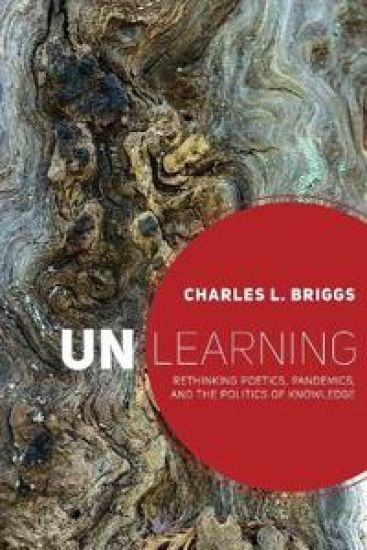
A provocative theoretical synthesis by renowned folklorist and anthropologist Charles L. Briggs, Unlearning questions intellectual foundations and charts new paths forward. Briggs argues, through an expansive look back at his own influential works as well as critical readings of the field, that scholars can disrupt existing social and discourse theories across disciplines when they collaborate with theorists whose insights are not constrained by the bounds of scholarship. Eschewing narrow Eurocentric modes of explanation and research foci, Briggs brings together colonialism, health, media, and psychoanalysis to rethink classic work on poetics and performance that revolutionized linguistic anthropology, folkloristics, media studies, communication, and other fields. Beginning with a candid memoir that credits the mentors whose disconcerting insights prompted him to upend existing scholarly approaches, Briggs combines his childhood experiences in New Mexico with his work in graduate school, his ethnography in Venezuela working with Indigenous peoples, and his contemporary work—which is heavily weighted in medical folklore. Unlearning offers students, emerging scholars, and veteran researchers alike a guide for turning ethnographic objects into provocations for transforming time-worn theories and objects of analysis into sources of scholarly creativity, deep personal engagement, and efforts to confront unconscionable racial inequities. It will be of significant interest to folklorists, anthropologists, and social theorists and will stimulate conversations across these disciplines.
Tell Me Why My Children Died

Tell Me Why My Children Died

Charles L. Briggs; Clara Mantini-Briggs

Duke University Press
2016
pokkari
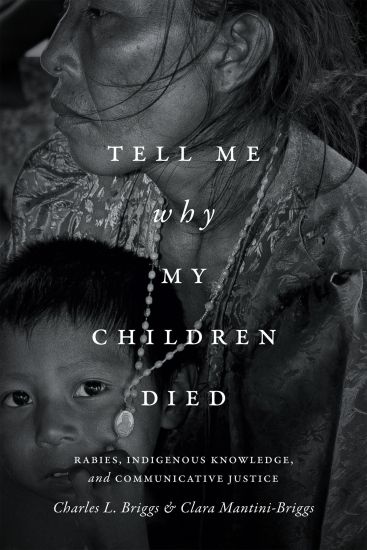
Tell Me Why My Children Died tells the gripping story of indigenous leaders' efforts to identify a strange disease that killed thirty-two children and six young adults in a Venezuelan rain forest between 2007 and 2008. In this pathbreaking book, Charles L. Briggs and Clara Mantini-Briggs relay the nightmarish and difficult experiences of doctors, patients, parents, local leaders, healers, and epidemiologists; detail how journalists first created a smoke screen, then projected the epidemic worldwide; discuss the Chávez government's hesitant and sometimes ambivalent reactions; and narrate the eventual diagnosis of bat-transmitted rabies. The book provides a new framework for analyzing how the uneven distribution of rights to produce and circulate knowledge about health are wedded at the hip with health inequities. By recounting residents' quest to learn why their children died and documenting their creative approaches to democratizing health, the authors open up new ways to address some of global health's most intractable problems.
Tell Me Why My Children Died

Tell Me Why My Children Died

Charles L. Briggs; Clara Mantini-Briggs

Duke University Press
2016
sidottu
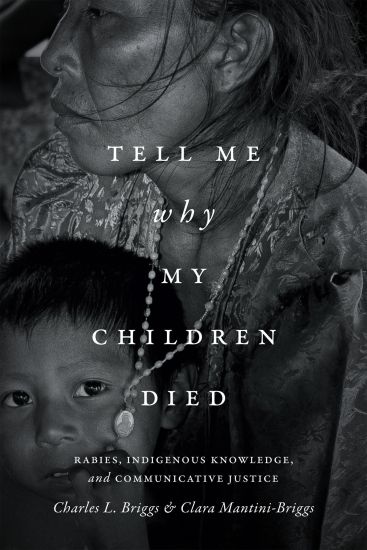
Tell Me Why My Children Died tells the gripping story of indigenous leaders' efforts to identify a strange disease that killed thirty-two children and six young adults in a Venezuelan rain forest between 2007 and 2008. In this pathbreaking book, Charles L. Briggs and Clara Mantini-Briggs relay the nightmarish and difficult experiences of doctors, patients, parents, local leaders, healers, and epidemiologists; detail how journalists first created a smoke screen, then projected the epidemic worldwide; discuss the Chávez government's hesitant and sometimes ambivalent reactions; and narrate the eventual diagnosis of bat-transmitted rabies. The book provides a new framework for analyzing how the uneven distribution of rights to produce and circulate knowledge about health are wedded at the hip with health inequities. By recounting residents' quest to learn why their children died and documenting their creative approaches to democratizing health, the authors open up new ways to address some of global health's most intractable problems.
Stories in the Time of Cholera

Stories in the Time of Cholera

Charles L. Briggs

University of California Press
2004
pokkari
Cholera, although it can kill an adult through dehydration in half a day, is easily treated. Yet in 1992-93, some five hundred people died from cholera in the Orinoco Delta of eastern Venezuela. In some communities, a third of the adults died in a single night, as anthropologist Charles Briggs and Clara Mantini-Briggs, a Venezuelan public health physician, reveal in their frontline report. Why, they ask in this moving and thought-provoking account, did so many die near the end of the twentieth century from a bacterial infection associated with the premodern past? It was evident that the number of deaths resulted not only from inadequacies in medical services but also from the failure of public health officials to inform residents that cholera was likely to arrive. Less evident were the ways that scientists, officials, and politicians connected representations of infectious diseases with images of social inequality. In Venezuela, cholera was racialized as officials used anthropological notions of 'culture' in deflecting blame away from their institutions and onto the victims themselves. The disease, the space of the Orinoco Delta, and the 'indigenous ethnic group' who suffered cholera all came to seem somehow synonymous. One of the major threats to people's health worldwide is this deadly cycle of passing the blame. Carefully documenting how stigma, stories, and statistics circulate across borders, this first-rate ethnography demonstrates that the process undermines all the efforts of physicians and public health officials and at the same time contributes catastrophically to epidemics not only of cholera but also of tuberculosis, malaria, AIDS, and other killers. The authors have harnessed their own outrage over what took place during the epidemic and its aftermath in order to make clear the political and human stakes involved in the circulation of narratives, resources, and germs.
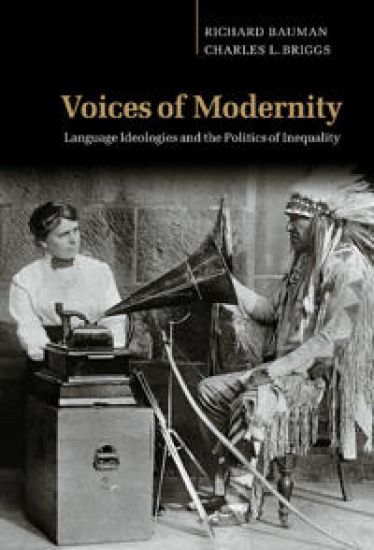
Voices of Modernity

Voices of Modernity

Richard Bauman; Charles L. Briggs

Cambridge University Press
2003
pokkari
Language and tradition have long been relegated to the sidelines as scholars have considered the role of politics, science, technology and economics in the making of the modern world. This novel reading of over two centuries of philosophy, political theory, anthropology, folklore and history argues that new ways of imagining language and representing supposedly premodern people - the poor, labourers, country folk, non-europeans and women - made political and scientific revolutions possible. The connections between language ideologies, privileged linguistic codes, and political concepts and practices shape the diverse ways we perceive ourselves and others. Bauman and Briggs demonstrate that contemporary efforts to make schemes of social inequality based on race, gender, class and nationality seem compelling and legitimate, rely on deeply-rooted ideas about language and tradition. Showing how critics of modernity unwittingly reproduce these foundational fictions, they suggest new strategies for challenging the undemocratic influence of these voices of modernity.
Voices of Modernity

Voices of Modernity

Richard Bauman; Charles L. Briggs

Cambridge University Press
2003
sidottu
Language and tradition have long been relegated to the sidelines as scholars have considered the role of politics, science, technology and economics in the making of the modern world. This reading of over two centuries of philosophy, political theory, anthropology, folklore and history argues that new ways of imagining language and representing supposedly premodern people - the poor, labourers, country folk, non-europeans and women - made political and scientific revolutions possible. The connections between language ideologies, privileged linguistic codes, and political concepts and practices shape the diverse ways we perceive ourselves and others. This 2003 book demonstrates that contemporary efforts to make schemes of social inequality based on race, gender, class and nationality seem compelling and legitimate, rely on deeply-rooted ideas about language and tradition. Showing how critics of modernity unwittingly reproduce these foundational fictions, it suggests strategies for challenging the undemocratic influence of these voices of modernity.
Learning How to Ask

Learning How to Ask

Charles L. Briggs

Cambridge University Press
1986
pokkari
Interviews are ubiquitous in modern society, and they play a crucial role in social scientific research. But, as Charles Briggs convincingly argues in this book, received interviewing techniques rest on fundamental misapprehensions about the nature both of the interview as a communicative event, and of the nature of the data that it produces. Furthermore, interviewers rarely examine the compatibility of interviews as a means of acquiring information to one another. These oversights often blind interviewers to ensuing errors of interpretation, as well as to the limitations of the interview as a means of acquiring data. To conflict these problems, Professor Briggs presents an analysis of the ‘communicative blunders’ that he himself committed in conducting research interviews among Spanish-speakers in northern New Mexico. By focusing on these errors and exploring how they may be avoided, he is able to propose new techniques for designing, implementing, and analyzing interview-based research. These rest on identifying the subjects’ resources for conveying information, and the relative compatability of the shared rules and understandings that underlie their strategies with those associated with interviews. Critical of existing paradigms of interviewing, which he sees as deriving from Western ‘folk’ theories of reality and communication, Briggs shows that the development of more sophisticated interviewing methodologies requires further research into interviewing itself. Briggs’s conclusions provide a basis for the reexamination of current uses of interviews in a wide range of contexts - from social science research to job applications, welfare and health care delivery, criminal and legal investigations, journalism and broadcasting, and other areas of everyday life. His book will appeal to linguists, sociologists, anthropologists, historians, psychologists, as well as other readers whose research or professional activities depend on the use of interviews.